As a Senior Nurse working in the high-pressure environment of New York City hospitals, I have stood by countless bedsides witnessing the sheer exhaustion families feel when administrative hurdles collide with medical crises. Navigating the legal requirements of a Power of Attorney while your loved one is vulnerable can feel overwhelming, but understanding these rules is an act of love and protection. My goal is to guide you through the clinical and legal realities of getting these documents signed correctly so you can focus on what matters most: your family member’s recovery. Please know that you are not alone in trying to solve this puzzle; we navigate this together every day.
Clinical Quick Answer
Yes, in New York City and throughout the state, a Power of Attorney (POA) signature absolutely requires notarization to be legally valid. Following the changes to the New York General Obligations Law in 2021, the principal’s signature must be notarized and witnessed by two disinterested persons (the notary can serve as one witness). Without these specific validations, the document is clinically and legally useless for managing a patient’s affairs.
Understanding the Strict Legal Standard in NYC Hospitals
When you bring a Power of Attorney document into a clinical setting like a hospital or a nursing home in New York, the scrutiny it undergoes is intense. We are not just looking for a signature; we are looking for statutory compliance. The New York Statutory Short Form Power of Attorney is a powerful instrument, giving someone else the ability to empty bank accounts, sell property, and manage Medicaid applications. Because the stakes are so high, the execution must be flawless.
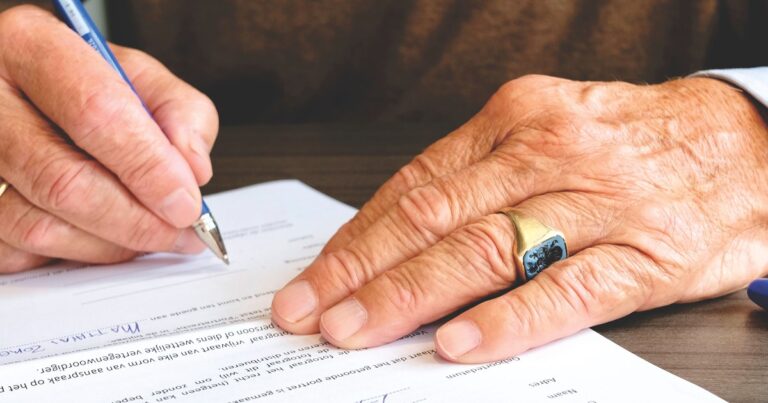
- The Notary Requirement: The person granting the power (the principal) must sign the document in front of a notary public. The notary must verify the identity of the signer and acknowledge the signature;
- The Two-Witness Rule: Unlike some other states, New York requires two witnesses. This is a crucial detail often missed by families using generic online forms. The witnesses must be adults and not named in the POA as agents;
- Clinical Relevance: If a family presents a POA to the hospital billing department or social work team to arrange for discharge planning or long-term care, and it lacks a notary stamp or witnesses, we cannot accept it. This delays care transitions and increases length of stay.
The “Capacity” Assessment: A Nurse’s Role
Before a notary will even put their stamp on a paper, there is a fundamental medical hurdle to clear: the patient’s capacity. From a clinical perspective, a notary is trained to refuse service if the signer appears confused, coerced, or heavily medicated. In a hospital setting, this assessment often falls informally on the nursing staff before the notary even enters the room.
- Alert and Oriented: The patient must be “Alert and Oriented x3” (Person, Place, and Time) generally speaking, though legal capacity is nuanced. They must understand what a POA is and what powers they are giving away.
- Medication Timing: If your loved one has just received heavy sedatives, opioids for pain, or anesthesia, a notary cannot ethically or legally notarize the signature. We often have to schedule signings between medication doses.
- The “Sundowning” Factor: For elderly patients with dementia, clarity often fades in the afternoon. We typically recommend scheduling notary services in the morning when the patient is most lucid.
Logistics of Finding a Notary in a Medical Facility

One of the most frequent questions I get is, “Nurse, can you notarize this for me?” The answer is almost always no. While I may personally be a notary, hospital policies in NYC usually forbid staff from notarizing patient documents due to conflict of interest. We are treating the patient; we cannot also be involved in their financial legalities.
- Social Work Departments: Some hospitals have designated notaries within the Social Work or Patient Advocacy departments, but they are not always available on weekends or evenings.
- Mobile Notaries: In NYC, there is a robust network of mobile notaries who specialize in hospital visits. They understand the clinical environment, know how to use PPE, and are patient with sick individuals.
- Remote Online Notarization (RON): New York now allows for remote notarization via audiovisual technology. This can be a lifesaver if the patient is in isolation (e.g., for COVID-19 or neutropenia) where physical visitors are restricted.
POA vs. Health Care Proxy: Don’t Confuse Them
In the high-stress environment of the ICU or ER, terms often get jumbled. It is vital to distinguish between the Financial Power of Attorney and the Health Care Proxy. Families often hand me a POA when I ask who makes medical decisions, or a Proxy when the billing department asks who handles the copays. They are distinct legal vehicles.
- Financial POA: Requires a notary and two witnesses. Handles money, Medicaid, rent, and bills. It does not usually grant authority for medical decisions unless specifically drafted to include health care billing access.
- Health Care Proxy: Under the NY State DOH guidelines, this document requires two witnesses but does not strictly require a notary (though it is recommended). It allows the agent to make medical decisions only when the patient lacks capacity.
- The Gap: If you only have a POA, you may not have the right to tell the surgeon to proceed. If you only have a Proxy, you cannot access the patient’s bank account to pay the surgeon. You usually need both.
The 2021 Legal Updates Families Must Know
In June 2021, New York significantly overhauled its Power of Attorney laws. If you are using a form your parents signed in 2010, it is likely still valid if it was valid then, but if you are drafting a new one using an old template found on the internet, it will be rejected.
- Elimination of the Statutory Gifts Rider: Previously, gifting authority required a separate document. Now, it is part of the main form (Section (g) in the Modifications section). This simplifies things but makes the main form more complex.
- Safe Harbor for Third Parties: The new law encourages banks and hospitals to accept valid POAs by shielding them from liability if they act in good faith. This helps families, as banks used to reject POAs for arbitrary reasons.
- Damages for Unreasonable Refusal: If a hospital or bank unreasonably refuses a properly executed, notarized POA, they can now be sued for damages. This gives the document more teeth.
What to Do If the Patient Cannot Physically Sign
Stroke, paralysis, or severe weakness can make holding a pen impossible. This does not mean you cannot execute a POA in NYC. The law provides a compassionate workaround called “signature by direction.”
- The Procedure: The patient must be mentally competent. They verbally declare their intent to sign. Another person (not the agent) signs the patient’s name in their presence. Respite Care Relief
- Notary Acknowledgment: The notary must note on the document that the signature was made at the direction of the principal.
- Documentation: As a nurse, if I witness this process, I often document in the medical chart that the patient was alert and verbally directed the signing, providing a clinical backup to the legal event.
Nurse Insight: In my experience, the most heartbreaking situations occur when families wait until the patient is intubated or comatose to think about a Power of Attorney. At that point, a notary cannot legally act because the patient cannot give consent. This leaves the family in a terrible limbo, often forcing them to pursue a Guardianship proceeding in court, which costs thousands of dollars and takes months. My advice: Get these forms notarized while your loved one is sitting up and drinking their morning coffee, not when we are rushing them to the ICU. It is the best insurance policy you can buy for your peace of mind.
Frequently Asked Questions
Does a POA signature need to be notarized in NYC?
Yes. A New York Power of Attorney is not valid without the principal’s signature being acknowledged by a notary public. Furthermore, two witnesses are required.
Can a registered nurse notarize a POA in a hospital?
Technically yes, if they have a commission, but practically no. Most NYC hospital policies forbid staff from notarizing patient documents to prevent ethical conflicts.
What if the patient is physically unable to sign their name?
New York law allows for “signature by direction,” where the patient directs another person to sign their name for them in their presence. This still requires a notary and witnesses.
Is a Power of Attorney the same as a Health Care Proxy?
No. A POA covers financial and legal affairs. A Health Care Proxy covers medical decisions. They are separate documents with different signing requirements.
Can a POA be notarized remotely in New York?
Yes. New York State permits Remote Online Notarization (RON) as of 2023, utilizing specific video conferencing and identity verification software.
Contact ProLife Home Care NYC for a free clinical assessment:(718) 232 – 2777