
{
“@context”: “https://schema.org”,
“@type”: “FAQPage”,
“mainEntity”: [
{ “@type”: “Question”,
“name”: “What are the best remote monitoring devices for NYC elderly residents in 2026?”,
“acceptedAnswer”: {
“@type”: “Answer”,
“text”: “In 2026, the most effective devices include AI-powered wearable patches for continuous cardiac monitoring, radar-based fall detection systems that don’t require cameras, and smart rings that track oxygen saturation and sleep patterns. For New Yorkers, devices that integrate directly with local hospital systems like Mount Sinai or NYU Langone provide the fastest emergency response times.”
}
},
{ “@type”: “Question”,
“name”: “Does NY Medicaid or Medicare cover the cost of Remote Health Monitoring?”,
“acceptedAnswer”: {
“@type”: “Answer”,
“text”: “Yes, as of 2026, many NY Medicaid Managed Care plans and Medicare Advantage plans cover Remote Patient Monitoring (RPM) services. Patients usually need a clinical diagnosis like hypertension or COPD and a prescription from their doctor to have the costs of the hardware and monthly monitoring services fully reimbursed.”
}
},
{
“@type”: “Question”,
“name”: “How does Remote Health Monitoring help seniors living in high-rise NYC apartments?”,
“acceptedAnswer”: {
“@type”: “Answer”,
“text”: “These systems use cellular and mesh-network technology to ensure signal reliability even in dense apartment buildings. They allow family members living elsewhere to receive real-time alerts if a senior falls or misses a medication dose, which is critical for those aging in place in the city’s vertical environments.”
}
},
{
“@type”: “Question”,
“name”: “Are remote monitoring devices for NYC elderly easy for non-tech-savvy seniors to use?”,
“acceptedAnswer”: {
“@type”: “Answer”,
“text”: “The 2026 generation of tools is designed to be ‘invisible.’ Most devices, like smart floor mats or adhesive skin sensors, require zero interaction from the senior. They automatically sync data to the cloud, meaning the elderly individual doesn’t need to navigate apps or press buttons for the system to work.”
}
},
{
“@type”: “Question”,
“name”: “Where can I find resources for installing these systems in New York City?”,
“acceptedAnswer”: {
“@type”: “Answer”,
“text”: “Families can contact the NY State Department of Health or local NYC aging-in-place non-profits. Many home care agencies in the five boroughs now offer ‘Tech-Ready’ installation packages where a technician sets up the hub and trains the family on the monitoring dashboard.”
}
}
]}
As a Senior Nurse who has spent over two decades navigating the halls of New York City’s busiest hospitals, I have seen firsthand how the right technology can be a lifeline for families. I understand the deep-seated anxiety you feel when your aging parent lives in a different borough or even just a few blocks away in a high-rise apartment. My goal is to help you bridge that gap using the latest advancements in medical technology designed specifically for our unique urban environment. We are entering a new era where Remote Health Monitoring isn’t just a luxury, but a fundamental pillar of keeping our beloved seniors safe and independent in the city they call home.
Clinical Quick Answer
Remote monitoring devices for NYC elderly in 2026 focus on proactive health management through wearable bio-sensors and ambient environmental trackers that detect anomalies in heart rate, gait, and respiration. These tools utilize high-speed cellular networks to provide real-time data to healthcare providers, significantly reducing the risk of emergency hospitalizations and enabling rapid intervention for falls or cardiovascular events. By integrating Remote Health Monitoring into daily care, NYC families can ensure 24/7 clinical oversight without infringing on the senior’s privacy or autonomy.
The Evolution of Remote Health Monitoring in 2026
The landscape of geriatric care in New York City has undergone a massive transformation as we head into 2026. The shift from reactive care—waiting for an emergency to happen—to proactive monitoring has saved countless lives. In the dense urban environment of NYC, where help can sometimes be delayed by traffic or building access, these tools provide an essential early warning system.
- Predictive AI Analytics: Modern systems no longer just report data; they analyze trends to predict potential health crises up to 48 hours before they occur, such as identifying early signs of congestive heart failure through fluid retention tracking.
- 5G and 6G Connectivity: Reliability in NYC’s “dead zones” has improved, ensuring that even in basement apartments or thick-walled pre-war buildings, the connection to emergency services remains constant.
- Bio-Integrated Sensors: We have moved past bulky pendants; the best remote monitoring devices for NYC elderly now include skin-like patches that are waterproof and can be worn for weeks at a time.
- Interoperability with NYC Health + Hospitals: Data now flows seamlessly from the home device to the electronic health records of major NYC hospital systems, allowing your primary care physician to see real-time updates.
- Multi-User Dashboards: Modern platforms allow for a “care circle” approach, where children, grandchildren, and professional home aides all receive coordinated notifications.
Essential Remote Monitoring Devices for NYC Elderly: Vital Signs
Tracking vital signs is the cornerstone of managing chronic conditions like hypertension, diabetes, and COPD. For NYC seniors, the 2026 suite of tools offers non-invasive ways to keep these numbers in check without the need for constant office visits.
- Continuous Glucose Monitors (CGM): No longer just for Type 1 diabetics, these are now frequently used for Type 2 management in seniors, providing a full picture of how NYC’s diverse food options affect blood sugar levels.
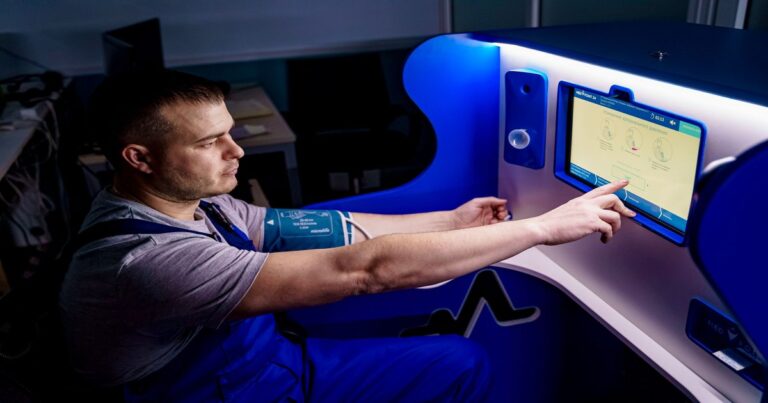
- Smart Blood Pressure Cuffs: These devices automatically upload readings to a nurse-monitored portal, flagging any spikes that could indicate a stroke risk in New York’s fast-paced environment.
- Wrist-Based Pulse Oximeters: Essential for those with respiratory issues, these wearables track blood oxygen levels overnight, which is a critical metric for monitoring recovery from viruses or managing chronic lung disease.
- Digital Weight Scales: For heart failure patients, a sudden gain of two pounds can mean a trip to the ER; these scales alert the clinical team immediately to adjust medication.
- Smart Thermometers: In 2026, we use ambient temperature sensors and wearable thermometers to detect the earliest onset of infection or heat-related illness during NYC’s humid summer months.
Fall Detection and Mobility Monitoring Technologies
Falls are the leading cause of injury for seniors in New York City, often exacerbated by cramped apartment layouts and uneven flooring. Remote Health Monitoring has revolutionized how we detect and respond to these events.
- Radar-Based Ambient Sensing: These wall-mounted devices use radio waves to detect a fall without the use of cameras, preserving privacy while ensuring that a “hidden fall” in a bathroom never goes unnoticed.
- Gait Analysis Insoles: By placing smart insoles in a senior’s walking shoes, we can track changes in balance and stride, predicting a high fall risk weeks before an accident happens.
- Automatic Fall Detection Pendants: The latest models use advanced accelerometers to distinguish between a senior sitting down quickly and an actual hard fall, reducing false alarms.
- GPS-Enabled Footwear: For seniors with early-stage dementia who enjoy walking in NYC parks, these shoes provide precise location tracking and “safe zone” geofencing alerts for family members.
- Smart Lighting Systems: Integrated with motion sensors, these lights illuminate pathways to the bathroom at night, significantly reducing the environmental risk of tripping.
Integration with NYC Home Care and Medicaid
Navigating the financial and logistical side of Remote Health Monitoring in NYC requires an understanding of the local healthcare ecosystem. The NY State DOH has been instrumental in expanding access to these technologies.
- CDPAP Integration: The Consumer Directed Personal Assistance Program now allows family caregivers to use monitoring data to justify care hours and demonstrate the medical necessity of home interventions.
- MLTC Plan Benefits: Many Managed Long-Term Care plans in the five boroughs now include “Tech Bundles” as part of their standard benefit package to prevent nursing home placement.
- Prescription-Based RPM: Doctors at major NYC centers can now “prescribe” these devices, making them eligible for 100% coverage under many insurance tiers.
- Professional Monitoring Hubs: NYC-based nursing agencies provide 24/7 monitoring centers where licensed LPNs or RNs review alerts and dispatch FDNY or EMS only when truly necessary.
- Language Accessibility: Given NYC’s diversity, the best systems in 2026 offer interfaces in Spanish, Mandarin, Russian, and Bengali, ensuring that the senior and their local aide can understand the device’s status.
Privacy and Data Security for Seniors
A common concern I hear from NYC families is whether these devices are “spying” on their parents. In 2026, the industry has set rigorous standards to protect senior data while providing clinical utility.
- End-to-End Encryption: All health data transmitted from a Brooklyn or Queens home to a doctor’s office is encrypted to the same level as military communications.
- Consent-Based Sharing: Seniors have the power to choose exactly who sees their data—whether it is just their doctor, or their adult children as well.
- No-Camera Policies: Most modern Remote Health Monitoring systems for the home are now “vision-free,” using infrared or radar instead of video to maintain dignity in private spaces like bedrooms and baths.
- HIPAA-Compliant Clouds: Data is stored on secure servers that meet or exceed federal healthcare privacy regulations.
- AI Anonymization: When data is used for broader health trends in NYC, all personal identifiers are removed, ensuring the senior’s identity remains private.
Future Outlook: AI and Predictive Diagnostics
As we look beyond 2026, the role of remote monitoring devices for NYC elderly will continue to expand into the realm of “invisible diagnostics.” The technology is becoming so integrated that we won’t even think of it as “tech” anymore.

- Voice Biomarkers: Smart speakers in the home will be able to detect the early signs of Parkinson’s or depression simply by analyzing the tone and cadence of a senior’s voice.
- Hydration Sensors: Small sensors in water glasses or wearable patches will help prevent the chronic dehydration that often leads to UTIs and confusion in the elderly.
- Smart Toilets: Emerging technology in NYC luxury senior living facilities now includes toilets that perform daily urinalysis to monitor kidney function and hydration.
- Virtual Reality Physical Therapy: Remote monitoring will extend to guided exercise, where a therapist in Manhattan can monitor a patient’s movements in Staten Island via high-definition sensors.
- Community Health Mapping: Aggregated data will help NYC health officials identify neighborhoods where seniors are struggling with specific issues, like heat exhaustion during summer, allowing for targeted community support.
Nurse Insight: In my experience, the biggest hurdle isn’t the technology itself—it is the conversation you have with your parent about it. I always tell NYC families to frame these devices not as a “monitor” but as a “security guard” that allows them to keep their cherished independence. When a senior realizes that a smart watch means they can keep living in their favorite neighborhood instead of moving to a facility, they are much more likely to embrace it. Don’t wait for a crisis; start the integration slowly so they can get comfortable with the tools while they are still healthy.
Frequently Asked Questions
How much do remote monitoring devices for NYC elderly cost per month?
Costs vary depending on the level of service. Hardware can range from $100 to $500, with monthly monitoring fees between $30 and $150. However, most NYC seniors with chronic conditions can get these costs covered by Medicare or Medicaid if prescribed by their doctor as part of a Remote Patient Monitoring program.
Will these devices work if my parent doesn’t have Wi-Fi in their apartment?
Yes. Most professional-grade Remote Health Monitoring systems in 2026 come with their own built-in cellular SIM cards (similar to a smartphone). They do not require the senior to have a home internet connection to transmit life-saving data to their medical team.
Can these tools detect a stroke or heart attack immediately?
While no device is 100% foolproof, modern ECG wearables and pulse oximeters can detect arrhythmias like Atrial Fibrillation or sudden drops in oxygen that are common precursors or indicators of cardiac and neurological events. They are designed to alert emergency services much faster than a human could in many cases.
What happens if the power goes out in the building?
Almost all high-quality monitoring hubs for seniors include a 24-hour backup battery. Additionally, the wearables themselves are typically rechargeable or have long-lasting coin-cell batteries that are unaffected by building power outages, which is a common concern during NYC summer grid strain.
How do I choose between a smartwatch and a medical alert pendant?
It depends on the senior’s cognitive state and lifestyle. Smartwatches are great for active seniors who want extra features like step tracking, but they require daily charging. Pendants or “invisible” wall sensors are better for seniors with memory issues who might forget to put a watch on or charge it.
Contact ProLife Home Care NYC for a free clinical assessment:(718) 232 – 2777