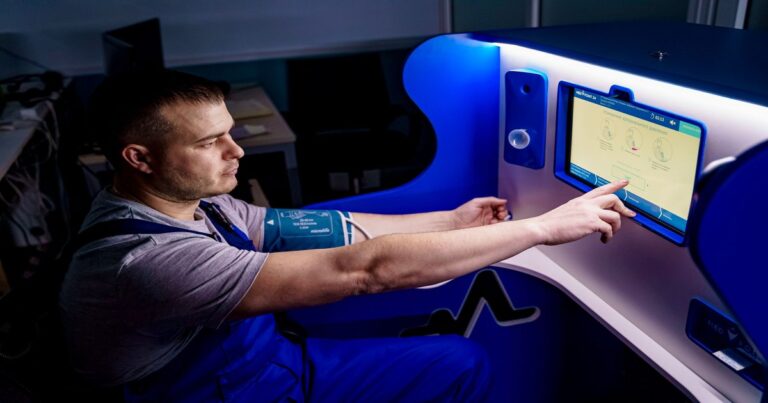

Caring for an aging parent in the fast-paced environment of New York City often brings a constant sense of worry regarding their daily health status. Smart mirrors for senior health provide a non-intrusive way to monitor vital signs during the simplest of morning routines, like brushing teeth or washing up. These innovative devices offer families peace of mind by capturing subtle changes in health before they become emergencies. By integrating technology into existing habits, we can ensure our seniors remain safe and supported without compromising their dignity or independence.
Clinical Quick Answer
Smart mirrors utilize advanced optical sensors and AI-driven computer vision to monitor heart rate, oxygen saturation, and skin temperature with clinical-grade accuracy. This data serves as a vital preliminary screening tool that complements a formal Nursing Assessment NYC for seniors aiming to age in place. By providing continuous longitudinal data, these devices allow healthcare providers to detect early warning signs of cardiovascular or respiratory distress in a home setting.

The Integration of Smart Mirrors for Senior Health in Urban Care
In the dense urban landscape of New York City, where clinic visits can be physically demanding for seniors, smart mirrors for senior health represent a significant leap forward in geriatric care. These devices are not merely “gadgets”; they are sophisticated medical-grade interfaces disguised as everyday household objects. For a senior living in a Manhattan apartment or a Brooklyn brownstone, the bathroom mirror is the first point of contact each morning. By embedding health-tracking technology into this surface, we eliminate the need for cumbersome wearable devices that many seniors find uncomfortable or forget to charge.
- Reduction in “white coat syndrome” as vitals are taken in a relaxed, familiar environment.
- Early detection of edema or facial asymmetry, which can be early indicators of heart failure or stroke.
- Automated data logging that provides a clearer picture of health than sporadic clinic visits.
- Improved medication adherence through visual reminders displayed directly on the mirror surface.
- Enhanced communication between family members and remote clinical teams through integrated dashboards.
- Passive monitoring that respects the senior’s privacy while ensuring 24/7 oversight.
Technological Foundations: How Bathroom AI Works
The core technology behind smart mirrors for senior health involves a process known as photoplethysmography (PPG) and advanced computer vision. When a senior stands in front of the mirror, high-resolution cameras detect microscopic changes in skin color that occur with every heartbeat. This “blood flow mapping” allows the device to calculate heart rate and heart rate variability without any physical contact. In New York’s competitive healthcare market, this technology is becoming a cornerstone for home-based care packages, allowing agencies to offer a higher level of surveillance for high-risk patients.
- High-definition sensors capable of detecting subtle tremors associated with neurological conditions.
- AI algorithms trained on geriatric datasets to distinguish between normal aging and clinical pathology.
- Thermal imaging layers that can identify localized inflammation or fever before the patient feels symptomatic.
- Natural language processing (NLP) that allows the mirror to ask, “How did you sleep?” and analyze the vocal tone for signs of depression or cognitive decline.
- Cloud-based integration that securely transmits data to the primary care physician’s electronic health record.
- Multi-user recognition to ensure the mirror distinguishes between the senior and their home health aide.
Enhancing the Nursing Assessment NYC Experience
A professional Nursing Assessment NYC is a critical requirement for Medicaid services and home care planning. Historically, these assessments provided only a “snapshot” of the patient’s health at the moment the nurse visited. Smart mirrors transform this process by providing a “film” of data leading up to the assessment. When a nurse visits a home in Queens or the Bronx, they can review thirty days of mirror-captured data to see if the patient’s blood pressure has been spiking in the mornings or if their gait has become unsteady over the last week.
- Objective data to support the clinical findings of the visiting Registered Nurse.
- Identification of “sundowning” behaviors in dementia patients through activity tracking.
- Correlation between morning vitals and the patient’s subjective complaints.
- Ability to adjust the Plan of Care (POC) based on real-time physiological trends.
- Streamlining the documentation process for Medicaid Managed Long Term Care (MLTC) approvals.
- Increased accuracy in determining the appropriate number of home care hours required based on functional decline.
Monitoring Chronic Conditions with Passive Sensing
For seniors in New York City managing chronic diseases like Chronic Obstructive Pulmonary Disease (COPD) or Congestive Heart Failure (CHF), daily monitoring is a necessity, not a luxury. Smart mirrors for senior health can be programmed to specifically look for signs of these conditions. For instance, the mirror can analyze the respiratory rate and the use of accessory muscles during breathing, which might indicate a COPD exacerbation. In CHF patients, the mirror can prompt the user to step on a connected Bluetooth scale, then display the weight trend alongside a visual check for lower-extremity swelling.
- Real-time alerts for bradycardia or tachycardia sent directly to emergency contacts.
- Visual cues for skin integrity, helping to identify pressure ulcers or diabetic foot issues early.
- Tracking of “gait speed” as a vital sign for frailty and fall risk assessment.
- Hydration monitoring through skin turgor analysis and visual check-ins.
- Integration with pulse oximetry for continuous SpO2 monitoring during morning routines.
- Sleep quality proxies based on facial appearance and eye bag inflammation markers.
Privacy, Security, and Ethical Considerations in NYC Home Care
One of the primary concerns for families regarding smart mirrors for senior health is privacy. Given that these devices are often placed in bathrooms, manufacturers have had to implement rigorous security protocols. Most devices do not store actual video footage; instead, they convert the visual data into numerical values and skeletal maps that represent health metrics. In New York, where healthcare privacy laws are strictly enforced, ensuring that these devices are HIPAA-compliant is essential for any agency incorporating them into a Nursing Assessment NYC or daily care plan.
- End-to-end encryption for all data transmitted from the home to the clinical server.
- Physical privacy shutters or software-based “blind modes” for sensitive moments.
- Granular consent controls, allowing the senior to choose exactly what data is shared and with whom;
- Local processing (edge computing) to ensure sensitive data never leaves the device unnecessarily.
- Strict adherence to New York State’s SHIELD Act regarding data breaches and consumer protection.
- Regular software audits to prevent unauthorized access to the mirror’s camera or microphone.
The Future of Aging in Place: Predictive Analytics
The ultimate goal of smart mirrors for senior health is to move from reactive care to predictive care. By using machine learning, these mirrors can learn a senior’s “baseline” and flag deviations that the human eye might miss. For example, if a senior’s movement pattern changes slightly—perhaps they are leaning more on the sink than usual—the AI can flag this as an increased fall risk. In the context of the busy NYC healthcare system, this proactive approach can prevent unnecessary hospitalizations at facilities like Mount Sinai or NYU Langone, keeping seniors in the comfort of their own homes longer.
- Integration with “Smart Home” ecosystems to adjust lighting if the mirror detects visual impairment.
- Long-term cognitive tracking by analyzing facial expressions and engagement over months.
- Collaboration with NYC-based telehealth platforms for immediate virtual doctor visits.
- Social connectivity features to reduce isolation by allowing video calls with family.
- Nutritional advice based on visual signs of vitamin deficiencies (e.g., pale conjunctiva).
- Community-wide data analysis to track the spread of seasonal illnesses like the flu among the elderly population.
Nurse Insight: In my experience conducting a Nursing Assessment NYC, the biggest challenge is often the patient’s tendency to “perform” during the visit. They want to show they are doing well, so they stand straighter and hide their pain. Smart mirrors for senior health are game-changers because they capture the raw, honest data of daily life. If I see a mirror report showing three days of decreased activity and a slight grayish tint to the skin, I know I need to dig deeper into their cardiac status, even if the patient says they feel fine. This technology doesn’t replace the nurse; it gives us the eyes we need when we aren’t in the room.
Frequently Asked Questions
Are smart mirrors for senior health covered by Medicare or Medicaid in NYC?
Does the mirror record video of my loved one in the bathroom?
How accurate are these mirrors compared to traditional blood pressure cuffs?
Can a smart mirror help if my parent falls in the bathroom?
Is the technology easy for seniors who are not tech-savvy to use?
Contact ProLife Home Care NYC for a free clinical assessment:(718) 232 – 2777