
Shingles (herpes zoster) is a painful rash illness caused by the varicella-zoster virus, the same virus that causes chickenpox. After chickenpox, the virus stays in the body and can wake up decades later, most often in adults over 50. Shingles itself does not spread from person to person, but fluid from the blisters can give chickenpox to someone who never had chickenpox or the vaccine, until the rash scabs over. The two-dose Shingrix vaccine is the main way to lower the risk.
What is shingles, and what causes it?
According to the CDC, shingles happens when the varicella-zoster virus reactivates in a person who already had chickenpox. The National Institute on Aging explains that the virus keeps living in some nerve cells after chickenpox, usually a childhood illness. For many adults it stays quiet. For about one in three, it becomes active again and causes shingles.
Researchers do not fully understand why it wakes up in some people and not in others. Both CDC and NIA name age and a weaker immune system as the main risk factors. NIA lists HIV, cancer and cancer treatments, organ transplant drugs, and chronic diseases such as diabetes and arthritis. About half of all cases are in adults 60 and older, and the chance gets much greater by age 70.
Can you get shingles if you never had chickenpox?
Almost never. Shingles comes from the chickenpox virus already in the body, so the person has to have had chickenpox, or, rarely, the chickenpox vaccine, first. The CDC says more than 99% of Americans born before 1980 had chickenpox, whether or not they remember it. That is why CDC says adults can get Shingrix even if they do not remember having chickenpox.
What are the early signs of shingles, and what does the rash look like?
The first sign is often not a rash. NIA describes burning, tingling, itching or numbness on one side of the body, which can come one to five days before anything shows on the skin. CDC adds that a fever can come first.
The rash itself is usually a single stripe of small, fluid-filled blisters on one side of the body, most often wrapping around the trunk, or on one side of the face. MedlinePlus says the pain can range from mild to severe, and NIA notes that for some people even the gentlest touch or breeze hurts. Other symptoms can include chills, headache and an upset stomach.
| Stage | What happens (NIA) |
|---|---|
| Before the rash | Burning, tingling or numb skin on one side of the body |
| 1 to 5 days later | A red rash appears |
| A few days after that | The rash turns into fluid-filled blisters |
| About 1 week to 10 days after that | The blisters dry up and crust over |
| A couple of weeks later | The scabs clear up |
NIA says most cases last three to five weeks. In rare cases, mostly in people with weakened immune systems, the rash is more widespread and can look like chickenpox.
Are shingles contagious?
You cannot catch shingles from someone who has it. The CDC states this directly. What can spread is the virus. Direct contact with fluid from the blisters, or breathing in virus particles from them, can give chickenpox to a person who never had chickenpox or the chickenpox vaccine. That person could later develop shingles themselves.
How contagious is shingles, and for how long?
Less than chickenpox. The CDC says people with chickenpox are more likely to spread the virus than people with shingles, and MedlinePlus says the risk is low when the rash is kept covered. A person with shingles can spread the virus while the blisters are present. Per the CDC transmission page, they cannot spread it before the blisters appear or after the rash scabs over.
| Who is around the person | What CDC says |
|---|---|
| Anyone who never had chickenpox or the chickenpox vaccine | Can get chickenpox from contact with the rash, so should avoid contact until it scabs over |
| Pregnant women who never had chickenpox or the vaccine | Should avoid contact until the rash scabs over |
| Premature or low birth weight infants | Should avoid contact until the rash scabs over |
| People with weakened immune systems | Should avoid contact until the rash scabs over |
| People who already had chickenpox | Cannot get shingles from someone who has it |
What should caregivers and home health aides do to prevent spread?
These steps come from CDC and NIA and matter most where a baby, a pregnant relative or someone with a weakened immune system lives or visits.
- Keep the rash covered. This is the single most useful step, because the virus spreads through the blister fluid.
- Do not touch or scratch the rash. If the rash is touched, wash hands right away.
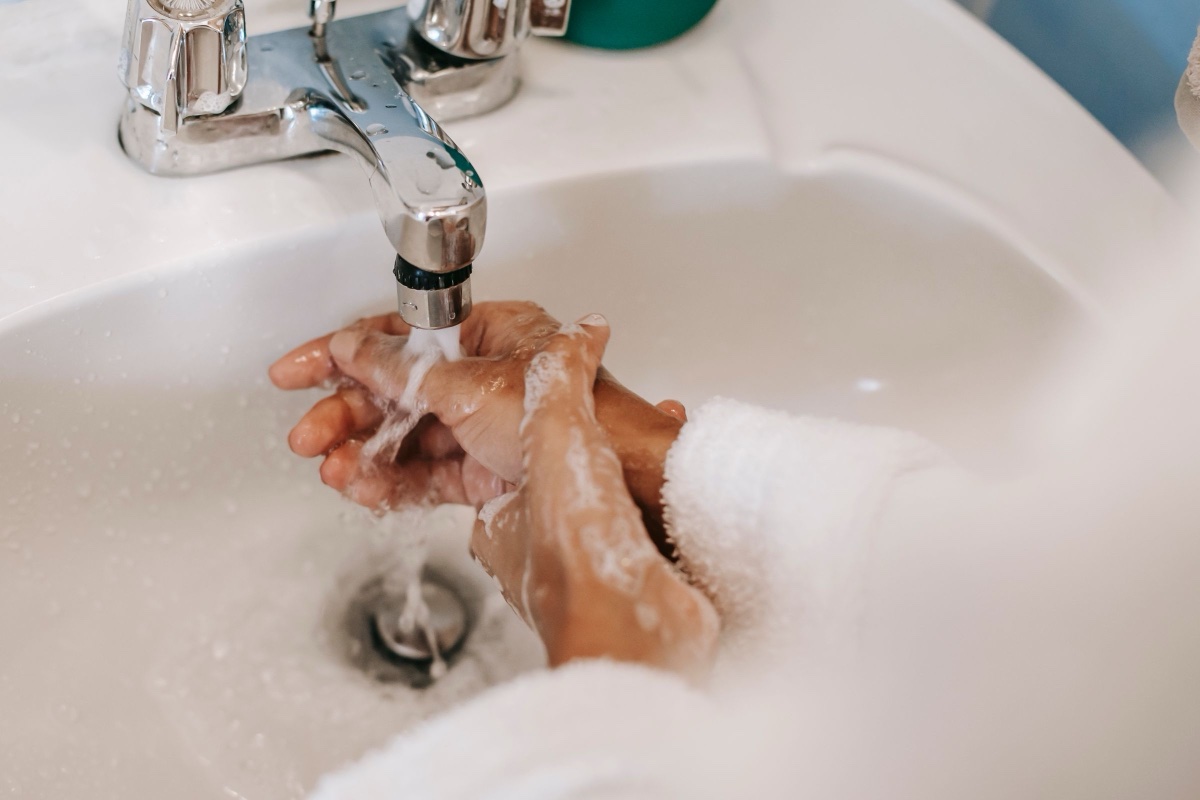
- Wash hands often. CDC says at least 20 seconds each time.
- Keep visitors in mind. Ask anyone who is pregnant, immunocompromised, or has never had chickenpox or the vaccine to wait until the rash has scabbed over. CDC says the same about people with active lesions: avoid contact with susceptible people at home and work until the lesions are dry and scabbed.
- Tell everyone who provides care. An aide or relative unsure of their own chickenpox history should ask their own clinician.
Our in-home care and personal care pages describe the daily help an aide can give while the person recovers.
When should someone get care for shingles, and how fast?
As soon as possible. NIA says to see a doctor no later than three days after the rash starts, and the CDC clinical overview says treatment is most effective within 72 hours of symptom onset. There is no cure, but according to NIA, early treatment with antiviral medicine can help the blisters clear up faster and limit severe pain. The CDC lists acyclovir, valacyclovir and famciclovir as the preferred antivirals. They are prescription medicines, so whether one is right, and at what dose, is for the clinician to decide, and nobody should start or stop a medicine on their own.
Blisters on the face or near an eye need care right away. NIA says blisters near or in the eye can cause lasting eye damage and blindness, and CDC says shingles on the face can affect the eye and cause vision loss. If the rash is anywhere near the eye, call the doctor or go to urgent care the same day rather than waiting for a routine appointment.
What complications can shingles cause?
| Complication | What the sources say |
|---|---|
| Postherpetic neuralgia (PHN) | Ongoing pain in the area where the rash was. The older the person, the greater the chance. It can affect sleep, mood, appetite and everyday tasks. No cure, but it can be treated, and for most people it lessens over time (NIA) |
| Eye involvement | Can cause lasting eye damage and vision loss (NIA, CDC) |
| Hearing loss and facial weakness | NIA says hearing loss and brief paralysis of the face can occur; CDC also lists hearing loss |
| Brain inflammation, pneumonia | Listed by CDC as possible complications; NIA calls brain inflammation very rare |
If pain, low mood or poor sleep continues after the rash is gone, tell the doctor. Our guides on loneliness and mental health and nutrition for seniors cover the daily-life side.
How do you manage shingles pain and stay comfortable at home?
NIA gives these comfort measures for people recovering from shingles:
- Wear loose-fitting, natural-fiber clothing.
- Take an oatmeal bath or use calamine lotion to soothe the skin.
- Apply a cool washcloth to the blisters to ease pain and help them dry.
- Keep the area clean and avoid scratching, so the blisters do not get infected or leave a scar.
- Rest, eat balanced meals and take the mind off the pain with TV, reading or calls with friends.
- Try light activity such as stretching or walking, after checking with the doctor.
For pain medicine, ask the doctor or pharmacist what is safe with the person’s other prescriptions. Older adults often take several medicines, and our medication management guide explains how to keep a clear list to show at the visit. If the person lives alone, someone can help with meals and getting to appointments. A medical escort from ProLife is an aide who goes into the appointment with the person.
Can you get shingles more than once?
Yes. The CDC says most people have only one episode but shingles can recur, and the exact recurrence rate is not known. MedlinePlus calls a second case rare but possible. Having had shingles does not replace the vaccine: the CDC says people who had shingles should still get Shingrix, and should wait until the rash has gone.
Who should get the Shingrix vaccine, and how often?
Shingrix is a series of two doses, not a yearly shot. The CDC shingles vaccination page (dated 19 August 2025) recommends it for adults 50 and older, with no maximum age, and for adults 19 and older with weakened immune systems.

| Group | Doses | Timing |
|---|---|---|
| Adults 50 and older | 2 | Second dose 2 to 6 months after the first |
| Adults 19 and older with a weakened immune system | 2 | Second dose can come 1 to 2 months after the first if needed |
CDC says to get Shingrix even if you already had shingles, had the chickenpox vaccine, or received the older Zostavax, which has not been available in the U.S. since 2020. It also says healthy adults 50 to 69 were 97% protected against shingles and adults 70 and older 91%, and that the vaccine was 91% effective at preventing PHN in adults 50 and older. Protection stayed high for at least seven years in healthy adults 70 and older, and the page does not list a booster.
Per CDC, people should wait if they currently have shingles, are moderately or severely ill, or are pregnant, and should not get it after a severe allergic reaction to a previous dose or to a vaccine component. A cold alone does not prevent vaccination. Side effects, usually a sore arm, tiredness, muscle pain, headache, chills or fever, last two to three days. Guillain-Barre syndrome has been reported very rarely. Whether the vaccine is right for a given person is a question for their doctor or pharmacist.
Does Medicare cover the shingles vaccine?
Yes, through Part D. Medicare.gov says you pay nothing for the shingles vaccine if you have Part D, and that your plan will not charge a copayment or apply a deductible for vaccines ACIP recommends. A CMS release from May 2024 says the Inflation Reduction Act eliminated cost sharing for all adult vaccines covered under Part D starting 1 January 2023.
People often ask about the Part D out-of-pocket cap. Medicare.gov puts it at $2,100 in 2026 and $2,400 in 2027 for covered drugs, but the shingles vaccine has no cost sharing, so it does not use any of it. Without Part D, ask your plan or doctor about coverage first. Our guide to what Medicare covers for home care explains the other parts of Medicare.
Where can you get the shingles vaccine in New York City?
NIA says you can get the shingles vaccine at your doctor’s office and at some pharmacies. Two practical steps:
- Call ahead. Ask whether the site has Shingrix in stock and whether they bill your Part D plan, since not every location carries it.
- Use the pharmacy finder. Vaccines.gov lets you search for pharmacies by ZIP code.
Our guide to senior vaccines in New York covers the other shots and clinics, and the senior medical transportation guide explains rides to appointments. For someone who needs a nurse’s help with care at home, see our nurse services page.
We are a licensed home care agency in Brooklyn and Queens, licence #2572L001, New York State Department of Health. We do not diagnose or treat shingles, but if a parent is recovering at home and needs help with meals, bathing, getting to the doctor or a few hours of company, call us at (718) 232-2777 or use our contact page.
Medical guidance and Medicare rules change. Everything above was checked on 14 October 2026 against cdc.gov, nia.nih.gov, medlineplus.gov, medicare.gov and cms.gov. Confirm your own situation with the person’s doctor or pharmacist and with Medicare or the plan. This page is general information, not medical advice.
Frequently asked questions
Are shingles contagious?
You cannot catch shingles from another person. But fluid from the blisters can spread the chickenpox virus to someone who never had chickenpox or the vaccine, who would then get chickenpox, not shingles. The CDC says this is possible only while the blisters are present, not before they appear or after they scab over.
How contagious is shingles?
Less than chickenpox. CDC says people with chickenpox are more likely to spread the virus than people with shingles, and MedlinePlus says the risk is low if the rash is covered. People who should avoid contact until the rash scabs over include pregnant women who never had chickenpox or the vaccine, premature or low birth weight infants, and people with weakened immune systems.
What causes shingles?
The chickenpox virus (varicella-zoster) waking up again in nerve cells where it stayed after the original infection. Researchers do not fully know why it reactivates in some people. Older age and a weakened immune system raise the risk.
Can you get shingles more than once?
Yes. Most people have it only once, but the CDC says it can recur and the exact rate is not known. People who have had shingles should still get Shingrix, after the rash has gone.
Can you get shingles if you never had chickenpox?
Almost never. You need the virus in your body, which comes from chickenpox or, rarely, the chickenpox vaccine. CDC says more than 99% of Americans born before 1980 had chickenpox, even if they do not remember it, and adults can get Shingrix regardless.
How often do you need the shingles vaccine?
CDC recommends two doses of Shingrix, 2 to 6 months apart, for adults 50 and older, and two doses for adults 19 and older with weakened immune systems. It is not a yearly shot, and the CDC page does not list a booster.
Does Medicare pay for Shingrix?
Yes. Medicare.gov says Part D covers the shingles vaccine and you pay nothing, with no copayment or deductible for vaccines ACIP recommends. Ask the pharmacy or doctor’s office whether they can bill your Part D plan.