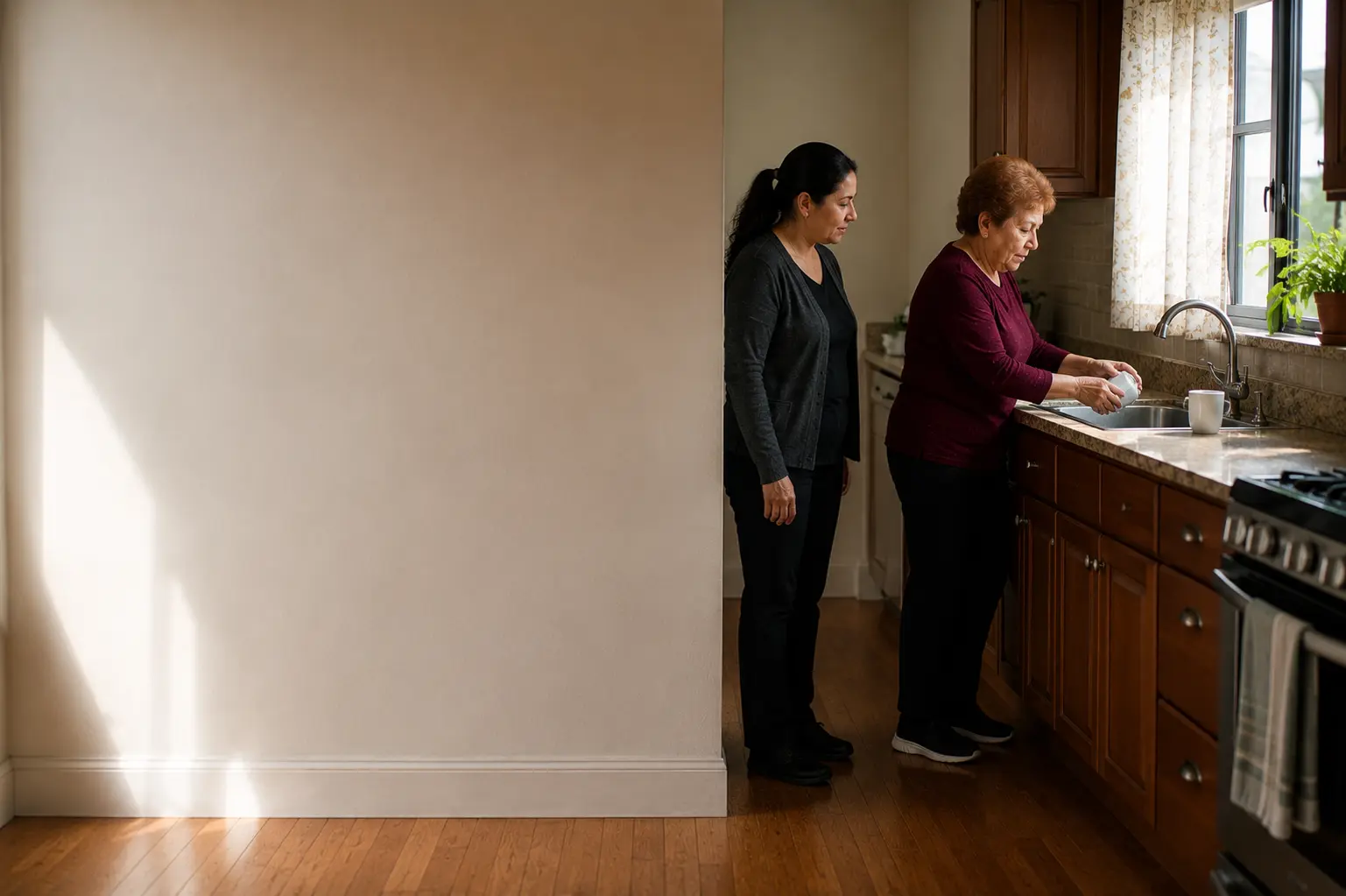
Puede caminar hasta la cocina.
Lo que ya no puede es prepararse el almuerzo
Terapia ocupacional a domicilio en Nueva York
Las piernas están bien. Lo que se rompió es la secuencia: alcanzar la sartén, sostener el frasco, estar de pie el tiempo suficiente para terminar. La terapia ocupacional a domicilio trabaja esas tareas y cambia el apartamento cuando el apartamento es el problema.
We will match a therapist near home.
A therapist shows what to change in the apartment.
Listo. Su solicitud está con un coordinador y le llamaremos.
Su información es privada y segura.
La diferencia entre terapia ocupacional y fisioterapia
Todo el mundo pregunta esto primero, y la respuesta cabe en una línea: la fisioterapia trata de moverse; la terapia ocupacional trata de hacer.
Una trabaja el cuerpo: fuerza, equilibrio, caminar. La otra trabaja la tarea: si al final ella puede de verdad vestirse, lavarse y preparar una comida. Alguien puede recuperar la fuerza para estar de pie frente a una encimera y aun así no poder cocinar, porque cocinar es una secuencia de pasos, alcances y agarres, no un solo movimiento.
| Terapia ocupacional | Fisioterapia | |
|---|---|---|
| El objetivo | Sacar adelante el día de forma independiente | Moverse con seguridad y con fuerza |
| Una sesión típica | Practicar una tarea real y después ajustar el método o el equipo | Ejercicio, práctica de marcha, trabajo de equilibrio, traslados |
| Un ejemplo | Vestirse con una sola mano después de un derrame; una silla de ducha y una esponja de mango largo | Caminar hasta la esquina con bastón en lugar de andador |
| Mira el apartamento | Sí: distribución, alturas, iluminación, almacenamiento, baño | Sobre todo los recorridos: escaleras, pasillos, el camino al baño |
| Cuándo hacen falta las dos | Después de un derrame, una caída o una hospitalización larga, que es la mayoría de las veces. Normalmente se indican juntas, no una después de la otra. |
Qué cambia un terapeuta ocupacional en el apartamento
La terapia ocupacional a domicilio es en parte enseñar un método nuevo. Buena parte es acercar el apartamento a la persona, para que haya menos que reaprender de entrada.

- Barras de apoyo, en los lugares correctos Al lado del inodoro y dentro de la tina, a la altura que le conviene a esta persona, no donde la pared resultó cómoda. El terapeuta marca el punto y la altura; ponerlas es trabajo de un instalador, no de terapia.
- Una silla de ducha y una regadera de mano Estar de pie durante el baño es donde ocurren muchísimas caídas de baño. Hacerlo sentada quita el riesgo por completo.
- Alturas de asientos y de la cama Un asiento de inodoro elevado, una silla más firme, una cama a la altura en la que levantarse no exija tomar impulso.
- La cocina, reorganizada Los platos y las ollas de todos los días bajados a la altura de la encimera. Nadie debería subirse a un banquito por las cosas que usa dos veces al día.
- Equipos adaptados Un calzador de mango largo, un ponemedias, un alcanzador, un abridor de frascos, cubiertos con peso. Objetos pequeños que devuelven una tarea entera.
- Alfombras, cables e iluminación La alfombrita del pasillo y la lámpara que nadie alcanza desde la cama causan más lesiones de las que la mayoría creería.
- Métodos nuevos para tareas de siempre Vestirse con una sola mano útil, lavarse sentada, cocinar por etapas en lugar de todo de una vez.
- Ahorro de energía Dónde sentarse, cuándo descansar, en qué orden hacer las cosas, para que el día no se acabe antes que las partes importantes de él.
La evaluación de seguridad del hogar
Una evaluación de seguridad del hogar es un recorrido habitación por habitación del apartamento buscando lo que causa caídas y lesiones. Iluminación, alfombras y cables, la distribución del baño, alturas de asientos y de la cama, qué está guardado fuera de alcance, qué tan ancho es el paso entre la cama y el baño a las tres de la madrugada. Normalmente lleva menos de una hora.

Lo que usted recibe al final es una lista escrita, ordenada por cuánta diferencia hace cada punto y no por lo fácil que es. Parte no cuesta nada: mover la alfombra, cambiar el foco, despejar el pasillo. Parte es una compra de veinte o treinta dólares. Una parte pequeña necesita un instalador. Para ser claros con el reparto de tareas: nosotros evaluamos y recomendamos, y la familia organiza la instalación. Vale la pena saberlo de antemano, porque una lista de cambios solo sirve si alguien va a hacerlos.
Vale la pena hacerla antes de una caída y no después, y es la hora de terapia ocupacional más útil para una familia que está sobre todo preocupada y no lidiando con una lesión concreta.
Cuándo las familias necesitan terapia ocupacional
La terapia ocupacional a domicilio se indica después de un derrame, con demencia, después de una fractura de hombro o de muñeca, con artritis y con pérdida de visión.
Después de un derrame. Un lado está más débil o no colabora, y cada tarea del día que necesita dos manos hay que reconstruirla: botones, frascos, lavarse, cortar la comida. Este es el motivo más frecuente de derivación.
Con demencia. El trabajo pasa de enseñar a simplificar: menos opciones, la ropa puesta en orden, etiquetas donde ayudan, peligros retirados. Buena parte es orientar a quien cuida, porque el entorno hace más trabajo del que puede hacer una instrucción.
Después de una fractura de hombro, muñeca o brazo. Caminar está bien. Vestirse, lavarse el pelo y abrir envases no, y un cabestrillo cambia el método de cada una de esas cosas.
Con artritis. Protección articular, ayudas de agarre y formas de hacer la misma tarea con menos esfuerzo, para que siga siendo posible más tiempo.
Con pérdida de visión. Contraste, iluminación, etiquetado y colocación constante, para que ella pueda orientarse de memoria y por el tacto cuando la vista ya no hace todo el trabajo.
Cuando la preocupación es general. Ningún hecho concreto, solo la sensación creciente de que las cosas no se manejan tan bien como antes. Ese es un motivo legítimo para preguntar, y suele ser donde empieza una evaluación de seguridad del hogar. La edad no es un filtro: casi todo este trabajo es con adultos mayores, pero con una orden médica no se rechaza a un paciente más joven ni a un niño por serlo. Lo que funciona distinto son los programas estatales para niños, Early Intervention y los servicios del distrito escolar, que pasan por sus propias aprobaciones y no por nosotros.
Terapia ocupacional después de un derrame
La recuperación tras un derrame se describe en términos de caminar, porque caminar se ve. Pero lo que decide si alguien vive de forma independiente son cosas más chicas: abrocharse un botón, sostener una taza sin derramarla, pasar una camisa por un brazo débil, arreglárselas en el baño sin otra persona presente.

Un terapeuta ocupacional trabaja el lado afectado donde puede recuperarse, y enseña compensaciones donde no: técnicas para vestirse con una mano, equipos adaptados, ordenar una tarea para que el cansancio no la corte a la mitad. Cuando el derrame afectó tanto la atención o la planificación como el movimiento, el trabajo también cubre recordar los pasos y mantenerlos.
El habla y la deglución las atiende otro especialista, y después de un derrame las tres se indican con frecuencia juntas. Vea terapia del habla y de la deglución.
Cuánto cuesta la terapia ocupacional a domicilio y cada cuánto viene un terapeuta
Para el pago privado publicamos el precio abiertamente, cosa que casi ninguna agencia de Nueva York hace.
Los precios dependen del condado. El tiempo de viaje por la ciudad varía lo suficiente como para que un solo número plano no fuera honesto. Su dirección se confirma en la llamada antes de agendar nada, y con ella se confirma la tarifa. Hay paquetes para fisioterapia; la terapia ocupacional la facturamos visita por visita.
Dos formas de pagarlo
Pagar de forma privada es lo más rápido: nada que autorizar, y la agenda arranca cuando usted decide. La otra vía es una agencia certificada de salud en el hogar que ya esté siguiendo el caso, y ahí la CHHA fija las condiciones y le factura a la familia, no nosotros. Por qué no podemos facturar a Medicare directamente, y cómo encajan Medicaid y los planes MLTC, está explicado en quién paga la terapia a domicilio.
Cada cuánto viene un terapeuta
Una evaluación de seguridad del hogar por sí sola puede ser una única visita. Después de un derrame el tratamiento suele durar más y se solapa con la fisioterapia.
Qué decide el número de visitas
El plan de cuidado, escrito después de la primera evaluación y revisado según cambien las cosas. Buena parte del valor está en lo que pasa entre visitas: una barra de apoyo en el lugar correcto funciona todos los días, y un método aprendido una vez hay que usarlo sin que el terapeuta esté allí de pie.
¿No está seguro de que esto sea terapia ocupacional? Describa qué dejó de hacer ella por el apartamento y una enfermera le dirá en una sola llamada qué terapia encaja y cuánto costaría.
Cuando una sola terapia no es todo el cuadro
La terapia ocupacional trata de hacer las tareas cotidianas, la fisioterapia trata de moverse, y la terapia del habla cubre hablar y tragar. Dos suelen ir junto a esta, y después de un derrame las tres tienden a llegar en la misma hoja de indicaciones.
Las tres terapias comparadas · Cuidado de Alzheimer y demencia · Servicios de asistente de salud en el hogar
Terapia ocupacional a domicilio en Nueva York y el condado de Nassau
Los terapeutas ocupacionales visitan casas en Brooklyn, Queens, Manhattan, el Bronx, Staten Island y el condado de Nassau, con licencia NY DOH n.º 2572L001. Como buena parte del trabajo es sobre el apartamento mismo, la primera visita es donde el terapeuta ve el baño de verdad y la cocina de verdad. Una primera visita normalmente se puede organizar desde 24 horas después de que usted llame, y la fecha la decide más la dirección que el condado.
Todos los 48 vecindarios
Todos los 47 vecindarios
Todos los 32 vecindarios
Todos los 43 vecindarios
Todos los 37 vecindarios
Todos los 39 vecindarios
- Servicio
- Terapia ocupacional a domicilio
- Dónde
- En la propia casa del paciente
- Condados atendidos
- Kings, Queens, New York, Bronx, Richmond, Nassau
- Licencia
- licencia NY DOH n.º 2572L001, agencia de servicios de cuidado en el hogar con licencia (LHCSA)
- Orden médica
- Obligatoria
- Frecuencia habitual
- 1 a 3 visitas por semana
- Duración habitual
- De 4 a 8 semanas, con revisión a medida que se cumplen los objetivos
- Brooklyn y Queens
- $120 por visita
- Manhattan
- $170 por visita
- Bronx, Staten Island, Nassau
- $170 por visita
- Pagado por
- Pago privado, o por contrato con una agencia certificada de salud en el hogar
- No se factura
- Medicare y Medicaid de atención administrada, que exigen licencia de CHHA
- Supervisión clínica
- Una enfermera registrada escribe y revisa el plan de cuidado
Una enfermera lee la orden antes de que un terapeuta toque su timbre

Anna Klyauzova, RN, MSN, MPA
Anna revisa cada plan de cuidado antes de asignar a nadie. La terapia ocupacional produce una lista de cambios en el apartamento, y la lista es donde los casos se atascan: alguien tiene que poner la barra de apoyo, alguien tiene que seguir usando la silla de ducha, y el asistente que viene los otros días tiene que saber qué se acordó. Esa es la parte que ella resuelve antes de que empiece la agenda.
Es enfermera desde 2011, en el Jacobi Medical Center y después en Mount Sinai, donde dirigió un equipo de quirófano antes de cofundar ProLife en 2017. Su perfil es público en LinkedIn, y la licencia de la agencia es pública en NYS Health Profiles.
Familias que nos llamaron primero
4.9★ de 120 reseñas verificadas de Google en Brooklyn, Queens, Manhattan, el Bronx, Staten Island y el condado de Nassau.
“Very good place. The staff are very friendly. The reception and care is very reliable. I recommend this place to everyone.”
“The staff is very nice and knowledgeable. Irene is always super helpful with all my questions and concerns. Strongly recommended!”
“The best home care agency you can find in New York. Very caring, professional, and knowledgeable staff. Helped me solve all the problems I had. Highly recommended!”
Estas son reseñas de la agencia, no de un terapeuta en particular. Todas son públicas y se pueden leer completas en nuestro perfil de Google.
Lo que las familias nos preguntan primero
La terapia no es la parte difícil. Organizarla, sí.
Deje un número y una enfermera le llama para repasar el caso: qué se indicó, en qué va a consistir y cuánto va a costar. La llamada es gratuita y no le compromete a nada.
¿Prefiere llamar ahora? (718) 232-2777
We will match a therapist near home.
A therapist shows what to change in the apartment.
Listo. Su solicitud está con un coordinador y le llamaremos.
Su información es privada y segura.