
Older New Yorkers on a fixed income can lower their monthly costs through several city and state programs: SCRIE and DRIE freeze the rent for eligible rent-regulated tenants, SCHE and Enhanced STAR cut property taxes for homeowners, and SNAP, HEAP, Medicare Savings Programs and reduced fares cover food, heat, Medicare premiums and transit. Each has its own age and income test, and none of them pays for home care itself. Medicaid does that, and it is a separate application.
Which programs can an older New Yorker use?
Every program checks income, and most also check whether you rent or own. Figures are as published by each agency on 8 October 2026.
| Program | Who qualifies | Where to apply | What you get |
|---|---|---|---|
| SCRIE | Age 62+, rent-regulated tenant, rent above one-third of household income, income under the limit (see next section) | NYC Department of Finance (HPD for Mitchell-Lama/HDFC); 311 | Rent frozen; no further legal rent increases |
| DRIE | Age 18+, receives SSI, SSDI, VA disability benefit or disability-related Medicaid; same rent and income tests | NYC Department of Finance; 311 | Rent frozen |
| SCHE | Homeowner 65+, combined income $58,399 or less, primary residence, owned 12+ months | NYC Department of Finance, by March 15 | 5% to 50% off assessed value |
| Enhanced STAR | Homeowner 65+, income $110,750 or less (2026-27) | NYS Tax Department, Homeowner Benefit Portal | Larger school/city tax benefit on primary residence |
| SNAP | Household with a member 60+ uses a higher income guide: $2,660/month for one person, $3,607 for two | mybenefits.ny.gov; 1-800-342-3009 | Monthly food benefit |
| HEAP | Gross monthly income $3,563 (1 person) or $4,659 (2), or receiving SNAP, TA or SSI | access.nyc.gov; emergency line 718-557-1399 | Heating cost benefit |
| Medicare Savings Programs | Medicare enrollee; income up to $1,856 (QMB) or $2,494 (QI) single, 2026; no asset limit | DOH-4328 form, by mail or in person | Part B premium paid; Extra Help for drug costs |
| Reduced-Fare MetroCard / OMNY | Age 65+ or qualifying disability | MTA customer service centers; 877-789-6669 | $1.50 subway and local bus fare |
How do SCRIE and DRIE rent freezes work?
SCRIE (Senior Citizen Rent Increase Exemption) and DRIE (Disability Rent Increase Exemption) are run together as the NYC Rent Freeze Program. Once approved, your rent is frozen and you are exempt from future legal increases; your landlord gets a tax abatement credit for the difference.
| SCRIE | DRIE | |
|---|---|---|
| Age | 62 or older | 18 or older |
| Disability benefit required | No | SSI, SSDI, VA disability pension or compensation, or disability-related Medicaid if you previously received SSI or SSDI |
| Rent test | More than one-third of monthly household income goes to rent | |
| Eligible apartments | Rent-controlled, rent-stabilized or rent-regulated; Mitchell-Lama and HDFC tenants apply through HPD | Same, plus Mitchell-Lama, Section 236 and HDFC apartments |
| Not eligible | NYCHA units, apartments partly or fully paid by a Section 8 voucher, non-regulated apartments, sublets | |
The income limit is in flux, so check it. The NYC Rent Freeze qualifications page still shows a household income limit of $50,000. But a 2026 New York State Homes and Community Renewal form says that as of 1 July 2026 total household income for SCRIE or DRIE cannot exceed $75,000, which matches the state budget change announced by Assemblymember Linda Rosenthal. If your household earns between the two figures, call 311 or run the city’s Eligibility Tool before assuming you are out.
How to apply:
- Gather copies, never originals. You need proof of age, proof of income (tax returns, Social Security or pension statements, bank statements), your lease documents and, for DRIE, your disability award letter.
- Apply online if you can. The city says online is the best way and is processed faster. A paper application is available if you cannot.
- Get help if stuck. Call 311 (212-639-9675 from outside NYC or by relay), book a virtual appointment, or visit a Department of Finance business center.
- Renew every time the benefit ends. The Department of Finance sends the renewal about 60 days before expiry, and online renewal through the Tenant Access Portal opens in that window.
What tax breaks exist for senior homeowners?
Two programs apply, and many owners miss both. The Senior Citizen Homeowners’ Exemption (SCHE) lowers your home’s assessed value. Per the Department of Finance, owners must be 65 or older (if the owners are spouses or siblings, only one must be), combined income cannot exceed $58,399, the home must be your primary residence, and you must have owned it for at least 12 consecutive months.
| Combined income | Assessed value reduction |
|---|---|
| Up to $50,000 | 50% |
| $50,001 to $52,999 | 45% down to 35%, falling 5 points per band |
| $53,000 to $56,599 | 30% down to 15% |
| $56,600 to $57,499 | 10% |
| $57,500 to $58,399 | 5% |
Apply or renew by March 15 for the benefit that starts on July 1. SCHE is renewed every two years.
Enhanced STAR is a state benefit for owners 65 and older with income of $110,750 or less for the 2026-27 school year. It comes either as an exemption or as a credit, and you register through the Tax Department’s Homeowner Benefit Portal. In New York City the exemption is applied partly to city taxes and partly to school taxes.
Can SNAP, HEAP and Medicare Savings Programs help with daily costs?
SNAP. Households with someone 60 or older use the higher income guide on ny.gov (effective 1 October 2026): $2,660 a month for one person, $3,607 for two. Apply at mybenefits.ny.gov or through your local Department of Social Services; the state hotline is 1-800-342-3009.

HEAP. For 2026-27 the monthly gross income limit is $3,563 for one person and $4,659 for two, and you also qualify if you receive SNAP, Temporary Assistance or SSI. The regular benefit opens on 2 November 2026 and the emergency benefit on 4 January 2027. In New York City you can apply at access.nyc.gov; for an emergency, call 718-557-1399.
Medicare Savings Programs (MSP). According to the New York State Office for the Aging, QMB covers monthly gross income up to $1,856 for a single person and $2,509 for a couple in 2026, and QI covers up to $2,494 and $3,375, with no asset limit for either. Each pays the Part B premium ($202.90 a month in 2026) and automatically enrolls you in Extra Help for prescription costs. One catch: you cannot hold QI and Medicaid at the same time, so people eligible for QI may have to choose between QI and Medicaid with a spend-down. See how Medicaid spend-down works before choosing.
What about transit, senior housing and “senior discounts”?
Reduced fares. Anyone 65 or older, or with a qualifying disability, can get the MTA Reduced-Fare program: $1.50 on subways and local buses, half the $3 base fare. New applicants 65 and over can sign up in person at a subway station customer service center and need only a valid photo ID; mail applications can take up to three months. Riders whose disability prevents them from using buses and subways may qualify for Access-A-Ride.
Senior housing. Affordable apartments, including senior buildings, are advertised through NYC Housing Connect, run by HPD. Income limits and any age rules vary by lottery, and some lotteries give priority to NYC residents who are seniors. Create a profile, apply before each deadline, and expect results to take months. The Affordable Housing Hotline is 212-863-7990 (leave a voicemail). Treat anyone who asks you to pay to enter a lottery as a red flag.
Discounts. There is no single official list of senior discounts. For city services, NYC Aging‘s Aging Connect line at 212-244-6469 (or 311) can direct you to older adult centers, meals and benefits screening.
When does financial help connect to paying for home care?
Rent freezes and tax breaks free up cash but do not pay an aide. If a parent needs hands-on help at home, the routes are Medicaid home care, long-term care insurance, or paying privately, where the cost of home care in New York matters. If income is just over the Medicaid limit, the pooled income trust is one way to qualify.
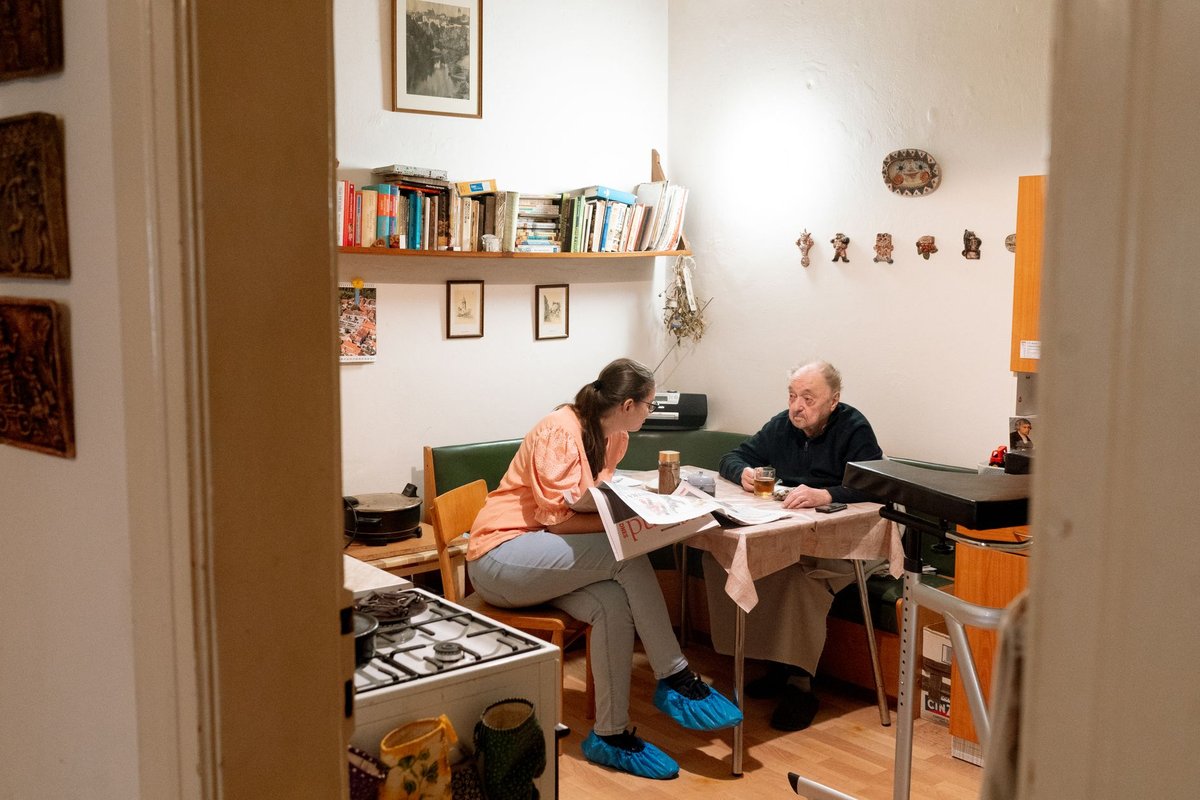
Families often combine them: the rent freeze keeps the apartment affordable, Medicaid covers aide hours, and a few hours of private home care fill the gaps. Adult day care is a lower-cost option for people not yet needing daily care.
Benefits older New Yorkers often miss: advice from our nurse director
Anna Klyauzova, RN, MSN, MPA, Director of Patient Services at ProLife Home Care, on what she sees in practice:
Families often haven’t heard of the Medicare Savings Programs, Extra Help with prescription costs, SNAP, or HEAP for heating bills. Many never check Medicaid or home care eligibility because they assume their income is too high.
If you don’t know what you qualify for, start with what is on the table: insurance, income, benefits already received and the person’s care needs. You don’t have to fill out a dozen applications this week. First find out which programs fit. NYC Aging, NY Connects and Medicaid specialists are good places to ask, and hospital Medical Social Services can help in tricky situations. We help families understand their home care options in Brooklyn and Queens and send them to the right specialist for the rest, so nobody has to sort it out alone.
ProLife Home Care is a licensed home care agency serving Brooklyn and Queens, New York State Department of Health licence #2572L001. We are not a benefits office and cannot file SCRIE, SNAP or Medicaid paperwork, but we can tell you what a realistic care plan costs. Call (718) 232-2777 or use our contact page.
Program limits change every year and the SCRIE/DRIE income figure is in transition. Everything above was checked on 8 October 2026 against nyc.gov, tax.ny.gov, ny.gov, mta.info, aging.ny.gov and the New York State HCR 2026 forms. Confirm your own eligibility with the agency named for each program.
Frequently asked questions
What is the income limit for SCRIE in 2026?
The NYC Rent Freeze Program page still lists $50,000 in combined household income, while New York State’s 2026 HCR forms say the limit is $75,000 as of 1 July 2026. Call 311 or use the city’s Eligibility Tool to confirm which figure applies to you.
Can I get SCRIE if I live in NYCHA or have a Section 8 voucher?
No. The Department of Finance lists NYCHA public housing units and apartments paid partly or fully with a Section 8 voucher as ineligible, along with non-regulated apartments and sublets.
What is the difference between SCRIE and DRIE?
SCRIE is for tenants 62 or older. DRIE is for tenants 18 or older who receive SSI, SSDI, a VA disability benefit or disability-related Medicaid. Both freeze the rent.
When do I apply for the senior homeowners’ exemption (SCHE)?
By March 15 each year for the benefit that begins on July 1 of that year. SCHE must be renewed every two years, and the Department of Finance sends a notice when renewal is due.
Do Medicare Savings Programs pay for home care?
No. QMB and QI pay your Medicare Part B premium and give automatic Extra Help with drug costs, but they are not full Medicaid. Apply for Medicaid separately if you need home care.
How much is the reduced MetroCard fare for seniors?
Riders 65 and older pay $1.50 on subways and local buses, half the $3 base fare. Apply in person with a valid photo ID, or by mail.
Is there a free way to apply for senior housing in NYC?
NYC Housing Connect is the city’s official portal for affordable housing lotteries and is where you create a profile and apply to each listing. Check each listing for age and income rules.