
In New York, Social Security alone rarely covers a nursing home bill. Most families pay privately at first, then apply for Medicaid, which pays the nursing home once the resident’s countable savings are under the state limit. After that, the resident pays most of their monthly income, including Social Security and pension, to the home, keeps $50 a month, and Medicaid pays the rest. Medicare covers only short stays that follow a hospital admission.
Below: how the contribution is calculated, what Medicare pays, the 5-year look-back, spouse protections and when care at home is the other route. Figures are the 2026 numbers from the state Department of Health (DOH). This is general information, not legal advice.
How do you pay for a nursing home with Social Security?
You pay privately until Medicaid starts, then through the Medicaid contribution. The DOH calls it the Net Available Monthly Income, or NAMI: a calculated portion of the resident’s monthly income that the resident is expected to pay toward nursing home costs. The state’s examples of income include Social Security, pensions, wages, rental income and IRA distributions.
The local department of social services (in New York City, the Human Resources Administration) calculates the NAMI. The nursing home usually collects it, or the Medicaid managed care plan does.
The state’s Medicaid Reference Guide sets the order of deductions from income. The NAMI is what is left after these:
| Step | What comes off the monthly income |
|---|---|
| 1 | The personal needs allowance (PNA): $50 a month for a resident of a nursing home with no earned income |
| 2 | Health insurance premiums |
| 3 | Support for children under 21 for whom the resident is legally responsible |
| 4 | Medical or remedial care expenses that neither Medicaid nor another insurer pays |
Here is an illustration with made-up numbers, not a prediction. A single resident receives $2,000 from Social Security and $400 from a pension. If no other deduction applies, $2,400 minus the $50 allowance leaves a NAMI of $2,350 a month. Medicaid pays the home’s remaining charge. The DOH adds that a mortgage payment is not deducted when the NAMI is calculated.
The NAMI can change when income changes. If it looks wrong, contact the local department; the notice also explains how to request a fair hearing.
What does Medicare pay for in a nursing home?
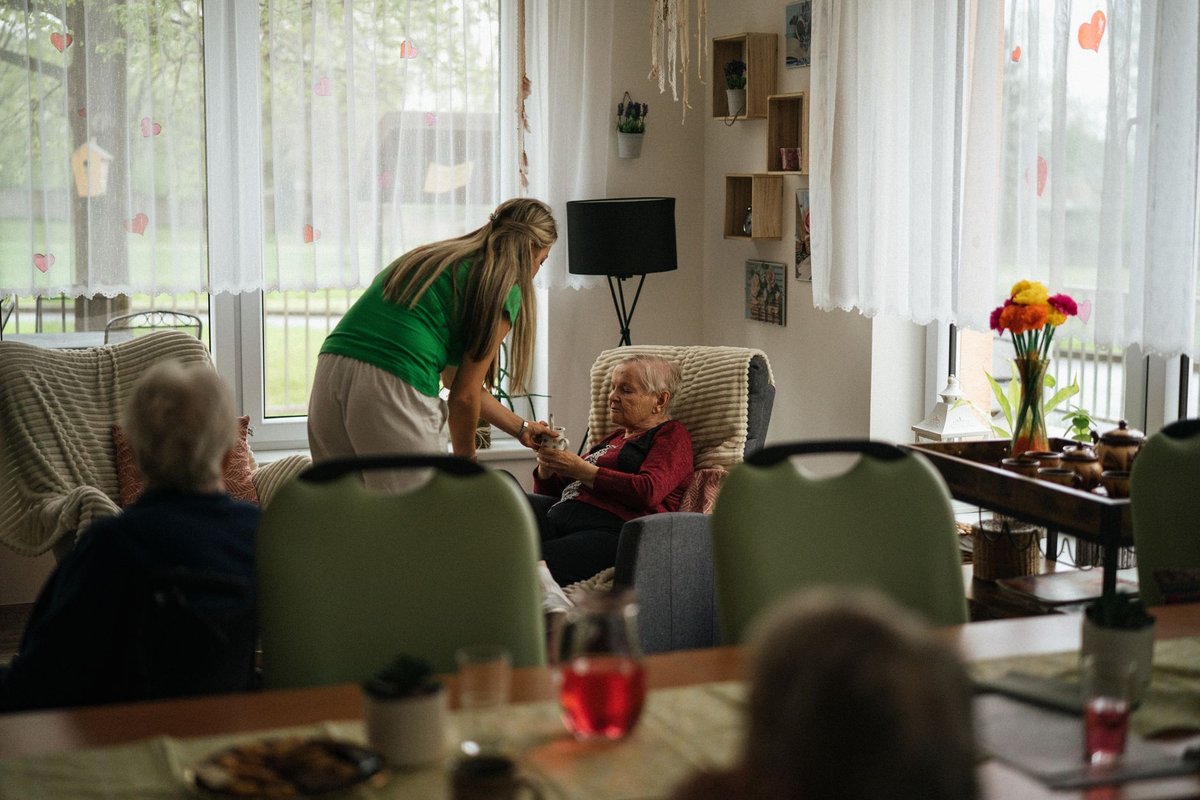
Medicare pays for short-term skilled care, not for long-term living in a nursing home. According to Medicare.gov, coverage in a skilled nursing facility requires a qualifying inpatient hospital stay of at least 3 days in a row, entry into the facility generally within 30 days, and a doctor’s decision that you need daily skilled care. Time in the hospital under observation does not count toward the 3 days.
What you pay in 2026 for each benefit period, per Medicare.gov:
| Days in the skilled nursing facility | What you pay |
|---|---|
| Days 1 to 20 | $0 a day, after the $1,736 Part A deductible (not owed again if you already paid it for the hospital stay in the same benefit period) |
| Days 21 to 100 | $217 a day |
| Day 101 and beyond | All costs |
That answers a question people often type into search: what happens when Medicare stops paying for a nursing home? The family pays privately, or Medicaid takes over if the resident is eligible. Medicare says plainly that it does not pay for most long-term care, which it describes as mostly non-medical help with daily activities, in a nursing home or at home. Our guide to what Medicare covers for home care covers the home side of this.
Who qualifies for Medicaid nursing home coverage in New York in 2026?
For people 65 or older, Medicaid for a nursing home has a resource test as well as an income calculation. These are the 2026 figures from the DOH’s income and resource chart (GIS 26 MA/05) and GIS 26 MA/03:
| 2026 figure | Amount |
|---|---|
| Resource limit, one person | $33,038 |
| Resource limit, couple (both applying) | $44,796 |
| Monthly Medicaid income level, one person | $1,836 |
| Home equity limit (nursing home and community long-term care) | $1,130,000 |
| Personal needs allowance in a nursing home | $50 a month |
Ask the caseworker how your income is treated rather than assuming Social Security makes you ineligible.
The home itself has special treatment. The Medicaid Reference Guide says a homestead stays exempt while a spouse or dependent lives there, or while the applicant states an intent to return home, subject to the equity limit above. A lien may be placed on the home of someone permanently institutionalized in certain circumstances, so speak to an elder law attorney early. Our pages on Medicaid spend-down and the pooled income trust explain the income side, and joint bank accounts and Medicaid covers a mistake families often make.
What is the 5-year look-back?
When someone applies for Medicaid nursing home coverage, the state reviews what they gave away or sold below value in the 60 months before. The Medicaid Reference Guide says the full 60-month period has applied to all transfers since February 1, 2011, and that the district first asks the applicant to explain each bank transaction of $2,000 or more.
A transfer in that window can create a penalty period with no Medicaid coverage for nursing facility services. The length is the amount transferred divided by a regional rate. GIS 25 MA/14 sets the 2026 rate for Brooklyn, Queens and the rest of New York City at $15,282 a month, based on average private-pay nursing home costs in the region. As arithmetic, a $30,564 gift works out to two months. The same rate is a useful reference for what a private-pay month costs in the city.
There are exceptions. The guide lists penalty-free transfers of the home to a spouse, a child under 21, a certified blind or disabled child, a sibling with an equity interest who lived there at least a year, or an adult child who lived there at least two years and provided care that kept the parent out of a facility. A transfer is presumed to have been made to qualify for Medicaid unless there is convincing evidence of another purpose.
The 60 months apply to nursing home coverage. For home care, a 2020 state law provides for a 30-month look-back, which the DOH’s waiver amendment request describes as needing federal approval. We found no official DOH notice that it is in effect, so treat it as possible with little warning. See our guide on what Medicaid covers for home care.
How are spouses protected when one goes into a nursing home?
New York applies “spousal impoverishment” rules so that the spouse at home is not left without money. The 2026 numbers are in the table below.

The spousal share is one half of the couple’s total countable resources at the start of the most recent continuous period of institutionalization, as the chart’s footnote explains.
| Protection | 2026 amount |
|---|---|
| Savings the spouse at home may keep (community spouse resource allowance) | The greater of $74,820 or the spousal share, up to $162,660 |
| Minimum monthly income for the spouse at home (MMMNA) | $4,066.50 |
| Maximum monthly allowance for a dependent family member | $902 |
On income, if the spouse at home has less than $4,066.50 a month, the nursing home spouse’s income can be used to bring it up to that level, as long as it is actually made available. For example, a spouse at home with $1,800 a month could receive up to $2,266.50 from the resident’s income before the rest counts toward the NAMI. If the spouse at home has more than the allowance, the guide says they are asked to contribute 25 percent of the excess toward care.
Either spouse can ask the district for an assessment of these allowances and can request a fair hearing if dissatisfied.
How does the application work?
- Check the stay type. If Medicare may cover the first weeks after a hospital stay, plan the Medicaid application before those days run out.
- Gather records. Bank and retirement statements going back 60 months, Social Security and pension award letters, property papers, insurance cards.
- Apply through your local department of social services. In New York City that is HRA.
- Explain large transactions. Expect questions on every bank transaction of $2,000 or more in the look-back period.
- Read the NAMI notice. It states the monthly amount, and you have a right to a fair hearing if it looks wrong.
When is staying home with home care the alternative?
If the person’s needs can be met safely at home, Medicaid home care avoids the nursing home bill and the NAMI altogether, because the NAMI applies to nursing home Medicaid. The Medicaid Reference Guide also says the transfer-of-assets rules do not apply to home and community-based waiver services, though see the 30-month note above. Home care is not a fit for every situation. Whether it is safe is a question for the person’s doctor and the care assessment.
The options are Medicaid home care, private-pay home care costs, live-in care, adult day care and the managed care comparison in PACE vs MLTC. If the main caregiver is exhausted, see respite care.
Benefits families miss when paying for care: advice from our nurse director
Anna Klyauzova, RN, MSN, MPA, Director of Patient Services at ProLife Home Care, on what she sees in practice:
Families often haven’t heard of the Medicare Savings Programs, Extra Help with prescription costs, SNAP, or HEAP for heating bills. Many never check Medicaid or home care eligibility because they assume their income is too high.
If you don’t know what you qualify for, start with what is on the table: insurance, income, benefits already received and the person’s care needs. You don’t have to fill out a dozen applications this week. First find out which programs fit. NYC Aging, NY Connects and Medicaid specialists are good places to ask, and hospital Medical Social Services can help in tricky situations. Don’t wait for a hospital stay or a fall to start looking at Medicaid and home care programs. It is far easier to arrange safe care before things reach a crisis.
We are a licensed home care agency in Brooklyn and Queens, licence #2572L001, New York State Department of Health. The Medicaid application and any gifting or retitling of assets are matters for your local department of social services and an elder law attorney. If you want to compare home care with what a facility would cost, call (718) 232-2777 or use our contact page.
Eligibility figures and allowances are updated each year. Everything above was checked against health.ny.gov (GIS 26 MA/03, 26 MA/05, 25 MA/14, the Medicaid Reference Guide and the NAMI overview) and medicare.gov on 12 October 2026. Confirm your own situation with your local department of social services and, before moving or gifting any assets, an elder law attorney.
Frequently asked questions
Can I use Social Security to pay for a nursing home in New York?
Yes, but it rarely covers the whole bill. Once Medicaid is approved, most of the monthly income, including Social Security and pension, is applied to the cost as the NAMI, and the resident keeps a $50 personal needs allowance plus certain allowed deductions.
How much of my Social Security do I keep in a nursing home on Medicaid?
The personal needs allowance is $50 a month for a resident with no earned income. Health insurance premiums and unpaid medical expenses can also be deducted before the NAMI is set, and a spouse at home may be entitled to part of the income.
Does Medicare pay for a nursing home?
Only for short skilled stays. After a qualifying hospital stay of at least 3 days, Medicare pays in full for days 1 to 20 (after the Part A deductible), charges $217 a day for days 21 to 100 in 2026, and pays nothing from day 101. It does not pay for long-term custodial care.
What is the 5-year look-back for a nursing home in New York?
The state reviews transfers made in the 60 months before a nursing home Medicaid application. A gift or below-value sale in that window can lead to a penalty period with no coverage for nursing facility services, calculated with a regional rate ($15,282 a month in New York City for 2026). Some transfers, such as to a spouse, are exempt.
Can my spouse keep their home and savings if I go into a nursing home?
Often yes, within limits. The home generally stays exempt while a spouse lives in it, and the spouse at home may keep the greater of $74,820 or the spousal share, up to $162,660 in 2026, plus a minimum monthly income of $4,066.50.
Is there a nursing home contribution if I get care at home instead?
The NAMI applies to nursing home Medicaid. Medicaid home care has its own income rules, such as spend-down, and a separate look-back question. See our page on Medicaid home care.
Who calculates the NAMI, and what if it is wrong?
The local department of social services calculates it. If you think it is wrong, contact the department; the NAMI notice also explains how to request a fair hearing.