
What Is the Dopamine Loop?
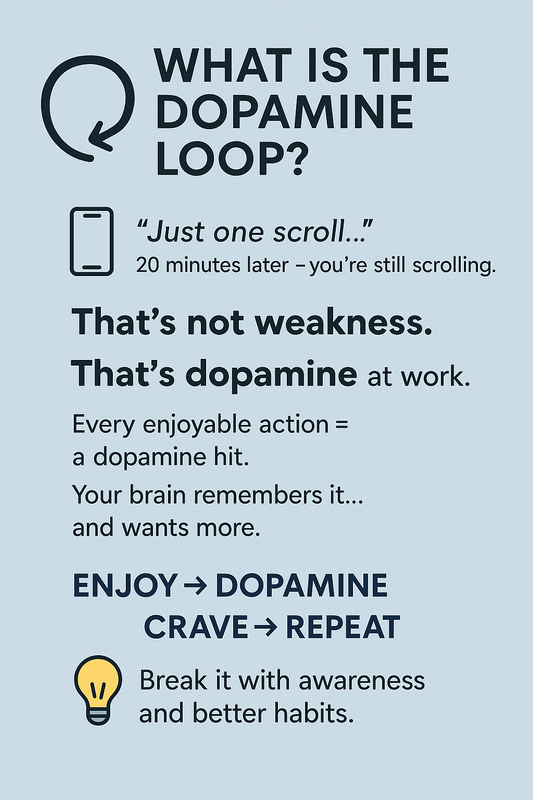
Have you ever checked your phone “just for a second” and found yourself still scrolling 20 minutes later? That’s the dopamine loop in action.
Dopamine is a brain chemical that plays a big role in motivation and pleasure. When you do something enjoyable, your brain releases dopamine, making you want to repeat the behavior. Over time, this creates a loop — your brain starts chasing that same reward again and again.
To understand how dopamine works in the brain, check out this article first:
👉 What Is Dopamine and How Does It Affect Our Brain?
How Our Brain Gets Stuck in Reward Cycles
From Likes to Snacks: Small Hits, Big Patterns
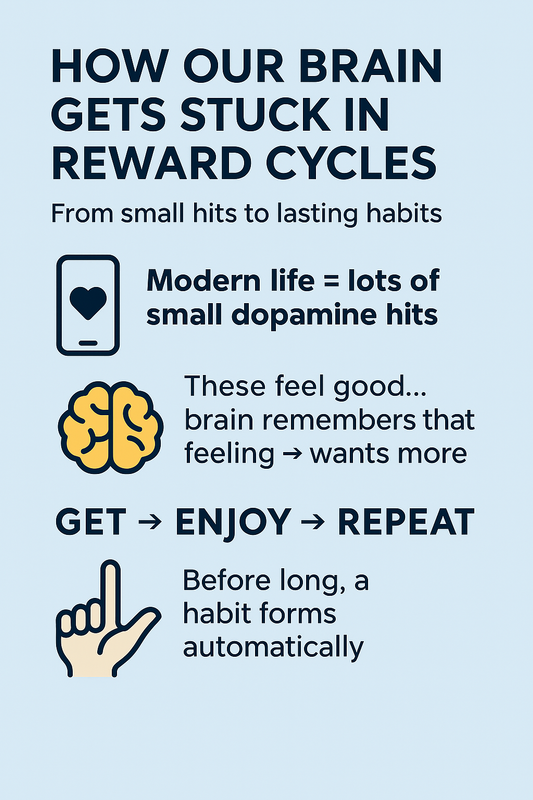
Modern life is full of tiny dopamine hits. Likes on social media. A new episode. A cookie. These things feel good for a moment—but your brain remembers the feeling and wants more.
Over time, your brain forms a pattern. You start reaching for these “easy” rewards without thinking. That’s the loop.
Why It Feels Good at First — and Then Feels Empty
At first, it’s fun. But overuse of quick rewards can reduce your brain’s sensitivity to dopamine. That means you need more of the same thing to feel pleasure—and everyday activities start to feel boring. It becomes harder to focus, enjoy quiet time, or be patient.
Real-Life Examples of Dopamine Loops
Social Media Scrolling
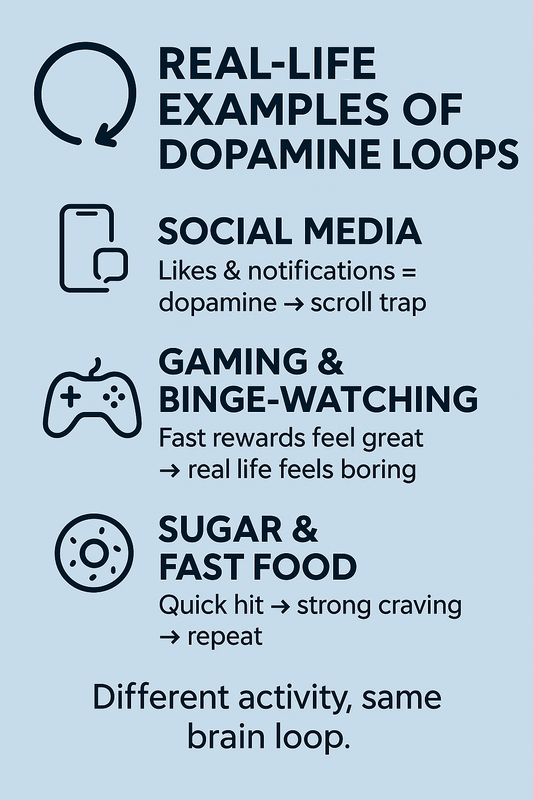
Each like, comment, or notification gives you a small dopamine hit. That’s why apps are designed to keep you hooked. You open them for one reason—and keep scrolling for 30 minutes.
Binge-Watching and Gaming
TV and games give us fast-moving rewards. Our brains love the excitement—but too much can make real life feel dull in comparison.
Sugar and Fast Food
Sugary and fatty foods release dopamine fast. That’s why cravings are so strong—even when we know something is unhealthy.
Are Dopamine Loops Dangerous? What Science Says
When It Becomes a Habit Loop
Not all dopamine loops are bad. But when they become automatic and interfere with your goals or health, they become a problem. These loops can impact your sleep, focus, and even emotional balance.
Mental Health and Overstimulation
Too many dopamine-triggering habits can lead to anxiety, irritability, and lack of motivation. Your brain becomes overstimulated—and under-inspired.
How to Break the Dopamine Loop
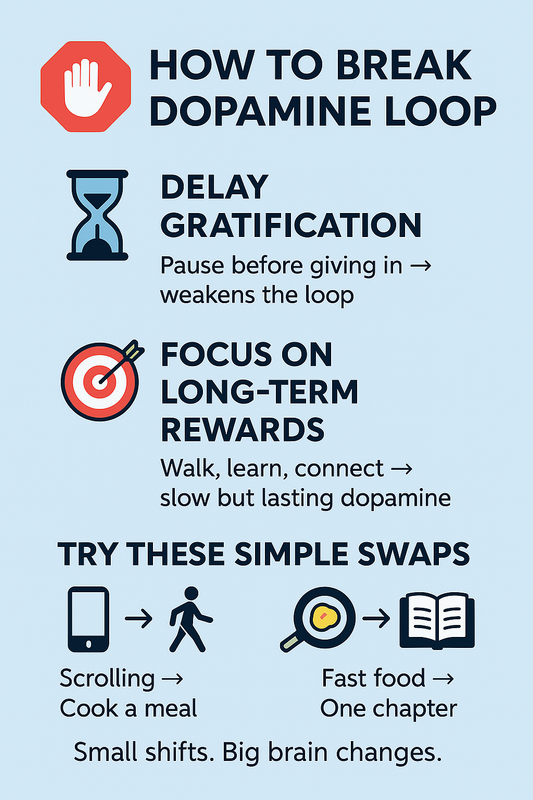
Delay Gratification: A Simple Start
Try waiting a few minutes before giving in to a quick reward. For example: pause before opening social media or eating a snack. The pause helps weaken the loop.
Focus on Long-Term Rewards
Work toward goals that take time—like walking daily, learning something new, or building relationships. These actions create slower, but more lasting, dopamine responses.
Practical Daily Swaps
- Instead of scrolling: take a short walk
- Instead of fast food: cook a simple meal
- Instead of bingeing: read one chapter or watch one episode
These small shifts retrain your brain.
Expert Insight: Anna Klyauzova on Helping Seniors Break Unhealthy Cycles
According to Anna Klyauzova, a registered nurse who works with older adults at Prolife Home Care:
“Many seniors fall into loops that can affect their mood—like endless TV or sugary snacks. These routines feel comforting, but over time, they lower energy and motivation. I often recommend gentle structure: walking groups, music, or puzzles. These offer natural dopamine boosts without overstimulation.”
Anna adds that sleep, hydration, and regular human interaction also help regulate the brain’s reward system as we age.
Internal Balance: Reconnecting with Natural Rewards
Our brain was designed to respond to nature, people, movement, and purpose. By reconnecting with these slower but deeper sources of pleasure, we train our brain to enjoy life without needing constant stimulation.
Frequently Asked Questions About Dopamine Loops
Is a dopamine loop the same as addiction?
Not exactly. But dopamine loops can lead to compulsive behaviors if left unchecked.
How can I tell if I’m in a dopamine loop?
If you often reach for something (phone, food, TV) without thinking—and feel less joy from regular life—it might be a loop.
Do dopamine loops affect older adults too?
Yes. Many seniors experience low motivation or restlessness, especially if routines lack variety or purpose.
What are the first steps to take control?
Start by pausing before each impulse. Add one new healthy habit—like walking, journaling, or drinking water—and build from there