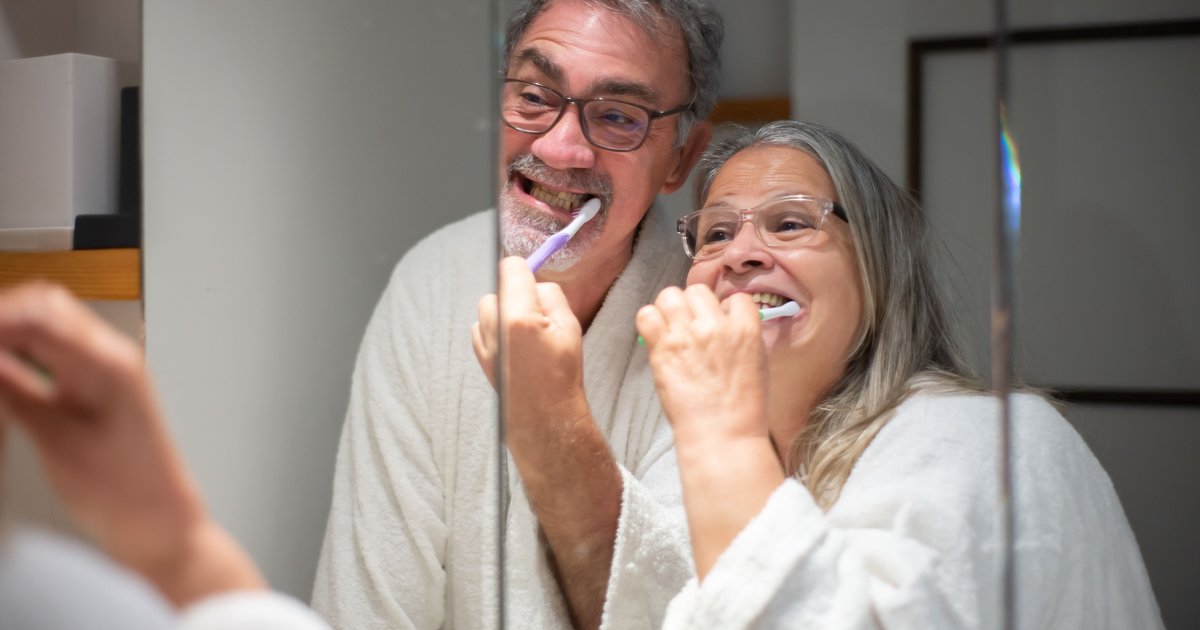
Older adults should brush twice a day with fluoride toothpaste, clean between the teeth once a day, clean dentures daily and take them out at night, and see a dentist at least once a year, even with dentures. In New York, Original Medicare generally does not pay for routine dental care, but New York Medicaid covers adult dental services such as exams, cleanings, fillings and dentures, and dental school clinics like NYU College of Dentistry charge lower fees than many private practices.
Why does mouth care matter more with age?
The CDC reports that about one in four adults aged 65 or older (26%) have 8 or fewer teeth, and 15% have lost all of them. The two leading causes are cavities and gum disease, and the CDC says both are largely preventable. Two things make older mouths harder to keep healthy:
- Dry mouth. The National Institute of Dental and Craniofacial Research (NIDCR) says dry mouth is not part of aging itself, but hundreds of medicines can reduce saliva. Medicines for high blood pressure, depression and bladder control often cause it, and taking more than one makes it worse. Less saliva raises the risk of decay and fungal infections, and dentures can rub and cause sore spots.
- Decay and gum recession. Tooth decay can happen at any age, and when gums pull back, exposed tooth roots are vulnerable.
If dry mouth starts after a new prescription, tell the doctor or dentist. NIDCR advises not to change any medication without talking to the prescribing doctor first.
Is there a link between mouth care and pneumonia?
There is research, but it comes from nursing homes, not home care. In a 2020 JAMA Network Open study from the University of North Carolina’s Sheps Center, nursing homes whose staff were trained in a mouth care program had a statistically significant 31% drop in pneumonia cases after one year. The second-year result was not significant, which the researchers tied to how hard it is to sustain new routines. See the UNC release. It is a reason to keep mouth care consistent, not a guarantee.
What does a daily mouth-care routine look like?
| Task | Independent older adult | Person who needs a caregiver’s help |
|---|---|---|
| Brushing, morning and bedtime | Small-headed soft brush, small amount of fluoride toothpaste, gentle small circles on all sides of each tooth, then the tongue | Caregiver brushes, or guides the person’s hand. Same time and place daily |
| Between the teeth, once a day | Floss, or a floss holder, interdental brush or pick if arthritis makes floss hard | Caregiver cleans between teeth; ask the dentist for the easiest tool |
| After meals | Rinse with plain water | Check cheeks and gums for leftover food |
| Dentures | Rinse, brush with a soft brush, take out at night | Caregiver removes, brushes and stores them in water |
| Dentist | At least once a year, even with dentures | Same; bring the medication list to every visit |
NIDCR adds that tartar (hardened plaque) cannot be brushed off. Only a dentist or hygienist can remove it. For dry mouth, sipping water, sugarless gum or candy, avoiding tobacco, alcohol and caffeine, and a humidifier at night all help.
How do you brush someone else’s teeth?
NIDCR’s caregiver fact sheet gives this method:
- Set up. Good light; toothbrush, toothpaste, towel, bowl and a glass of water within reach.
- Position. The person sits in a chair or upright in bed. You position yourself so you can see all surfaces of the teeth and gums.
- Explain first. Use “tell-show-do”: say what will happen, show the brush, then do it.
- Protect yourself. Wash your hands and wear disposable gloves.
- Remove dentures or partials, then check between teeth and cheeks for food with a gloved finger or damp gauze.
- Brush. Soft brush, small amount of fluoride toothpaste (water if toothpaste bothers the person), bristles angled toward the gumline, small circles on every side, then the tongue. Do not scrub hard back and forth.
- Finish. If the person cannot rinse, give a drink of water or sweep the mouth with a finger wrapped in damp gauze.
What about dementia, stroke or a bedbound client?
Dementia. Start with prompts, not takeover. NIDCR suggests leaving the toothbrush and toothpaste out, handing over a loaded brush, or brushing your own teeth at the same time. If that fails, rest your hand lightly over theirs and guide the brush. Keep the same routine at the same time and place, and use favorite objects or music for comfort. More in our guide to dementia care at home.
Stroke or Alzheimer’s. People with these conditions may not be able to feel wetness in their mouths, so do not rely on them to report dryness. Check for food pocketed in the cheek after meals. Related reading: stroke recovery at home and Parkinson’s care at home.
Bedbound. NIDCR’s instructions assume the person is seated or upright in bed. If someone cannot sit up, or has trouble swallowing, ask their nurse or doctor how to position them before you start.
How should dentures be cleaned?
- Rinse first, then brush every surface gently with a soft toothbrush and a non-abrasive cleanser (American Dental Association).
- Take them out at night. NIDCR says to brush them, put them in a cup of water, keep them in water whenever they are out of the mouth, and change the water daily. Ask the dentist whether cleaning tablets are appropriate.
- Each morning, before they go back in, brush the gums, tongue and palate with a soft brush.
When should an older adult see a dentist?
| What you notice | What NIDCR advises |
|---|---|
| Mouth sores, pain, swelling or bleeding gums | See the dentist right away |
| A sore, lump or white or red patch in the mouth or throat, hoarseness, trouble chewing or swallowing, or dentures that suddenly don’t fit, lasting more than two weeks | See a dentist or doctor. Most often it is not cancer, but early treatment works best |
| Loose teeth, painful chewing, sore bleeding gums | Signs of advanced gum disease; book an exam |
| Mouth always dry | See a dentist or doctor to find the cause |
What covers dental care for older adults in New York?
| Coverage | Dental |
|---|---|
| Original Medicare (Parts A and B) | Generally no. Medicare.gov says it does not cover routine cleanings, fillings, extractions, dentures or implants in most cases. Exceptions include some dental care tied to certain covered treatment (for example an exam before a heart valve replacement) or a hospital stay. See Medicare.gov |
| Medicare Advantage (Part C) | Many plans add dental as an extra benefit, but benefits and costs vary by plan. Check the plan’s Summary of Benefits |
| Medigap | Generally no, according to Medicare.gov |
| NY Medicaid | Covers oral exams, cleanings, X-rays, fillings, dentures, extractions, crowns, root canals and, in some circumstances, implants. See the State Department of Health. In a managed care plan, call the number on your member card |
| Essential Plan | Includes dental and vision benefits with no monthly premium or deductible, per the State Department of Health. Eligibility depends on your circumstances; check NY State of Health |
A person can hold Medicare and Medicaid together, and the Medicaid dental benefit applies even though Medicare does not pay for the same care. Our pages on what Medicare covers for home care and what Medicaid covers explain how the two differ at home.
Where can you find low-cost dental care in NYC?
- Call 311. The NYC Health Department says to call 311 and ask for help finding a low-cost dentist. It also publishes borough lists, Brooklyn and Queens included, and a search on the NYC Health Map.
- Try a dental school clinic. NYU College of Dentistry provides care by dental students under faculty supervision, says its fees are lower than many private practices, and accepts NY State Medicaid, including Medicaid Managed Care. New patients call 212-998-9800 or use the online form; bring photo ID and proof of address. It has a Brooklyn Patient Care site in Downtown Brooklyn as well as the main clinic at 345 E. 24th St. in Manhattan. Columbia’s College of Dental Medicine runs teaching clinics at 630 W. 168th St. (general information line 212-305-2862).
- Plan the trip. Getting a frail or confused parent to the appointment is often the real obstacle. A medical escort can go along.
Can a home health aide help with oral hygiene?
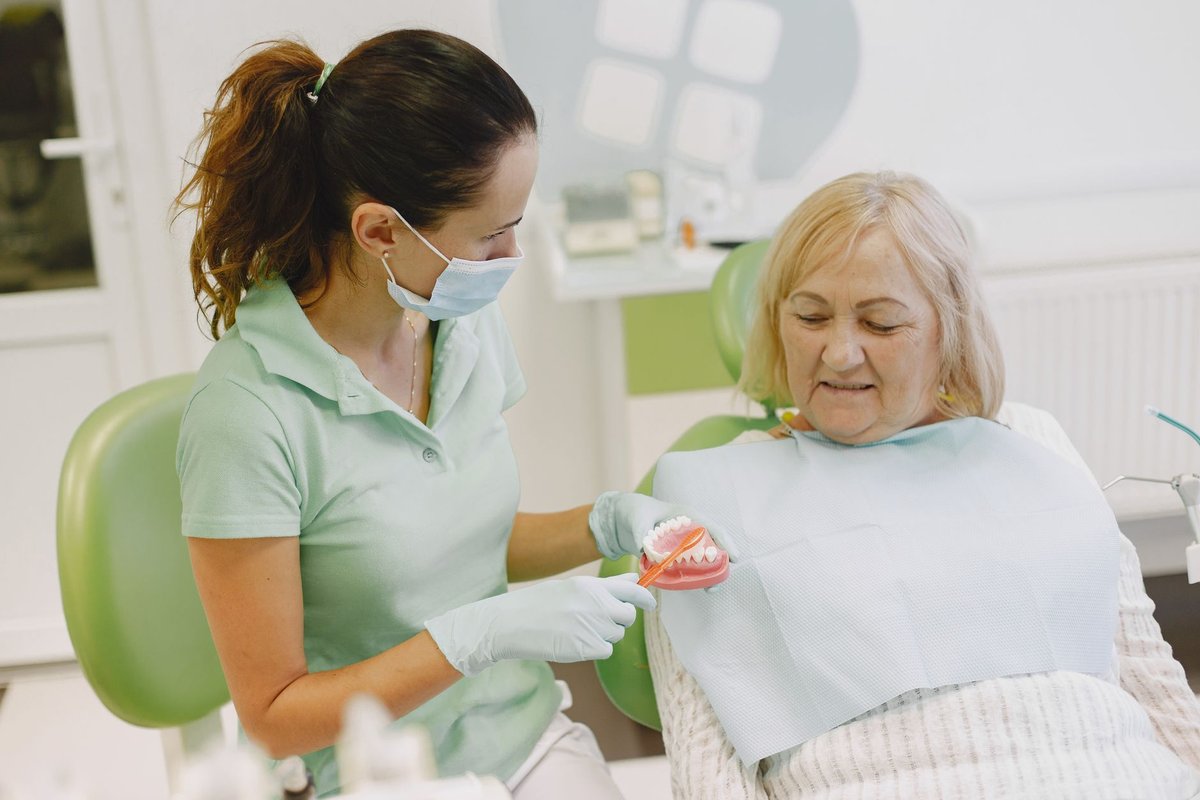
Yes. Mouth care goes naturally with bathing, dressing and grooming, and it can be written into the care plan: reminders and setup for someone who can still brush, or brushing and denture cleaning for someone who cannot. See personal care services and in-home care. Anything needing clinical judgment, such as swallowing problems or mouth sores, goes to a nurse or dentist; our nurse services can help coordinate that.

Mouth care at home: what our nurse director tells caregivers
Anna Klyauzova, RN, MSN, MPA, Director of Patient Services at ProLife Home Care, on what she sees in practice:
Oral care is part of daily hygiene. A home health aide or personal care aide can help with brushing, look after removable dentures and set out supplies, as far as their training and the care plan allow. The nurse decides what help each patient needs.
Older adults often struggle with dry mouth, dentures that don’t fit and cleaning their own teeth. With dementia, a person may refuse because they don’t understand what is being asked. Stay calm, explain each step and never use force.
If you have no dental coverage, check your insurance first. In New York, Medicaid covers many dental services, and Medicare Advantage plans may add benefits. Without coverage, look at dental school clinics or community health centers that charge by income. Don’t put off treatment because of the cost.
ProLife Home Care is a licensed home care agency in Brooklyn and Queens (licence #2572L001, New York State Department of Health). To build mouth care into a parent’s daily routine, call (718) 232-2777 or use our contact page.
This page is general information, not medical or dental advice. Ask a dentist or doctor about your own situation. Coverage rules change. Everything above was checked on 8 October 2026 against NIDCR, CDC, American Dental Association, Medicare.gov, New York State Department of Health, NYC Health and the NYU and Columbia dental school pages. Confirm what your own plan covers with the plan or the dental office before treatment.
Frequently asked questions
How often should an older adult brush their teeth?
Twice a day with a small amount of fluoride toothpaste, plus cleaning between the teeth once a day, according to NIDCR. A small-headed soft brush and gentle small circles work best.
Should dentures be taken out at night?
Yes, if possible. The CDC advises removing dentures at night, and NIDCR says to brush them and keep them in a cup of water, changing the water daily. Ask the dentist whether cleaning tablets are appropriate.
Does Medicare cover dental care?
Generally not. Medicare.gov says Original Medicare does not cover routine cleanings, fillings, extractions or dentures in most cases, with limited exceptions for dental care tied to certain covered treatment or a hospital stay. Some Medicare Advantage plans add dental benefits, which vary by plan.
Does New York Medicaid cover dentures?
The New York State Department of Health lists dentures among the dental services Medicaid covers, along with exams, cleanings, X-rays, fillings, extractions, crowns and root canals. Details are set by Medicaid or your managed care plan, so ask the dental office to check before treatment starts.
Why is my parent’s mouth always dry?
Dry mouth is not a normal part of aging. NIDCR says common causes are medicines, including some for high blood pressure, depression and bladder control, and dehydration. A dentist or doctor can look for the cause, but do not stop prescriptions without asking the prescriber.
How do I brush the teeth of someone with dementia who resists?
Keep the same routine at the same time and place, explain each step (“tell-show-do”), and begin with prompts or hand-over-hand guidance. NIDCR also suggests favorite objects or music for comfort, and asking a dental professional for more ideas.
Where can I find low-cost dental care in New York City?
Call 311 and ask for help finding a low-cost dentist, or use the NYC Health Map. Dental school clinics such as NYU College of Dentistry (212-998-9800 for new patients) offer supervised student care at lower fees than many private practices and accept NY State Medicaid.