COPD (chronic obstructive pulmonary disease) is a long-term lung disease in which damaged airways or air sacs block airflow and make breathing hard. Emphysema and chronic bronchitis are forms of COPD, not separate illnesses, and a breathing test called spirometry confirms the diagnosis and sets one of four GOLD grades, from mild to very severe. There is no cure, but treatment can ease symptoms and slow the disease.
Is emphysema COPD, and how does it differ from chronic bronchitis and asthma?
Yes. The National Heart, Lung, and Blood Institute (NHLBI) says the term COPD refers to two main conditions, emphysema and chronic bronchitis, and that most people with COPD have a mixture of both in different proportions. So the difference between COPD and emphysema is scope: COPD is the diagnosis, and emphysema is one way the lungs get damaged. The CDC reports nearly 16 million U.S. adults have COPD.
| Term | What it means | Part of COPD? |
|---|---|---|
| COPD | Long-term damage to the airways or other parts of the lung that blocks airflow | This is the umbrella diagnosis |
| Emphysema | Damage to the walls between the air sacs, so the lungs find it harder to move air out | Yes |
| Chronic bronchitis | Repeated or constant irritation of the airway lining, with a lot of thick mucus | Yes |
| Asthma | Airways that become inflamed and narrowed at times; often starts in childhood and is set off by triggers such as pollen, exercise, viral infections or cold air | No, a different condition |
The 2026 GOLD report treats asthma and COPD as different disorders that can exist in the same person, so the doctor has to sort them out.
How is COPD diagnosed?
No single symptom proves COPD. NHLBI calls spirometry the main test, and says it can detect COPD before symptoms appear. GOLD requires an FEV1/FVC ratio below 0.7 after a bronchodilator (an airway-opening medicine) to confirm it. A typical workup runs in this order:
- History. The provider asks about smoking, secondhand smoke, air pollution, fumes or dust, the cough and mucus, and family history.
- Exam. The provider listens to the chest. MedlinePlus notes the lungs can sound normal even when COPD is present.
- Spirometry. The person breathes in deeply and blows out as hard as possible into a tube connected to a small machine. It may be repeated after inhaling a medicine that opens the airways.
- Other tests as needed. A chest X-ray cannot diagnose COPD but can show other problems. A CT scan, an arterial blood gas test and a blood test for alpha-1 antitrypsin deficiency, an inherited cause, may be added.
- Grading. The doctor then looks at the airflow limit, daily symptoms and past flare-ups.
What are the 4 stages of COPD?
The “four stages” people search for are GOLD grades 1 to 4, from the Global Initiative for Chronic Obstructive Lung Disease. They apply only after spirometry confirms COPD, and rest on FEV1, the air a person can blow out in the first second, as a percentage of the predicted value.
| GOLD grade | Label | FEV1 (% of predicted) |
|---|---|---|
| GOLD 1 | Mild | 80 or higher |
| GOLD 2 | Moderate | 50 to 79 |
| GOLD 3 | Severe | 30 to 49 |
| GOLD 4 | Very severe | Below 30 |
A grade describes airflow, not the whole person. GOLD notes airflow severity may differ from severity of the disease and correlates only weakly with symptoms. Someone at grade 2 can be more limited than someone at grade 3, so doctors also ask about symptoms and flare-ups.
Since 2023 GOLD also sorts people into groups A, B and E to help choose first treatment:
| Group | Flare-ups in the past year | Breathlessness score |
|---|---|---|
| A | None needing treatment or hospital care | mMRC 0 to 1, or CAT below 10 |
| B | None needing treatment or hospital care | mMRC 2 or higher, or CAT 10 or higher |
| E | One or more moderate or severe | Any |
The mMRC and CAT are short questionnaires about breathlessness. The highest mMRC level means too breathless to leave the house or to dress. Ask the doctor which grade and group apply.
What are the symptoms of COPD in older adults?
Early COPD may cause no symptoms or only mild ones. NHLBI lists the common ones:
- shortness of breath, especially with activity
- an ongoing cough, or one that brings up a lot of mucus, often the first symptom
- wheezing, a whistling or squeaky sound when breathing
- chest tightness or heaviness
- fatigue
Severe COPD can also bring appetite loss, weight and muscle loss, anxiety and depression. The American Lung Association warns that people often blame breathlessness on age and cut back activities, so COPD is found late.
Can COPD be reversed?
No. NHLBI, the CDC, the American Lung Association and MedlinePlus all say there is no cure. GOLD describes the airflow blockage as persistent and not fully reversible. According to NHLBI, treatment can help a person feel better, stay more active and slow the disease. MedlinePlus calls quitting smoking the best way to slow lung damage.
What does daily COPD management look like?
The doctor sets the plan; families help it work at home.
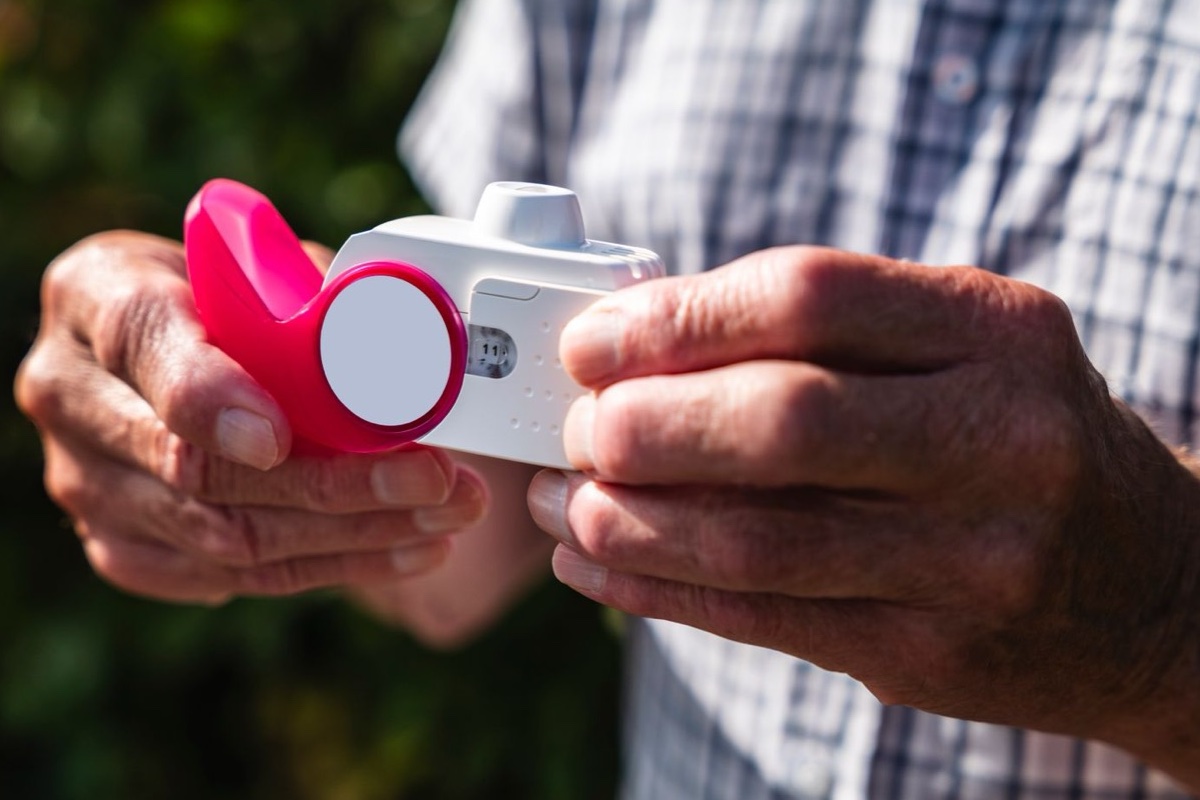
- Inhalers as prescribed. NHLBI says short-acting bronchodilators last about 4 to 6 hours and are used when symptoms appear; long-acting ones last 12 hours or more and are taken daily. Technique often goes wrong, so take the inhaler to appointments and ask the provider to show you. Do not change a dose or switch inhalers on your own; ask the prescriber.
- A flare-up plan. NHLBI advises agreeing with the provider on what to do, and which medicine to use, when symptoms flare.
- Food and an easier home. A provider may suggest smaller, more frequent meals and resting before eating. Keep everyday items within reach and cut down on stair climbing.
How do pulmonary rehab, vaccines and trigger avoidance help?
Pulmonary rehabilitation is a supervised program of exercise training, health education and breathing techniques. NHLBI notes some programs run by phone, web or app for people who cannot travel.

Medicare Part B covers pulmonary rehabilitation for people with moderate to very severe COPD; you pay 20% after the deductible, plus a copayment in a hospital outpatient setting. Two other habits matter:
- Vaccines. Infections can trigger flare-ups. NHLBI recommends staying current on COVID-19, flu and pneumonia shots, and says the RSV vaccine is recommended for people 60 and older with COPD. Ask the doctor what is due.
- Triggers. NHLBI lists chemical fumes, dust, smoke from cooking and heating fuels, secondhand smoke, cold air and poor air quality. On bad air days, stay in with windows closed.
What should you know about oxygen at home?
Oxygen is prescribed, and the flow rate is part of the prescription. Never change it on your own or let someone else adjust it because the person seems short of breath; call the prescriber. Oxygen is also a fire risk. MedlinePlus advises:
- No smoking in any room where oxygen is used, and a “NO SMOKING” sign in each.
- Keep oxygen 6 feet from candles, fireplaces, wood stoves, electric heaters, electric blankets and hairdryers, and away from the stovetop and oven. Microwave cooking is usually fine.
- Do not store it in a trunk, box or small closet.
- Skip petroleum-based creams on the face and upper body unless the provider approves.
See our guide to oxygen and breathing support at home. GOLD also lists sleep apnea among conditions to look for in COPD; our CPAP guide covers that equipment.
What are the warning signs of a COPD flare-up?
A flare-up is a sudden worsening of symptoms, often triggered by infection, smoke, dust or cold air. NHLBI advises:
| What you notice | What to do |
|---|---|
| Symptoms get suddenly worse: harder to breathe, more chest tightness, fever, more coughing or throat clearing, yellow or green phlegm | Call the healthcare provider right away |
| Cannot catch breath or talk; lips or fingernails blue or gray; not mentally alert; very fast heartbeat; prescribed treatment is not working | Call 911 |
Keep the provider’s, the hospital’s and a driver’s phone numbers handy, plus a list of every medicine. Heart attacks and strokes are also more likely during a flare-up and in the months after, so follow-up visits matter.
How long does end-stage COPD last?
There is no honest single answer, and this page will not give a number. GOLD says predicting six-month survival for an individual with COPD is unreliable. It describes a gradual decline with more symptoms, punctuated by flare-ups.
What helps is planning early. GOLD says palliative care aims to relieve suffering and support quality of life at any stage of disease, and it covers breathlessness, fatigue, anxiety and depression. It also recommends talking early about resuscitation, advance directives and where the person wants to be cared for. For very advanced illness, hospice can be provided at home. See our guides to palliative and hospice care and hospice at home.
What can home care and skilled nursing do for COPD, and what can’t they?
| Need | Who can help | Limits |
|---|---|---|
| Bathing, dressing, meals and housework when breathless | Home health aide or personal care aide, following the care plan | Care covers tasks in the plan |
| Medicine reminders | Aide reminds; a nurse administers and manages medication | No one at home changes doses |
| Noticing a change (more breathless, more fatigue, new phlegm color) | Aide reports it to the nurse and family; nurse assesses | Aides and nurses do not diagnose; the doctor decides |
| Skilled assessment, monitoring and teaching | RN or LPN | Clinical tasks need the doctor’s orders |
| Getting to appointments | A medical escort | Not an ambulance |
| Emergencies, oxygen flow changes, inhaler prescriptions | Prescriber or 911 | Home care cannot replace them |
See nurse services, private duty nursing and personal care services.
Does Medicare or Medicaid pay for COPD care at home?
| Item | Medicare |
|---|---|
| Home oxygen equipment | Part B covers oxygen systems, containers and tubing if the doctor says you are not getting enough oxygen and blood gas levels fall in a set range. After the deductible you pay 20%; equipment is rented for 36 months (Medicare.gov) |
| Home health nurse or therapist visits | Covered at no cost if homebound, with a doctor-ordered need for part-time skilled care from a Medicare-certified agency (Medicare.gov) |
| 24-hour care, or help with bathing and dressing as the only need | Not covered |
Medicare Advantage plans can differ, so check with the plan. For ongoing help, the NY State Department of Health says managed long term care plans can provide home nursing, home health aide and personal care services. See Medicare home health, Medicaid coverage and private care costs.
Heat and cold checks for someone with COPD: nurse director’s notes
NHLBI lists cold air and poor air quality among flare-up triggers, so the apartment matters. See our heat and cold safety guide.
Anna Klyauzova, RN, MSN, MPA, Director of Patient Services at ProLife Home Care, on what she sees in practice:
Our aides check the temperature in the apartment first, then whether there is water to drink, whether the air conditioner or heat works, and how the person looks and feels. People with dementia or chronic illness need closer watching, because an older person often doesn’t notice they are too hot or too cold.
In New York we see overheated apartments in winter and stuffy ones in summer, especially on upper floors. The riskiest client is the one who can’t open a window, switch on the air conditioner or call for help.
ProLife Home Care is a licensed home care agency in Brooklyn and Queens, licence #2572L001, New York State Department of Health. We can talk through which parts of a COPD care plan an aide or nurse can cover. Call (718) 232-2777 or use our contact page.
Checked on 12 October 2026 against nhlbi.nih.gov, the 2026 GOLD report, cdc.gov, lung.org, medlineplus.gov, medicare.gov and health.ny.gov. GOLD guidance and Medicare rules change. This page is general information, not medical advice. Ask the prescriber about inhalers, oxygen and vaccines, and call 911 in an emergency.
Frequently asked questions
What are the 4 stages of COPD?
Doctors use GOLD grades: GOLD 1 mild (FEV1 80% of predicted or higher), GOLD 2 moderate (50 to 79%), GOLD 3 severe (30 to 49%) and GOLD 4 very severe (below 30%). They are set by spirometry, and doctors also consider symptoms and flare-ups.
How is COPD diagnosed?
By spirometry, a breathing test, together with symptoms and history. GOLD requires an FEV1/FVC ratio below 0.7 after a bronchodilator. Chest X-rays, CT scans and blood tests may be added, but an X-ray alone cannot diagnose COPD.
Is emphysema COPD?
Yes. NHLBI says COPD includes emphysema and chronic bronchitis, and most people have some of both. COPD is the umbrella term, while emphysema means damage to the walls between the air sacs.
Can COPD be reversed?
No. There is no cure, and the airflow blockage is not fully reversible. Treatment and lifestyle changes, especially quitting smoking, can help a person feel better and slow progression.
How long does the end stage of COPD last?
It varies, and GOLD says predicting survival for an individual is unreliable. Ask the doctor about palliative care and advance care planning now, since palliative care can start at any stage.
Does Medicare pay for home oxygen for COPD?
Part B can cover oxygen equipment and supplies if the doctor documents low oxygen and blood gas levels in the required range. After the deductible you pay 20% of the approved amount. Medicare Advantage plans may have their own rules.
What is the difference between COPD and asthma?
Asthma causes inflamed, narrowed airways that are set off by triggers and often starts in childhood. COPD develops mostly in adults and is progressive. GOLD says they are different disorders that can occur together, so the doctor decides which applies.