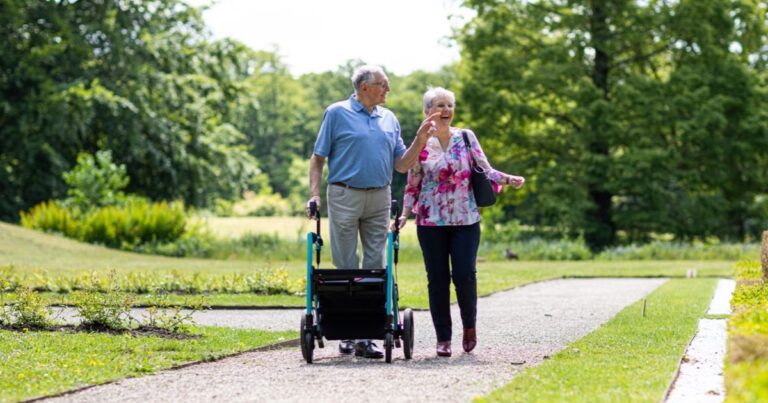
Dementia is usually described in three stages: early (mild), middle (moderate) and late (severe). A seven-stage version, the Global Deterioration Scale, splits the same path into finer steps. In the early stage a person often manages most daily life; in the middle stage they need regular help and supervision; in the late stage they need care around the clock. How fast someone moves through the stages differs from person to person.
What are the stages of dementia?
The Alzheimer’s Association describes Alzheimer’s as progressing in three stages, early, middle and late, which doctors may call mild, moderate and severe. The National Institute on Aging (NIA) adds a stage before symptoms, called preclinical, when brain changes have started but memory and thinking still seem normal. The Alzheimer’s Association adds that people experience the disease differently and that the stages may overlap, so it can be hard to place someone in just one.
| Stage | Memory and thinking | Daily living and safety | Help usually needed |
|---|---|---|---|
| Early (mild) | Memory lapses, trouble finding words, repeated questions, trouble planning | Money and bills get harder; wandering and getting lost can start; the person may still drive and socialize | Reminders, help with bills and appointments, a safer home, planning ahead |
| Middle (moderate) | More confusion, forgetting personal history, trouble with language and multistep tasks, sometimes not recognizing people | Dressing and bathing need help; sleep changes; hallucinations, delusions, restlessness and wandering are possible | Regular hands-on help and supervision. Usually the longest stage |
| Late (severe) | Little or no ability to communicate, little awareness of surroundings | Eating, swallowing, walking and bladder and bowel control are affected | Around-the-clock personal care |
These descriptions describe Alzheimer’s disease, the most common type. NIA’s guide to different types of dementia notes that symptoms can be similar across types, can vary by person, and that some people have more than one type.
What are the signs of dementia?
The CDC lists trouble with memory, attention, communication, reasoning and judgment, and vision, such as depth perception. Its examples of telltale signs include getting lost in a familiar neighborhood, using unusual words for familiar objects, forgetting the name of a close family member, and being unable to complete common tasks alone.
The CDC also says dementia is not a normal part of aging. Misplacing keys now and then or briefly searching for a word is common and should not get in the way of daily life. Memory loss that disrupts daily life, poor judgment, and losing track of dates or location are different; NIA lists them among the signs of mild Alzheimer’s. Some memory problems have treatable causes, such as medication side effects, vitamin deficiency or thyroid imbalance, according to the CDC, so the first step is a medical evaluation. See our guide to early detection of Alzheimer’s.
What are the 7 stages of dementia?
The seven-stage system is the Global Deterioration Scale, developed by Barry Reisberg, M.D., at New York University and described in a fact sheet from the Alzheimer’s Association. That document is dated (updated in 2003), and the association’s website now teaches the three-stage version, but the seven stages are still widely quoted, so here is how they line up. Stages 1 to 3 describe little or no impairment, although early-stage Alzheimer’s can be diagnosed in some people at stage 3. The association calls stages artificial benchmarks in a continuous process, so treat them as a frame of reference.
| Stage | Name | Matches | What changes |
|---|---|---|---|
| 1 | No cognitive impairment | Normal | No memory problems |
| 2 | Very mild decline | Before dementia | Lapses with names or object locations, not obvious to others |
| 3 | Mild cognitive decline | Early, in some people | Family and coworkers notice word-finding and planning problems |
| 4 | Moderate decline | Early (mild Alzheimer’s) | Less knowledge of recent events, trouble with finances and complex tasks, withdrawal |
| 5 | Moderately severe decline | Middle (moderate) | Some day-to-day help becomes essential; needs help choosing clothes; confusion about date and place; usually still eats and toilets alone |
| 6 | Severe decline | Middle | Extensive help: dressing, toileting details, incontinence; disrupted sleep; suspiciousness, delusions, hallucinations; wandering |
| 7 | Very severe decline | Late (severe) | Speech and movement are lost; help with eating and toileting; swallowing is impaired |

What stage of dementia is hallucinations?
Most often the middle stage. NIA says people in moderate Alzheimer’s may have hallucinations, delusions and paranoia, and the Alzheimer’s Association fact sheet lists hallucinations under stage 6, meaning seeing or hearing things that are not there. Other types differ: NIA lists visual hallucinations among the symptoms of Lewy body dementia, and hallucinations or delusions among those of vascular dementia.
NIA’s advice on hallucinations is practical:
- Tell the person’s doctor, because an illness or a medicine can sometimes cause hallucinations or delusions. Ask the doctor about any medicine; do not change it yourself.
- Do not argue about what the person sees or hears. Comfort them if they are afraid.
- Try a distraction, such as moving to another room or going outside.
NIA also warns that a distrustful person may be a victim of elder abuse, not paranoid. See our elder abuse guide.
What stage of dementia is not sleeping?
Sleep changes typically show up in the middle stage. NIA lists sleeping more during the day and being restless at night among the signs of moderate Alzheimer’s, and the Alzheimer’s Association fact sheet lists a disrupted sleep-wake cycle at stage 6. Restlessness and wandering in the late afternoon or evening is called sundowning, and we cover it in our sundowning guide.
NIA’s suggestions for late-day restlessness include:
- Stick to a daily schedule.
- Get sunlight each day, outdoors or by a window.
- Avoid alcohol and caffeine late in the day.
- Discourage long naps late in the day.
If sleep suddenly gets worse, ask the doctor. Do not start or stop a sleep aid or any other medicine without the prescriber.
How fast does dementia progress?
There is no standard speed. The Alzheimer’s Association says Alzheimer’s typically progresses slowly and that the rate varies, and NIA says brain changes may begin a decade or more before symptoms appear. The association describes the middle stage as typically the longest, lasting many years.
A fast change deserves a medical look. If someone seems suddenly more confused, more agitated or stops eating, the cause may not be the disease itself. NIA lists pain, constipation, and medications or medication interactions among triggers of agitation, and the CDC lists medication side effects among treatable causes of memory problems. Describe exactly what changed and when to the doctor, and say it was sudden.
How much help does someone with dementia need at home at each stage?
| Stage | Typical level of help | What can fill the gap |
|---|---|---|
| Early | Check-ins, reminders, help with bills, medicines and appointments | Family, a few hours of aide help, adult day programs, planning for legal and financial matters |
| Middle | Hands-on help with bathing, dressing and toileting; supervision for safety; more intensive supervision, in NIA’s words | Regular aide visits, longer shifts, respite care, an adult day center |
| Late | Around-the-clock assistance with personal care, positioning, feeding and skin care | Live-in or 24-hour care, nursing guidance, hospice for comfort |
The diagnosis does not set the hours. For Medicaid-funded care they come from an assessment (see what Medicaid covers for home care), and private-pay families can see typical prices in our home care cost guide.
Home safety checklist by stage
Early stage
- Plan while the person can take part. The Alzheimer’s Association calls the early stage the ideal time for legal, financial and end-of-life plans. Read our guide on power of attorney and guardianship in New York.
- Watch driving. NIA’s signs it is no longer safe include new dents, near misses and confusing the brake and gas pedals.
- Add identification. NIA suggests an ID or medical bracelet and a recent photo, and telling neighbors if the person wanders.
- Medicines. Our medication management guide has practical steps, and NIA advises locking up medicines as the disease advances.
Middle stage
- Kitchen. NIA suggests stove safety knobs, an automatic shut-off, and working smoke and gas detectors, since people with Alzheimer’s may not smell smoke.
- Lock up risks. Medicines, alcohol, cleaning products, matches, laundry pods, knives and guns belong in a locked area or out of the home.
- Doors and wandering. NIA lists keyed deadbolts, door chimes or alarms, a fenced yard with a locked gate, and keeping shoes and coats out of sight. It says not to leave someone with a history of wandering unattended.
- Bathroom. Grab bars, nonskid mats, a raised toilet seat and a handheld shower head. NIA recommends setting the water heater to 120°F.
- Falls and light. Nightlights, bright tape on step edges, and no busy patterns. NIA notes that changes in depth perception raise fall risk. See our fall prevention guide for NYC apartments.
Late stage
- Change position. NIA advises moving the person at least every two hours and using pressure-reducing mattresses and cushions. Our guide to bed sore prevention goes deeper.
- Mealtimes. NIA says the person should be upright and seated while eating and for at least 20 minutes afterward, never drowsy or lying down. Ask the doctor about swallowing trouble.
- Comfort. The Alzheimer’s Association says hospice can help in the final stage. See when to consider hospice for dementia.

When is professional home care or nursing help typically needed?
NIA says Alzheimer’s caregiving often exceeds what one person can provide, and that some caregivers need help in the early stages while others wait for the later ones. Situations in which families commonly add help:
- The person needs help with bathing, dressing or toileting that family cannot give safely.
- Someone must watch them most of the day, or they wander, or nights are broken.
- The main caregiver is exhausted (see our burnout guide).
- A skilled need appears, such as wounds, swallowing problems or unsafe transfers.
NIA separates two kinds of help. Home care sends an aide for personal care, company and daily tasks, from a few hours to a full day and overnight, with no skilled medical care. Home health care is part-time medical care ordered by a physician for a specific condition, such as nursing or therapy. Our pages on in-home care, personal care services and nurse services show what we offer, and live-in care covers overnight presence. Breaks can come from respite care or an adult day program; NIA notes Medicare does not pay for adult day care, but Medicaid and other programs may.
NIA says there may come a time when home is no longer enough, and that guilt about that decision is common. Our guide on when it is time for memory care and the broader dementia care at home guide can help you weigh it.
Dementia stages at home: advice from our nurse director
Anna Klyauzova, RN, MSN, MPA, Director of Patient Services at ProLife Home Care, on what she sees in practice:
You can’t do all of it by yourself. Alzheimer’s and other dementias change the whole family’s life, not only the patient’s. The sooner support is in place, the easier it is to keep a familiar routine and a safe home. Even a few hours of professional home care a week gives relatives time to rest.
Families rarely hear this: don’t argue with the person and don’t keep correcting mistakes. If your mother asks the same question for the fifth time, she isn’t doing it on purpose. A calm voice, a familiar room and a routine she can predict usually work better than long explanations.
We are a licensed home care agency in Brooklyn and Queens, licence #2572L001, New York State Department of Health. If you are not sure what stage your relative is in or what help fits, call (718) 232-2777 or use our contact page, and a coordinator will talk it through. For free support any hour, the Alzheimer’s Association helpline is 1-800-272-3900.
Staging systems are general guides, and this page is not a diagnosis or care plan. Everything above was checked on 12 October 2026 against nia.nih.gov, alz.org, cdc.gov and an Alzheimer’s Association fact sheet. Only the person’s doctor can say what stage they are in or what they need. Ask the doctor or prescriber before any change to medicines.
Frequently asked questions
What are the stages of dementia?
Early (mild), middle (moderate) and late (severe), according to the Alzheimer’s Association. NIA also names a preclinical stage before symptoms. A seven-stage version, the Global Deterioration Scale, divides the same course more finely.
What stage of dementia is hallucinations?
Usually the middle (moderate) stage, according to NIA, or stage 6 on the seven-stage scale. Some dementia types, such as Lewy body dementia, can include visual hallucinations. Tell the doctor, because an illness or medicine can sometimes be the cause.
What stage of dementia is not sleeping?
Sleep changes, such as sleeping more by day and being restless at night, are listed by NIA under moderate Alzheimer’s. The Alzheimer’s Association places a disrupted sleep-wake cycle at stage 6. Ask the doctor before using any sleep medicine.
How fast does dementia progress?
It varies widely. The Alzheimer’s Association says Alzheimer’s typically progresses slowly, with the middle stage usually the longest. A sudden worsening is worth a medical check for pain, infection, constipation or a medicine effect.
What are the signs of dementia?
The CDC lists trouble with memory, attention, communication, judgment and vision, and signs such as getting lost in a familiar neighborhood or being unable to finish common tasks alone. Dementia is not a normal part of aging, so see a doctor.
How long does each stage of dementia last?
There is no fixed length. The Alzheimer’s Association says the middle stage is typically the longest and can last many years, and that stages overlap. We do not give timelines, because they would mislead.
Does everyone with dementia go through all seven stages?
The seven-stage scale describes Alzheimer’s disease, and the Alzheimer’s Association notes that not everyone experiences every symptom or has symptoms at the same time. Other types of dementia can look different.