
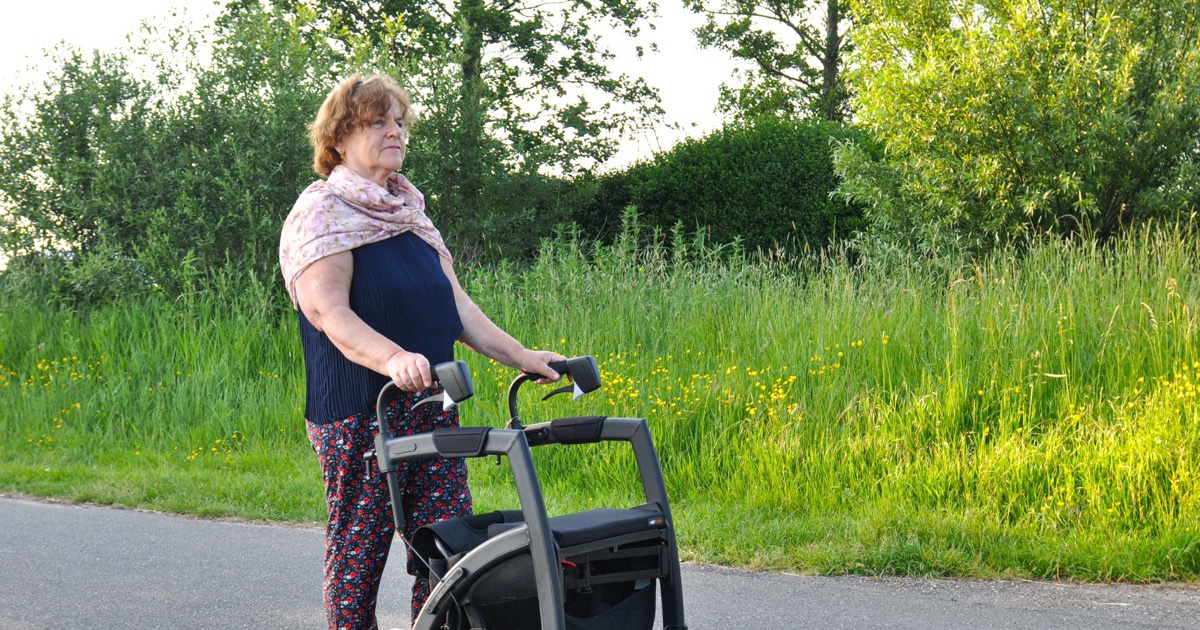
Most people leave the hospital within a day or two of a knee replacement (some go home the same day), get back to most everyday activities in about 3 to 6 weeks, and keep improving for months. MedlinePlus says full recovery takes 4 months to a year. Your own timeline depends on your health, the kind of surgery and how rehab goes, so your surgeon and physical therapist decide what you can do and when.
How long is recovery from knee replacement?
There is no single number. The ranges below come from AAOS OrthoInfo and MedlinePlus. Where they differ, both are shown. This is general information, not medical advice.
| Phase | What the sources say is typical |
|---|---|
| Surgery day to discharge | Same-day discharge if the surgery is outpatient. Otherwise an overnight stay or longer: OrthoInfo says 1 to 3 days, MedlinePlus says same day or 1 to 2 days. You are asked to start moving on the day of surgery. |
| First days to about 2 weeks | Walker or crutches. Help at home for several days to several weeks (OrthoInfo). Stitches or staples usually come out about 10 to 14 days after surgery (MedlinePlus). Some pain with activity and at night is common. |
| Weeks 3 to 6 | Most normal daily activities can resume within 3 to 6 weeks (OrthoInfo). A cane or single crutch is often possible at about 2 to 3 weeks (OrthoInfo exercise guide). |
| About 2 to 3 months | A walker or crutches may be used for up to 3 months (MedlinePlus). Keep doing the prescribed exercises for at least 2 months (OrthoInfo). |
| 3 months to a year | Mild to moderate swelling can last about 3 to 6 months (OrthoInfo). Full recovery takes 4 months to a year (MedlinePlus). Full knee motion is uncommon, but most people can almost fully straighten the knee and bend it enough to climb stairs and get into a car. |
Age, other health conditions and how steadily the exercises get done all change the pace. Treat these as ranges, not promises.
What happens in the hospital, and who can go home the same day?
The OrthoInfo activities guide says that before discharge you need to get in and out of bed alone, have acceptable pain control, use the bathroom, walk with a cane, walker or crutches and manage two or three stairs, and be able to do the home exercises. If you cannot, or nobody can help at home, going straight home may be unsafe and you may be moved to a rehabilitation or skilled nursing center for a time. Our guide to hospital discharge and home care in New York covers the questions to ask before leaving.
How do you manage pain and swelling after knee replacement?
Some pain is expected. OrthoInfo says swelling can be moderate to severe in the first days or weeks, then mild to moderate for about 3 to 6 months. It suggests elevating the leg and applying ice, and says compression stockings may help. MedlinePlus says icing for 30 minutes before and after exercises can reduce swelling. Tell the surgeon about new or severe swelling, because OrthoInfo notes it can be a warning sign of a blood clot.
Medicines are the surgeon’s call. Pain medicines and blood thinners are prescribed individually, and this page does not tell anyone to take, skip or change any of them. If a medicine is not working or the instructions are unclear, call the surgeon’s office or the pharmacist. Our pages on medication reconciliation after discharge and medication management explain how to keep the list straight.
What exercises and physical therapy help knee replacement recovery?
The OrthoInfo exercise guide says your surgeon and therapist may recommend 20 to 30 minutes of exercise once to three times daily, plus walks of about 30 minutes, 2 to 3 times daily, in early recovery. Early exercises it names include ankle pumps, quadriceps sets, straight leg raises and supported knee bends. Which ones you do is for your therapist to say.
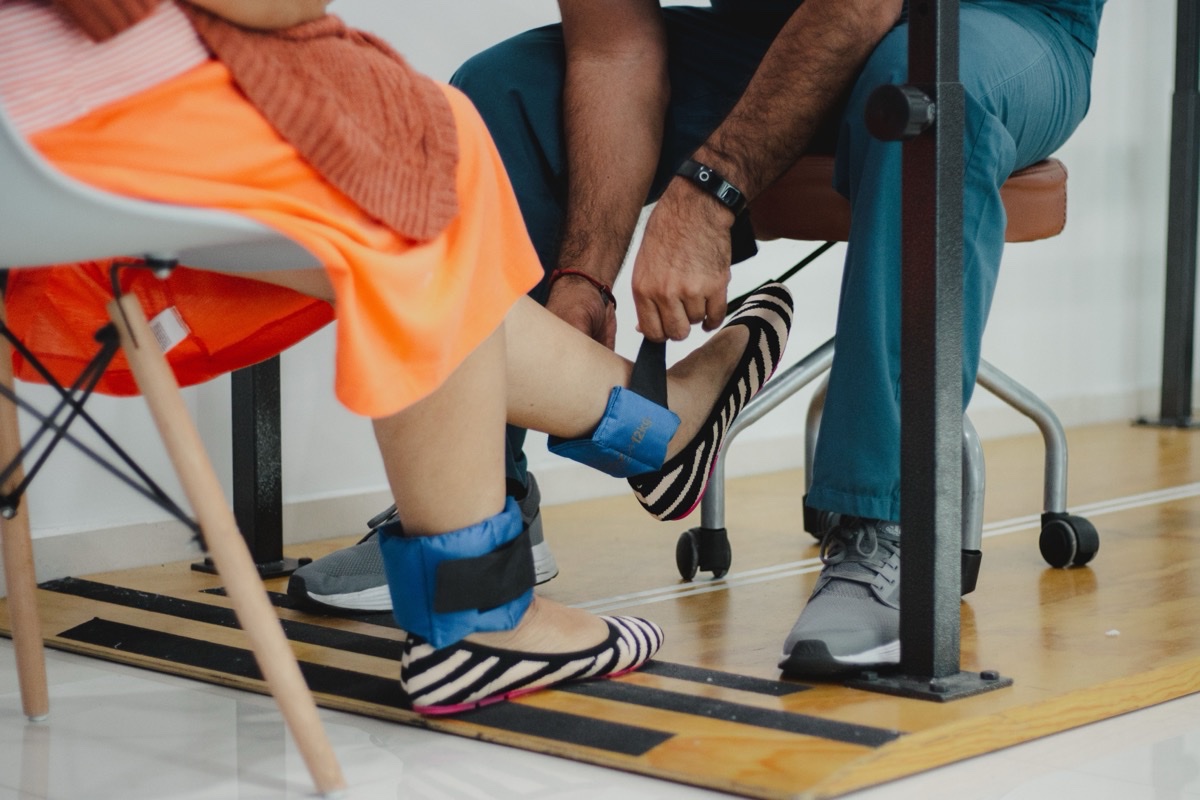
MedlinePlus adds: take short walks often, wear well-fitting nonskid shoes, and try not to sit more than 45 minutes at a time. Walking does not replace the prescribed exercises.
Is physical therapy better at home or at an outpatient clinic?
OrthoInfo says a therapist may help you at home or in a therapy center in the first weeks. Which one you get depends on your surgeon’s orders, how well you can leave the building (mention any walk-up stairs to the surgeon’s team) and your coverage. For Original Medicare, Medicare.gov’s home health page and physical therapy page say:
| Where | Medicare rule in brief | What you pay |
|---|---|---|
| At home, through Medicare home health | You must be homebound, need part-time or intermittent skilled care, and a provider who has seen you in person must order it from a Medicare-certified agency | Nothing for covered home health services |
| Outpatient therapy (Part B) | Medically necessary therapy that your doctor or other provider certifies; no limit on what Medicare pays in a calendar year | After the Part B deductible, 20% of the Medicare-approved amount |
Because home health requires being homebound, therapy may move to an outpatient setting as a person gets out more easily. Medicare Advantage and Medicaid plans may have their own networks and approvals, so call your plan first. See our guides to Medicare physical therapy coverage and the Medicare home health benefit. Our therapy at home service is private pay, needs a physician order, and is not billed to Medicare or Medicaid managed care.
What are the warning signs of a blood clot or infection?
Complications are uncommon, but a clot or infection needs fast attention. Use your discharge papers for the phone numbers and thresholds your surgeon gave you.
| Possible problem | Signs listed by AAOS, MedlinePlus or CDC | What the sources say to do |
|---|---|---|
| Blood clot in the leg | Increasing calf pain, tenderness or redness above or below the knee, new or increasing swelling of calf, ankle or foot | Notify the surgeon immediately; CDC says to see a doctor as soon as possible |
| Clot that has traveled to the lung | Sudden shortness of breath, sudden chest pain, chest pain with coughing, coughing up blood, fainting | CDC says to seek medical help immediately; MedlinePlus says to call 911 or go to the emergency room |
| Infection | Persistent fever (OrthoInfo says over 100°F by mouth, the MedlinePlus discharge page says over 101°F), chills, increasing redness, tenderness or swelling at the wound, drainage, increasing knee pain at rest and with activity | Tell the surgeon immediately |
OrthoInfo also says a fall in the first weeks can damage the new knee and may lead to more surgery, so ask the surgeon’s office what to do after any fall. More at MedlinePlus on deep vein thrombosis and the CDC page on blood clots.
How do you get the home ready for knee replacement recovery?
Set things up before surgery if you can. OrthoInfo and MedlinePlus suggest:
- Bed height. Low enough for your feet to touch the floor when you sit on the edge. If the bedroom is up or down stairs, set up a bed on the floor where you spend the day.
- Chair. Firm seat, 18 to 20 inches high, with a firm back, two arms and a footstool.
- Bathroom. A raised toilet seat with arms, a shower chair or bench, grab bars or handrails by the toilet and tub, and a slip-proof mat.
- Floors. Remove loose throw rugs, secure cords, fix uneven thresholds, add good lighting.
- Reach. Phone, water and medication list within reach. Do not carry things with a walker; attach a pocket or basket.
For more, see home modifications and grab bars, fall prevention in NYC apartments, Medicare coverage for walkers and free medical equipment in New York.
Who helps in the first weeks?
OrthoInfo says you will need help for several weeks with cooking, shopping, bathing and laundry. MedlinePlus suggests asking your surgeon about a trained caregiver if nobody can be there for the first one or two weeks.
| Source of help | What it does | How it is paid |
|---|---|---|
| Family and friends | Rides, meals, laundry, being there the first nights | Unpaid |
| Private-pay aide | Bathing, dressing, bathroom, meals, walking as your therapist directs. See post-surgery home care and private home care | Private pay, hours you choose |
| Medicaid personal care | Aide hours set by an assessment. See Medicaid and home care | Medicaid, if eligible; the state says an assessment and authorization may be needed, so it is not immediate |
| Medicare home health | Part-time skilled nursing or therapy; an aide only while you also get skilled care; 24-hour care is not covered | Medicare, if the rules above are met |
| Nurse visits | Dressing changes and wound checks that need a nurse. See nurse services | Depends on the order and coverage |
The New York State Department of Health notes that meeting one program’s criteria does not mean you qualify for every program offering a service.
When can you drive or use stairs after knee replacement?
The sources do not fully agree, so ask the surgeon. OrthoInfo’s knee replacement page says most people resume driving about 4 to 6 weeks after surgery, once the knee bends enough to sit comfortably in the car and muscle control allows adequate reaction time. Its activities page says driving is usually safe when you are no longer taking opioid pain medicine and your strength and reflexes have returned, and that your doctor will help you decide.
On stairs, OrthoInfo says they are a particular hazard until the knee is strong and mobile, and to use a cane, crutches, walker or handrails, or have help. The surgeon and therapist decide when aids can stop. In a walk-up building, ask the therapist to practice your actual stairs before discharge.
What is the caregiver checklist for the first 72 hours?
The first three days at home are when fatigue, pain and unfamiliar equipment meet. This list is for the person helping, and it never replaces the discharge sheet.

- Get written instructions. Dressing and shower rules, exercises, weight-bearing rules, follow-up date, and who to call after hours.
- Match every medicine to the discharge list. Do not start, stop or change anything on your own; ask the surgeon or pharmacist.
- Clear the path. Rugs and cords out, night lights on, walker and phone within reach.
- Have someone home the first nights. Family or an aide.
- Do the exercises and walks as taught. Prompt the therapist’s exercises and encourage getting up about every 45 minutes.
- Check the incision daily. Look for the infection signs above. Change the dressing only if the surgeon said to.
- Watch legs and breathing. Calf pain or swelling means calling the surgeon; chest pain, trouble breathing or fainting means 911.
- Plan food, fluids and rest. OrthoInfo says appetite can dip for several weeks, and that a balanced diet and plenty of fluids help healing.
Knee replacement recovery at home: advice from our nurse director
Anna Klyauzova, RN, MSN, MPA, Director of Patient Services at ProLife Home Care, on what she sees in practice:
You can’t do all of it by yourself. Illness and age change the whole family’s life, not only the patient’s. The sooner support is in place, the easier it is to keep a familiar routine and a safe home. Even a few hours of professional home care a week gives relatives time to rest. We want the person safe and well cared for, and the family able to breathe. And please don’t wait for a fall or a hospital stay before you look into Medicaid home care. It is far easier to arrange safe care before things reach a crisis.
ProLife Home Care is a licensed home care agency in Brooklyn and Queens, NY DOH licence #2572L001. We can talk through what help you may need after surgery and what each option covers. Call (718) 232-2777 or use our contact page.
Checked on 16 October 2026 against orthoinfo.aaos.org, medlineplus.gov, cdc.gov, medicare.gov and health.ny.gov. Medicare and Medicaid rules change, and recovery differs for every person. Follow your surgeon’s and therapist’s instructions, and confirm coverage with your plan, 1-800-MEDICARE or HIICAP. This page is general information, not medical advice.
Frequently asked questions
How long is recovery from knee replacement?
AAOS says most normal daily activities can resume within 3 to 6 weeks, and MedlinePlus says full recovery takes 4 months to a year. Swelling can last 3 to 6 months. Your surgeon sets the timeline for you.
How long will I need a walker after knee replacement?
It varies. MedlinePlus says you may use a walker or crutches for up to 3 months, and the OrthoInfo exercise guide says a cane or single crutch is often possible around 2 to 3 weeks. Your surgeon and physical therapist decide when aids can be set aside.
When can I drive after a knee replacement?
OrthoInfo says most people resume driving about 4 to 6 weeks after surgery, and also says it is usually safe once you are off opioid pain medicine and your strength and reflexes have returned. Ask your surgeon before you drive.
Is swelling normal for months after knee replacement?
OrthoInfo says mild to moderate swelling for about 3 to 6 months is expected. It advises elevating the leg and using ice, and telling the doctor about new or severe swelling, which can be a sign of a blood clot.
Does Medicare cover physical therapy after knee replacement?
Original Medicare can cover therapy at home through home health, at no cost for covered services, when you are homebound and meet its rules. It can also cover outpatient therapy under Part B with 20% coinsurance after the deductible. Plans and situations differ, so confirm with Medicare or your plan.
Can an older adult recover from knee replacement alone at home?
AAOS says you will need help for several weeks with tasks such as cooking, shopping, bathing and laundry. If nobody can help, a hospital social worker or discharge planner can help arrange it, including a short stay in an extended care facility. Raise it with the surgical team before surgery, not on discharge day.
What should I do if I think I have a blood clot?
Call the surgeon right away for leg pain, tenderness, redness or new swelling. For chest pain, trouble breathing, coughing up blood or fainting, call 911 or go to the emergency room. Do not wait to see whether it passes.