
New York City’s senior centers are officially called older adult centers. NYC Aging says membership is free and open to all New Yorkers 60 and older, and the network has more than 300 centers and affiliated sites across the five boroughs. They offer meals, classes, fitness programs and help with public benefits. To find the closest one, use the NYC Aging services finder, call Aging Connect at 212-244-6469, or dial 311.
What is a senior center in NYC?
The city’s Department for the Aging (NYC Aging) calls them older adult centers, or OACs. You will still hear “senior center” and “senior citizen center” in daily speech. NYC Aging says services, classes and schedules differ at individual centers, so two centers a few blocks apart can feel quite different.
Who can join an older adult center, and is it really free?
According to NYC Aging, membership is free and open to all New Yorkers age 60 and older. In a 2019 press release, the department added that immigration status and income are never barriers to membership, and that centers serve meals for a nominal suggested donation. That release is several years old, so ask the center about its current practice before you go.
The city’s pages do not list a required document or application form, so call the center you choose and ask what signing up involves.
What do older adult centers offer?
NYC Aging describes the following, and says services, classes and schedules differ from one center to another.
| Area | What NYC Aging says centers offer |
|---|---|
| Meals | Healthy meals reviewed by NYC Aging nutrition staff, culturally aligned meals in diverse neighborhoods, and at some centers breakfast, dinner or grab-and-go options |
| Classes and activities | Arts and crafts, music and theater, computer classes, dominoes, bingo, chess and ping-pong, gardening, day trips, holiday and birthday celebrations |
| Fitness and health | Walking clubs, yoga, chair exercise, tai chi, dance and Zumba, chronic disease self-management classes, falls prevention workshops |
| Benefits and resources | Help accessing benefits such as Medicare, Medicaid, SCRIE and SNAP |
| Transportation | At some centers, rides to essential medical and social service appointments for people who cannot get there otherwise |
| Mental health | On-site and virtual services at more than 80 centers through the Geriatric Mental Health Initiative |
Some centers serve particular communities. NYC Aging funds SAGE centers and the Queens Center for Gay Seniors for LGBTQ+ older adults, and VISIONS at Selis Manor for older adults who are blind or visually impaired. For what centers do about meals at home, see our guide to meal delivery for seniors in NYC.
How do I find a senior center near me?
You do not need to know the center’s name. Any of these routes works, and they are all free.
- Use the online finder. The NYC Aging Find Services page has a services finder for older adult centers and an activities finder. Search by your address.
- Or call Aging Connect. NYC Aging’s information line is 212-AGING-NYC (212-244-6469). An aging specialist can connect you to local services.
- Or call 311. The city lists 311 as another way to reach aging-related services.
- Call the center before you go. Ask about hours, the weekly schedule, the language staff speak and whether lunch needs a reservation.
- Visit once as a guest if the center allows it. Meet the staff and see whether the room feels welcoming before you sign up.
We do not list individual centers here because hours and programs change, so use the official finder.
What other kinds of senior programs are there?
An older adult center is only one of several options, and the right one depends on how much support the person needs.
| Type | What it is | Who it suits |
|---|---|---|
| Older adult center (OAC) | Free membership, meals, classes, fitness and social services at a neighborhood site | New Yorkers 60 and older who can come to the center |
| NORC program | Services in a housing development or building where many older adults live. NYC Aging says there are about 60 NORCs with a social service provider and that it funds 36 of them. Services include case management, health care management and health promotion such as blood pressure screenings, yoga and tai chi | Older residents of a participating building who want services where they already live |
| Social adult day care | A structured program with socialization, supervision, monitoring, personal care and nutrition | Adults who need help with daily activities |
| Virtual Senior Center | Online and hybrid classes, free for New Yorkers 60 and older through a state grant (718-559-4370) | Homebound people or anyone who cannot easily travel |
What is the difference between a senior center and adult day care?
NYC Aging’s description of social adult day care says it is for adults who require help with activities of daily living and includes supervision, monitoring and personal care. Most such programs are privately owned and require Medicaid or direct payment by the family. An older adult center page lists meals, classes, fitness and social services, and does not describe personal care or supervision.
| Older adult center | Social adult day care | |
|---|---|---|
| Cost | Free membership | Medicaid or paid by the family, per NYC Aging |
| Main purpose | Meals, activities, classes, connection and help with benefits | Socialization plus supervision, personal care and nutrition in a structured setting |
| Typical fit | Someone who can take part in group activities | Someone who needs hands-on help or watching during the day |
If your parent needs help with toileting or cannot be left alone, a regular center may not be enough. Our adult day care guide explains social adult day care and adult day health care, and the staff of any center can tell you honestly what they can and cannot support.
Can a senior center help with loneliness?
It can be one of the simplest steps. The CDC says older adults are more at risk for social isolation, and that isolation and loneliness can raise the risk of heart disease, stroke, type 2 diabetes, depression, anxiety, dementia and earlier death. A regular place to go, with people who expect you, gives structure to the week. NYC Aging says studies show older adults report feeling healthier, more positive and less isolated after joining a center.
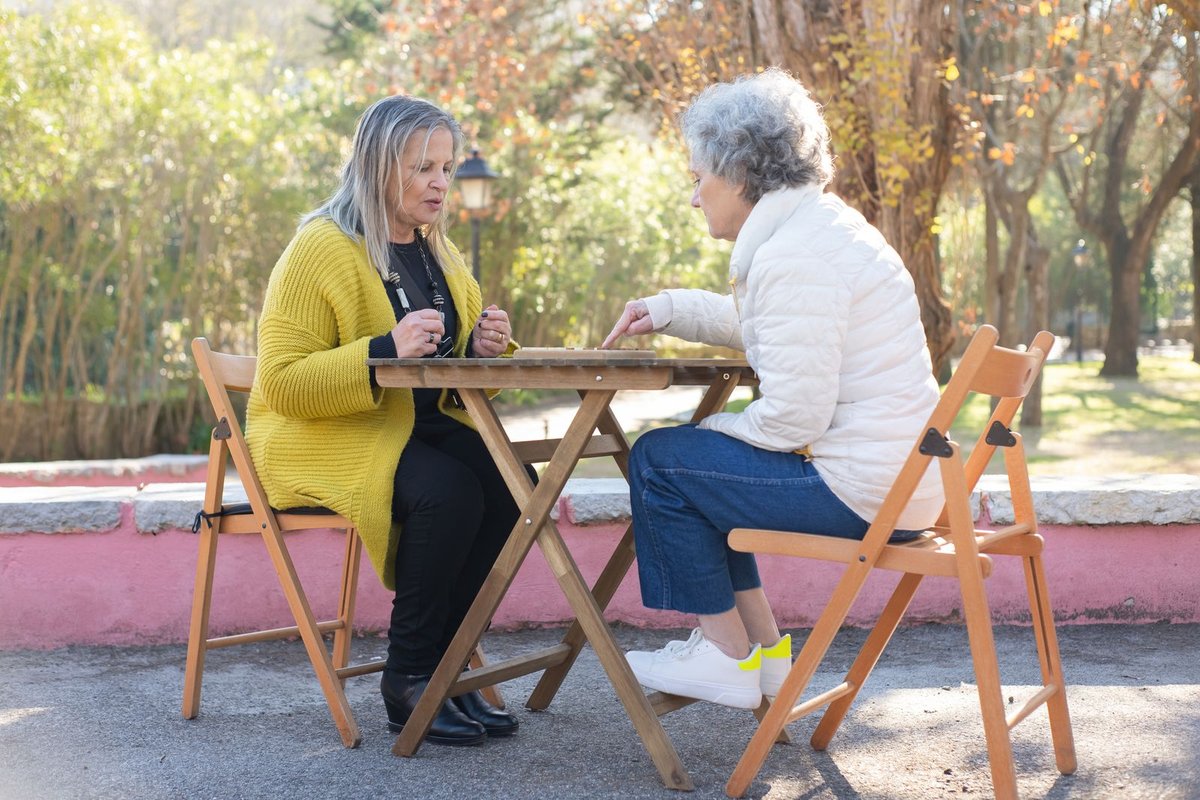
Centers are not the only answer. NYC Aging’s Geriatric Mental Health Initiative offers screening and counseling to New Yorkers 60 and older, and you do not have to be a center member. Its clinicians speak languages including Cantonese, Mandarin, Italian, Russian and Spanish. For people who rarely leave home, the Friendly Visiting program sends a volunteer by phone, video or in person. Our page on loneliness and mental health for seniors in NYC covers the warning signs and where to turn.
How can family or an aide help someone get to a center?
For many people the barrier is not interest. It is the trip. These steps tend to help.
- Go together the first time. A relative or friend can walk in with them, meet the staff and see what the room is like.
- Ask the center about transportation. NYC Aging says some centers offer rides for essential medical and social service appointments, and that many provide group transportation to and from the center, shopping trips and outings. Its transportation page adds that group trips need at least five older adults.
- Plan the route. Our guides to transportation for seniors in NYC and senior medical transportation cover subway, bus and ride options.
- Make the home ready to leave. A clear path, a place to sit while putting on shoes and no tripping hazards help. Our home safety checklist covers the basics, and centers run falls prevention workshops.
- Use an escort for medical visits. ProLife’s medical escort service is built for doctor visits and procedures and is private pay.
- Ask whether an aide can go along. If the person already has an aide, ask the agency and, for Medicaid hours, the plan, whether accompanying them to a center fits the care plan.
What should I ask on a first visit?
Walk through the center with questions in hand. Official pages do not describe the layout, language or staffing of an individual center, so these are the ones to ask.
- Is there a step-free entrance and an elevator or ramp to the activity rooms?
- Are restrooms easy to reach, and is there seating throughout the day?
- What languages do staff and activities use?
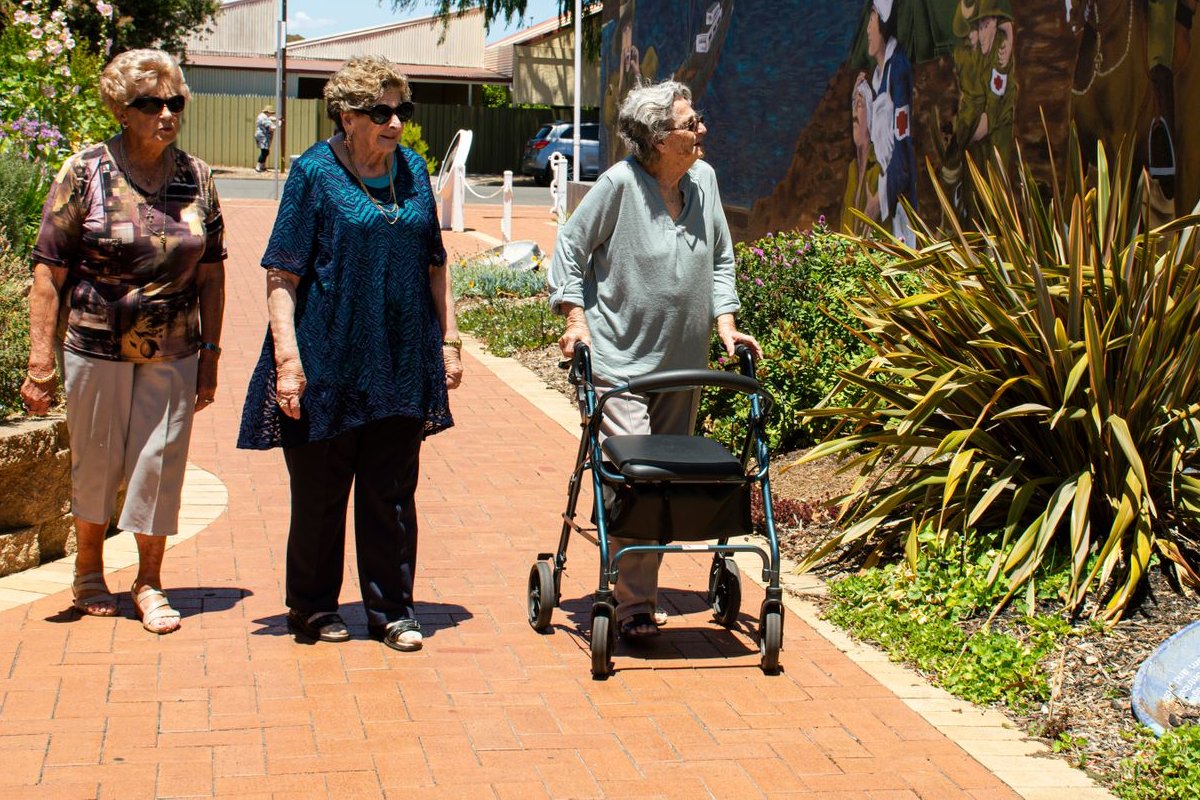
- Can someone who uses a walker or wheelchair move around easily?
- What is the weekly schedule, and when is lunch served? Can special diets be met?
- Is there any transportation to the center or group outings?
- Can staff help with SNAP, Medicare, Medicaid or SCRIE questions?
- What happens if a member seems unwell or confused during the day?
- Can we try a day or two before signing up?
Accessibility needs vary, so the visit tells you more than a brochure will. If a center does not fit, Aging Connect can point you to other services. People who are deaf or hard of hearing can reach NY Connects through the NY Relay System at 711.
What if you live outside New York City?
The rest of the state has its own network, and the starting point is NY Connects. The state Office for the Aging describes it as a free, no-wrong-door service for information on long-term services and supports. The statewide number, 1-800-342-9871, connects callers to their local office by county. Local Area Agencies on Aging are among the access points.
For New Yorkers 60 and older anywhere in the state, the Virtual Senior Center is free. In New York City, NY Connects is run by NYC Aging, and its borough offices include Brooklyn at (718) 671-6200 and Queens at (718) 559-4400.
Where to start and what to keep in mind: advice from our nurse director
Anna Klyauzova, RN, MSN, MPA, Director of Patient Services at ProLife Home Care, on what she sees in practice:
If you don’t know what you qualify for, start with what is on the table: insurance, income, benefits already received and the person’s care needs. You don’t have to fill out a dozen applications this week. First find out which programs fit. NYC Aging, NY Connects and Medicaid specialists are good places to ask, and hospital Medical Social Services can help in tricky situations.
Small things matter more than people expect: tea together, talking about the news, looking through family photos, a short walk. The signs that worry me are loss of interest in things the person used to enjoy, refusing food, trouble sleeping, withdrawing and constant sadness. Aides report these to the nurse, and we ask the family to see a doctor. Depression is not a normal part of getting older.
We are a licensed home care agency in Brooklyn and Queens, licence #2572L001, New York State Department of Health. If a parent needs more help than a center can give, we can talk through the options, including in-home care. Call (718) 232-2777 or use our contact page.
Hours, programs and eligibility can change. Everything above was checked on 16 October 2026 against nyc.gov (NYC Aging), aging.ny.gov, the Virtual Senior Center site and cdc.gov. Call the center or Aging Connect to confirm before you go. This page is general information, not medical or legal advice.
Frequently asked questions
How do I find a senior center near me in NYC?
Use the services finder on the NYC Aging website, call Aging Connect at 212-244-6469, or dial 311. They can tell you which older adult center is closest to your address.
How old do you have to be to go to a senior center in NYC?
NYC Aging says membership is open to New Yorkers age 60 and older.
Are NYC senior centers free?
Membership is free, according to NYC Aging. A 2019 city press release said income is never a barrier and meals carry a nominal suggested donation, so confirm any current charge with the center.
Do I need to be a citizen or have a certain income to join?
A 2019 NYC Aging press release states immigration status and income are never barriers to membership. The current city page lists only age 60 and older and New York City, so confirm with the center if you have concerns.
What is the difference between a senior center and adult day care?
A senior center offers free meals, activities, classes and social services. Social adult day care is for people who need help with daily activities, and offers supervision and personal care, usually for Medicaid or private payment.
Can someone with memory loss or a walker attend a senior center?
It depends on the center and the person’s needs. Ask about access, staffing and what support staff can give. If the person needs supervision or personal care, adult day care may fit better.
Is there a senior center option if I live outside New York City?
Yes. Call NY Connects at 1-800-342-9871 to be connected to your local office, and ask about the nearest senior center or Area Agency on Aging. The Virtual Senior Center is free for any New Yorker 60 and older.