A home safety checklist for an older adult in New York comes down to six checks: fall hazards in each room, working smoke and carbon monoxide alarms, a safe stove and hot water, medicines stored safely, a door and phone routine that blocks scams, and a way to call for help. The CDC’s “Check for Safety” checklist and the National Institute on Aging (NIA) both suggest going room by room and fixing the easy items first. Many fixes are inexpensive, and some New York programs pay for them.
What should you check first in each room?
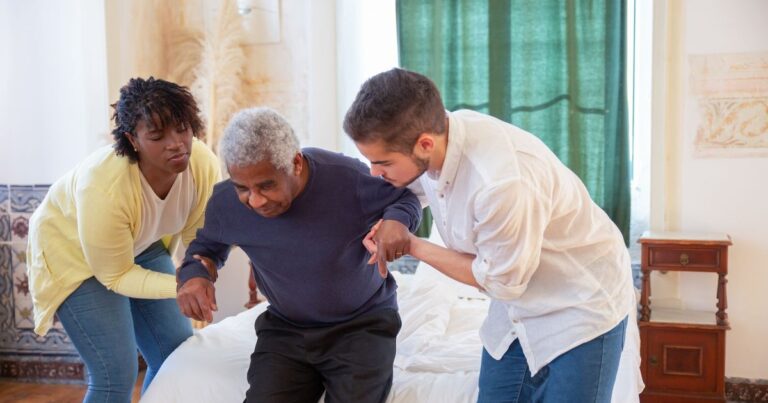
NIA says more than one in four people age 65 or older fall each year, and that many falls can be prevented, including by making the home safer. The CDC’s Check for Safety checklist turns that into questions you can answer room by room. This table is a short version of it.
| Area | What to look for | Simple fix |
|---|---|---|
| Stairs and steps, indoors and outdoors | Objects on stairs, broken or uneven steps, loose carpet, a loose handrail or a rail on one side only, no light at top and bottom | Keep stairs clear, repair steps, secure carpet or use non-slip treads, rails on both sides, lights and switches at both ends |
| Floors and living areas | Furniture in the walking path, throw rugs, lamp or phone cords across the floor | Move furniture, remove rugs or use double-sided tape or a non-slip backing, coil or tape cords along the wall |
| Bathroom | A slippery tub or shower floor, no support getting in and out of the tub or up from the toilet | Non-slip mat or self-stick strips, grab bars inside and next to the tub and next to the toilet |
| Bedroom | A bedside light that is hard to reach, a dark path to the bathroom | A lamp within reach, nightlights (some turn on by themselves) |
| Kitchen | Everyday items on high shelves, an unsteady step stool | Keep daily items about waist high, use a step stool with a bar to hold, never a chair |
| Everywhere | Smooth-soled slippers, socks on stairs, icy walkways at the door | Nonskid, rubber-soled, low-heeled shoes; sand or ice melt by doors (NIA) |
NIA says not every change may be necessary, and a fall should always be mentioned to the doctor. Our guides to fall prevention in NYC apartments and grab bars and walk-in tubs go deeper. If you rent, ask the landlord before changing fixtures.
How do you make the kitchen and hot water safer?
The FDNY’s safety booklet for seniors calls cooking accidents the leading cause of fire and fire injuries in the home. NFPA’s 2020 to 2024 averages say unattended equipment is a factor in a quarter of home cooking fires and half of the deaths.
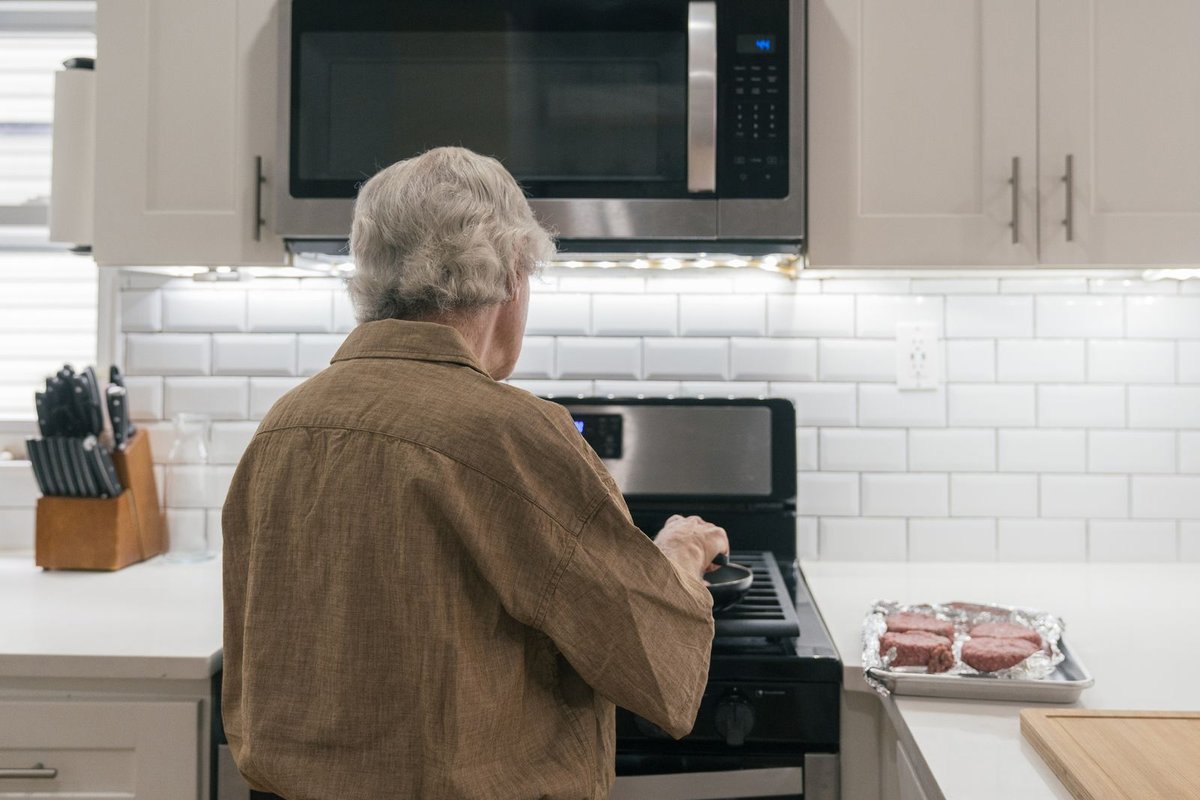
- Stay with the pan. Stay in the kitchen while frying, boiling or broiling, and use a timer when simmering or baking. NFPA advises against using the stove when sleepy or after alcohol.
- Keep a lid beside the pan. For a grease fire, slide the lid on and turn off the burner. Never use water. If it does not go out, get everyone out and call 911 from outside.
- Dress and arrange for safety. The FDNY recommends short or tight sleeves, pot handles turned inward, and towels kept away from the stovetop, and says never to heat the home with the oven.
Hot water needs its own check. The Consumer Product Safety Commission (CPSC) says most adults get third-degree burns from two seconds at 150°F, six seconds at 140°F and thirty seconds at 130°F, and even 120°F can burn after five minutes. It urges lowering water heaters to 120°F. The FDNY booklet suggests 110°F and anti-scald devices on faucets.
In an NYC rental you usually do not control the boiler, and HPD requires owners to supply hot water at a constant minimum of 120°F. That is a floor, not a cap. Test the tap with a thermometer and ask the building about anti-scald options. CPSC’s scald guidance explains how.
Are smoke and carbon monoxide alarms required in NYC homes?
In most apartment buildings, yes, and the owner must provide them. According to HPD, owners of multiple dwellings must provide at least one approved smoke detector in each unit, plus a carbon monoxide detector where the building has fossil fuel burning devices. Tenants must test them at least monthly, replace batteries at least twice a year and never paint over them.
NFPA says to replace the whole unit if it is over 10 years old. The FDNY adds that smoke and CO alarms are not substitutes for each other, and if a CO alarm sounds everyone should get out and call 911. For hearing loss, the FDNY and NFPA both point to alarms with a flashing light or bed shaker.
| Fire and security check | What good looks like |
|---|---|
| Smoke alarms | Inside and outside every sleeping area and on every level, tested monthly, unit replaced after 10 years (NFPA) |
| CO alarm | At least one working alarm, separate or combined with the smoke alarm (FDNY) |
| Cords and heaters | No frayed cords, none under rugs, space heaters 3 feet from anything that burns and plugged into the wall, not an extension cord (FDNY) |
| Apartment door | Fireproof and self-closing, lock opens from inside with a thumb turn, no key needed (FDNY) |
| Windows and fire escape | Windows open easily from inside, fire escape window clear, any security gate FDNY approved (FDNY) |
| Bedside | Phone, glasses, keys, hearing aids and a light within reach (FDNY) |
The FDNY’s Get Alarmed NYC program installs free smoke alarms and gives home fire safety education in all five boroughs. Requests are made online.
What should you do in a fire in a high-rise or walk-up?
It depends on the building type and where the fire is. The FDNY’s fireproof and non-fireproof tip sheet says to check with the Department of Buildings if you are unsure which yours is. Always follow Fire Department instructions on the day.
- Fire in your apartment, any building. Get out, close all doors behind you, do not use the elevator, and call 911 from a safe place.
- Fire elsewhere in a non-fireproof building. It is usually safer to leave right away. Check the door with the back of your hand first. If it is hot, do not open it and use the fire escape window.
- Fire elsewhere in a fireproof building. It is usually safer to stay inside with the door closed. Call 911 with your apartment number.
Owners of buildings with three or more units must post a fire safety plan inside every apartment’s front door. If your parent cannot get out alone, NFPA recommends naming a person in the household to help, plus a backup.
How should medicines be stored at home?
NIA’s advice is practical. Keep medicines out of reach of children and pets, keep prescription pain medicines such as opioids in a locked cabinet or drawer, check expiration dates, discard unused or expired medicines promptly, and keep them away from heat and direct sunlight. Ask the doctor or pharmacist before any change in how something is taken.
If someone swallows the wrong medicine, Poison Control (1-800-222-1222) is free and confidential. Call 911 if the person collapses or has trouble breathing. See our medication management guide.
How can a senior stay safe from scams at the door and on the phone?
The FTC lists four signs of a scam: the caller pretends to be from an organization you know, says there is a problem or a prize, pressures you to act immediately, and tells you to pay in a specific way, such as a gift card, wire, cryptocurrency or payment app. Caller ID can be faked. A simple rule: you can hang up, close the door, and say “I will call you back.”

Here is how to respond in the most common situations.
| Situation | Safer response |
|---|---|
| A caller says a relative is in trouble and needs money now | Hang up, call the relative on a number you already have, and talk to someone you trust first (FTC) |
| A “bank” or “government” caller says an account is at risk | Do not share Social Security, bank or card numbers; look up the organization’s real number yourself (FTC) |
| Anyone demands a gift card, wire, crypto or payment app | Do not pay; these are scam payment methods (FTC) |
| A stranger at the door offers repairs | In NYC, home improvement work over $200 needs a licensed contractor. Check the license through 311 or nyc.gov/dcwp, get a written contract, never pay cash, and pay no more than 25% upfront (DCWP) |
Report scams at ReportFraud.ftc.gov. The New York Attorney General’s help line is 1-800-771-7755. If someone close to your parent is pressuring them for money, see our elder abuse guide.
Security and fire safety must work together. NFPA says security bars on doors and windows should have emergency release devices that open easily from inside, and the FDNY says only FDNY-approved gates may go on a fire escape window.
What belongs in a simple emergency plan, and what are the heat rules?
NYC Emergency Management’s advice for older adults makes a good template:
- Ask at least two people to be in your support network, give them spare keys, and tell them where your emergency kit is.
- Keep a list of medications, doses and reasons, and refill when fewer than seven days remain.
- Stock water and nonperishable food. For powered medical equipment, ask the utility about life-sustaining equipment listings.
- Include any home health aide or visiting nurse in the plan, and register for free Notify NYC alerts through the app, nyc.gov/notifynyc or 311.
For heat, HPD says it must be provided from October 1 to May 31. When it is below 55°F outside, apartments must be at least 68°F from 6 a.m. to 10 p.m. and at least 62°F overnight. If there is no heat or hot water, tell the landlord first, then call 311. Our heat and cold safety guide covers warning signs. For HEAP heating help, call HRA at 718-557-1399 or see its energy assistance page.
When should you add a medical alert system?
A checklist cannot rule out every fall. NIA suggests carrying a charged phone at all times, arranging daily contact with a family member or friend, and considering a button on a necklace or bracelet that calls for help. Ask whether your parent lives alone, has fallen before, and could reach a phone from the floor. A button does not replace regular check-ins. Our medical alert guide explains what to compare and who may pay.
Where can you get free help with home safety in NYC?
- NYC Aging Home Modification Program. A federally funded program with a home assessment by an occupational therapist and no-cost changes such as grab bars, railings, non-slip strips, shower chairs and better lighting. The 2026 application lists age 62 or older, living in the five boroughs, income at or below 80% of the NYC area median income, no project-based rental assistance, and plans to stay in the home at least two years. Call 212-602-4455 or email HomeMod@aging.nyc.gov, per the NYC Aging application.
- Get Alarmed NYC. Free smoke alarms, requested online.
- Other help. For ramps, see how Medicaid pays for ramps. Equipment options are in free medical equipment, and other programs in financial help for seniors in NYC. Aging Connect, 212-244-6469, or 311 can point you to aging services.
How do you use the checklist with a parent without taking away independence?
NIA notes that most people want to stay in their own homes and keep their independence. These steps keep your parent in charge.
- Ask before you inspect. Start with what worries them or has felt harder lately, not your list of concerns.
- Walk through together in daylight. Let them lead.
- Fix urgent items first. NIA says to correct immediate dangers, such as loose stair railings and poor lighting, first.
- Offer choices. Skip changes they do not need yet, and let them pick the lamp or the mat.
- Set a date to look again. Needs change, so recheck together.
If a parent refuses help, read when a parent refuses home care. If memory loss is part of the picture, see dementia care at home.
Home safety advice from our nurse director
Anna Klyauzova, RN, MSN, MPA, Director of Patient Services at ProLife Home Care, on what she sees in practice:
A registered nurse (RN) from the agency usually does the first assessment. She meets the patient and talks through their health and care needs. She checks whether there is a risk of falls, memory problems or disorientation, and how safe the home is. We look closely at what the person can really do, not just what they say they can do. It is far easier to arrange safe care before things reach a crisis.
We are a licensed home care agency in Brooklyn and Queens, licence #2572L001, New York State Department of Health. For help with the daily side of staying safe, such as a personal care aide or other in-home care, call (718) 232-2777 or use our contact page.
Rules, programs and phone numbers change. Everything above was checked on 15 October 2026 against cdc.gov, nia.nih.gov, nfpa.org, cpsc.gov, ftc.gov, ag.ny.gov and nyc.gov (FDNY, HPD, NYC Aging, HRA, DCWP, Emergency Management). Confirm details with the agency before relying on them. This page is general safety information, not medical or legal advice. For a medicine or health question, ask the prescriber or doctor, and in an emergency call 911.
Frequently asked questions
What should be on a home safety checklist for seniors?
Fall hazards in each room (stairs, rugs, cords, lighting, bathroom, kitchen), working smoke and carbon monoxide alarms, safe stove habits and hot water, medicines stored safely, door and phone scam rules, and a way to call for help. The CDC’s Check for Safety checklist is a good free starting point.
What is a safe hot water temperature for an older adult?
CPSC urges water heaters set to 120°F, and notes that even at 120°F a five-minute exposure can burn. The FDNY’s booklet for seniors suggests 110°F. NYC requires building owners to supply at least 120°F, so tenants should test the tap and ask about anti-scald devices rather than expect a lower building setting.
Are smoke detectors required in NYC apartments?
Yes. HPD requires owners of multiple dwellings to provide at least one approved smoke detector in each unit, and a carbon monoxide detector where fossil fuel burning devices are present. Tenants must test them monthly and replace batteries at least twice a year.
Should an older adult in a high-rise stay or leave during a fire?
It depends. The FDNY says that in a fireproof building with a fire elsewhere it is usually safer to stay inside with the door closed and call 911, while in a non-fireproof building it is usually safer to leave right away. If the fire is in your apartment, get out. Follow Fire Department instructions.
How can I protect my parent from scam calls and door-to-door sellers?
Agree on a rule: no money, gift cards or personal numbers in response to an unexpected call or visit, and call back on a number you already know. For repairs, check that a contractor has a New York City license through 311 or nyc.gov/dcwp before work starts.
Who pays for grab bars and railings for low-income seniors in NYC?
The NYC Aging Home Modification Program provides no-cost changes such as grab bars and railings for eligible older adults, after a home assessment by an occupational therapist. The 2026 application requires age 62 or older and income at or below 80% of the NYC area median income. Call 212-602-4455 to confirm availability.
When does a senior need a medical alert system?
Ask whether your parent lives alone, has fallen before, or could reach a phone from the floor; if the answers worry you, look into one. NIA lists emergency response systems alongside a charged phone and daily contact. A medical alert is not a substitute for regular check-ins.