
Older adults become dehydrated more easily because thirst weakens with age, the body holds less water in reserve, and illness, heat or some medicines can increase fluid loss. Common warning signs include a dry mouth, dark urine, passing little urine and dizziness, while confusion, fainting, very little urine or a rapid heartbeat mean getting medical help right away. No medical source gives one daily fluid amount for every older person, so the right amount is a question for their doctor.
Why are older adults more likely to become dehydrated?
According to NIH’s MedlinePlus Magazine, as we age our bodies do not retain fluids as well and we may become less aware of thirst. MedlinePlus lists older adults, people with diabetes or kidney problems, and people who take medicines that make them urinate or sweat more among those more likely to develop dehydration.
| Risk factor | What the sources say |
|---|---|
| Weaker thirst | A published review of hydration in older adults says the thirst sensation often diminishes with age, so a person may not feel the need to drink. |
| Kidney changes | The same review reports that the kidneys’ maximum ability to concentrate urine falls by more than half by age 80, so more water is lost in urine. |
| Medicines | The CDC’s clinical guidance on heat lists diuretics as causing volume depletion, dehydration and reduced thirst, and ACE inhibitors and ARBs as reducing thirst. |
| Illness | MedlinePlus lists fever, vomiting and diarrhea as common ways the body loses fluid. |
| Memory problems | The review notes that people with memory problems may forget to drink. |
| Limited mobility or swallowing problems | Reduced mobility and difficulty eating and drinking are listed as risks. |
On medicines, please do not stop or skip one because of dehydration worries. The CDC’s guidance for clinicians warns against abruptly stopping medications without a plan, and any change belongs to the prescriber. Take a current medication list to every appointment (see our guide to medication management for seniors). A separate article covers medications linked to dementia risk, a different question but another reason to ask for a regular review.
What are the signs of dehydration in an elderly person?
The table below, from the MedlinePlus Medical Encyclopedia, separates milder signs from severe ones.

The National Institute on Aging adds that a person with Alzheimer’s disease may not be able to tell you what is wrong, so caregivers need to watch for signs. Its caregiver page lists dry mouth, dizziness, hallucinations (which may also come from Alzheimer’s itself) and a rapid heart rate as signs of dehydration.
| Level | Signs listed by MedlinePlus |
|---|---|
| Mild to moderate | Thirst, dry or sticky mouth, not urinating much, darker yellow urine, dry and cool skin, headache, muscle cramps |
| Severe | Not urinating, or very dark yellow or amber urine; dry, shriveled skin; irritability or confusion; dizziness or lightheadedness; rapid heartbeat; rapid breathing; sunken eyes; listlessness; shock; unconsciousness or delirium |
MedlinePlus says severe dehydration is a life-threatening emergency, and that when it is treated quickly a person should recover completely. Diagnosis belongs to a clinician, who checks blood pressure, heart rate and skin elasticity and may order blood and urine tests.
Can dehydration cause confusion, and what about infections?
Yes, confusion is on MedlinePlus’s list of signs that need help right away. The NIA also notes that medical problems in someone with Alzheimer’s can cause confusion and behavior changes. A sudden change in alertness or behavior should not be put down to “just the dementia” until a clinician has looked.
Illness and dehydration feed each other: fever, vomiting or diarrhea make the body lose fluid faster, and a person who feels unwell often drinks less. MedlinePlus advises that anyone with a fever, vomiting or diarrhea should drink plenty of fluids without waiting for signs of dehydration, and that families should watch how much older adults can drink when sick. Our guide to delirium versus dementia explains why sudden confusion is treated as urgent.
When should you get medical help or call 911?
MedlinePlus says to get medical help right away if dehydration symptoms come with confusion, fainting, lack of urination, rapid heartbeat, rapid breathing or shock. Its encyclopedia says to call 911 or the local emergency number if the person loses consciousness, has any change in alertness (such as confusion or seizures), has a fever over 102°F (38.8°C), shows signs of heatstroke such as a rapid pulse or rapid breathing, or does not improve or gets worse despite treatment.
Pulling those sources together, a sensible order is:
- Look for the emergency signs first. Confusion, fainting, no urine, a racing heartbeat or fast breathing call for immediate help.
- If the signs are milder, call the doctor or nurse line the same day. MedlinePlus advises calling the provider when you think someone may become dehydrated, before it gets worse.
- Offer small sips while you wait. MedlinePlus suggests sips of water or ice chips, and for someone having trouble keeping liquids down, small sips are better than large drinks.
- Do not give salt tablets. MedlinePlus warns they can cause serious complications. Tell the clinician about drinking, urine, fever, vomiting or diarrhea, and medicines.
This is general information from public health sources, not a substitute for the person’s own doctor.
How much should an older adult drink in a day?
There is no single number that suits every older adult. The CDC says water recommendations vary by age, sex, pregnancy status, activity level and breastfeeding status, and that you need more in hot climates, when active, with a fever, or with diarrhea or vomiting. Water-rich foods such as many fruits and vegetables also count.
| Source | What it says |
|---|---|
| NIH MedlinePlus Magazine | It depends on age, activity level and climate, but a good general rule is about eight glasses of fluids a day. Water is best, and juices, herbal teas and fruits and vegetables with a lot of water help too. |
| NIA (bladder health) | Drink enough fluids that you need to urinate every few hours. Some people need to drink less because of conditions such as kidney failure or heart disease, so ask your health care provider. |
| MedlinePlus | Each person’s needs can be different, so ask your provider how much you should drink each day. |
| CDC survey brief | Reference “adequate intake” levels from 2004 are 3.7 liters (125 ounces) for men and 2.7 liters (91 ounces) for women, counting water from all foods and drinks. Average intake in people 60 and over was 2.92 liters for men and 2.51 liters for women. |
The last row is a population figure that includes the water in food, not a target for one person. Treat every number above as general information, not a prescription.
When fluids may need to be limited
Some conditions reverse the usual advice. A review of hydration strategies notes that fluid restriction may be needed in heart failure, kidney disease or liver dysfunction. If a doctor has set a limit, the NIA’s hot weather page says to ask the doctor what to do when it is very hot. Do not push extra fluids on a person with a restriction. Our guide to congestive heart failure care at home explains why heart patients often have a fluid plan.
How can you help an older person drink more?
Small, steady habits work better than occasional large drinks. The hydration review above recommends offering water with meals, between meals and when medicines are given, and encourages drinking steadily through the day rather than in large amounts at once.
- Offer a drink every time you see the person, for example with each meal, at medicine times and after the bathroom.
- Keep a filled cup where the person can see and reach it, and use reminders: the review says phone apps can help prompt regular drinking.
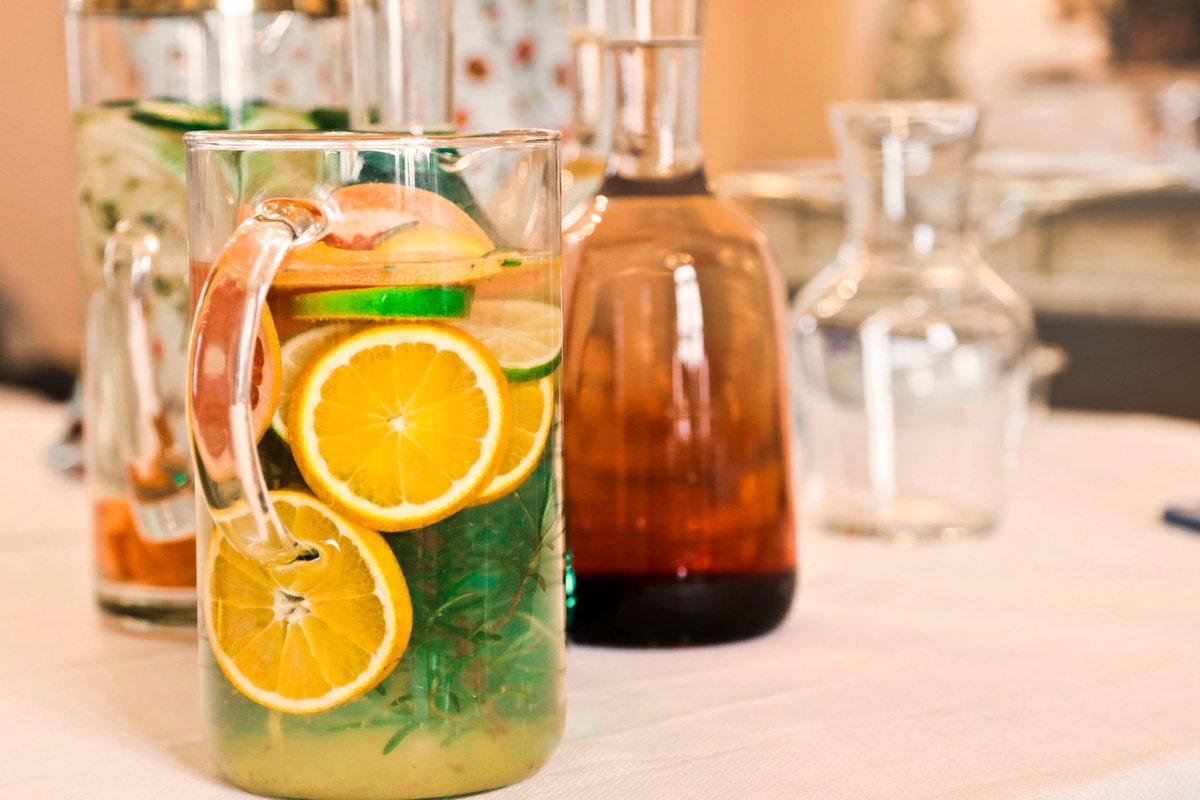
- Change the flavor. The review says flavoring water may encourage people to drink more. If the person does not want plain water, the NIA suggests juice, flavored water, broth, milk, or decaffeinated coffee or tea.
- Add water-rich foods. The review lists watermelon, cucumbers, celery, lettuce, zucchini, spinach and strawberries as more than 90% water. Soup and broth also count as fluid. Our nutrition guide for NYC seniors has more on meals.
- Ask why the person is not drinking. The review gives limited mobility, poor eyesight, depression and fear of incontinence as reasons. If the bathroom trip feels risky, see our fall prevention tips.
MedlinePlus advises avoiding drinks with sugar and caffeine. On sports drinks, it says they may help if electrolytes have been lost, but some contain a lot of sugar. Ask the clinician before making them a regular drink, especially with diabetes, heart or kidney disease.
What if swallowing is difficult or liquids are thickened?
Swallowing problems are more common in older adults, and MedlinePlus notes that they can make it hard to take in enough calories and fluids. The American Speech-Language-Hearing Association lists dehydration among the consequences of dysphagia and says dehydration risk is one factor to weigh when diet changes such as thickened liquids are considered.
A systematic review found that in nine of ten studies measuring intake, people drank less thickened fluid than their basic water needs, and said strict monitoring of fluid volume is essential. Follow the swallowing specialist’s plan exactly, tell them if the person drinks very little, and do not thicken or un-thicken liquids on your own. Our guide to swallowing problems and home care covers the topic in more depth.
Does hot or cold weather make dehydration more likely?
The NIA says older adults are more likely to take medicines that alter the body’s ability to control temperature or sweat, and that dehydration can occur in hot weather or in homes without air conditioning. For heat it advises plenty of liquids such as water, fruit or vegetable juices or drinks with electrolytes, and avoiding alcohol and caffeine. Our guide to heat and cold safety for NYC seniors covers apartments and city programs.
What can a home health aide or nurse do?
| Who | What they can do about hydration |
|---|---|
| Home health aide or personal care aide | Offer and encourage drinks, notice changes in how the person looks and feels, and report them to the nurse or coordinator. Tracking how much is drunk is for the nurse or care plan to decide. |
| Registered nurse | Assesses the person’s needs, checks the care plan against their condition, and works with the doctor. Our nurse services page describes this work. |
| Doctor | Diagnoses dehydration, sets any fluid limit, and reviews medicines |
An aide does not diagnose or decide how much a person should drink. Families who need regular help with daily routines can read about our personal care services.
Hydration at home: advice from our nurse director
Anna Klyauzova, RN, MSN, MPA, Director of Patient Services at ProLife Home Care, on what she sees in practice:
Our aides check the temperature in the apartment first, then whether there is water to drink, whether the air conditioner or heat works, and how the person looks and feels. People with dementia or chronic illness need closer watching, because an older person often doesn’t notice they are too hot or too cold. The riskiest client is the one who can’t open a window, switch on the air conditioner or call for help. If the conditions threaten the person’s health, we act right away, and the aide tells the nurse or coordinator.
We are a licensed home care agency in Brooklyn and Queens, licence #2572L001, New York State Department of Health. If you are worried about how much a parent is drinking or you need regular help at home, call (718) 232-2777 or use our contact page. We cannot diagnose dehydration by phone; for urgent symptoms call the doctor or 911.
Medical guidance changes, and each person’s needs differ. Everything above was checked on 16 October 2026 against medlineplus.gov, nia.nih.gov, cdc.gov, pmc.ncbi.nlm.nih.gov and asha.org. Confirm your own situation with the person’s doctor, nurse or pharmacist. This page is general information, not medical advice.
Frequently asked questions
How do you know if an elderly person is dehydrated?
Common signs include a dry or sticky mouth, darker urine, passing little urine, dizziness, headache and tiredness. Severe signs include confusion, fainting, no urine, a rapid heartbeat and sunken eyes. A doctor makes the diagnosis, often with blood and urine tests.
Can an older person be dehydrated without feeling thirsty?
Yes. NIH’s MedlinePlus Magazine says that with age, people may become less aware of thirst. That is why caregivers offer drinks on a schedule rather than waiting for the person to ask.
How much water should an 80-year-old drink a day?
There is no one answer. NIH describes about eight glasses of fluids as a general rule, but says it depends on age, activity and climate, and some people with heart or kidney disease need to drink less. Ask the person’s doctor for a personal figure.
Can dehydration cause confusion in the elderly?
Yes. MedlinePlus lists confusion among the signs that need medical help right away. Sudden confusion has other possible causes too, including infections and medicines, so it should be checked by a clinician.
What should I do if my parent refuses to drink?
Try different drinks and temperatures. The NIA suggests juice, flavored water, broth, milk, or decaffeinated coffee or tea, and soups and watery fruit also count. If refusal continues, or the person coughs when drinking or seems unwell, tell their doctor or nurse.
When is dehydration an emergency?
MedlinePlus says to get help right away for confusion, fainting, lack of urination, rapid heartbeat or rapid breathing, and to call 911 if the person loses consciousness, has any change in alertness, or has a fever over 102°F or signs of heatstroke.
Are sports drinks good for dehydration in seniors?
They can help when electrolytes have been lost, according to MedlinePlus, but many contain a lot of sugar. Because of conditions such as diabetes, heart or kidney disease, ask the person’s clinician before using them regularly.