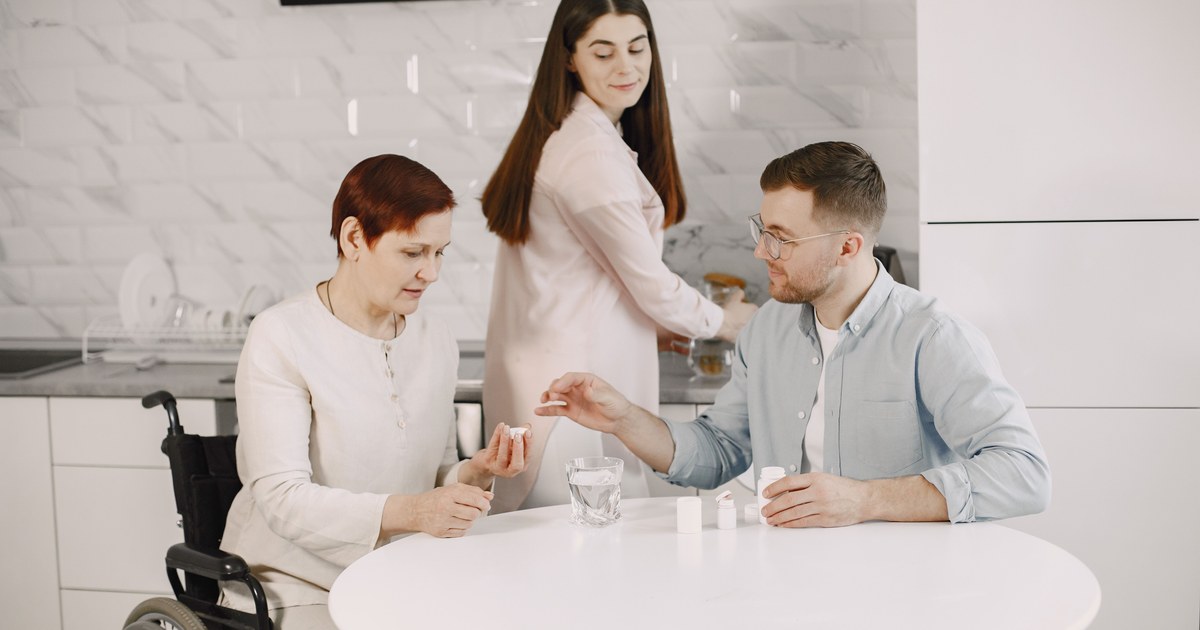
ALS (amyotrophic lateral sclerosis) affects the nerve cells controlling voluntary muscles — the ones used for walking, speaking, swallowing, and eventually breathing. There’s no fixed timeline for how it progresses: some people decline gradually over years, others more quickly, and the disease affects everyone differently.
How needs typically change over time
ALS usually starts with weakness in a single limb, slurred speech, or difficulty swallowing. Early on, muscles may feel weak and soft, or stiff and prone to cramping and twitching. As it progresses, more muscle groups are affected — mobility, speech, eating, and eventually breathing all become involved. In later stages, most voluntary muscles are affected, breathing is significantly compromised, and full-time caregiving support is generally needed.
| General phase | What tends to change |
|---|---|
| Early | Weakness in one limb, slurred speech, or swallowing difficulty; muscle cramping and twitching |
| Progressing | More muscle groups affected — mobility, speech, and eating all increasingly involved |
| Later | Most voluntary muscles affected; breathing significantly compromised; full-time care generally needed |
Because the pace varies so much between individuals, a care plan built around “where things are now” — reassessed regularly — tends to work better than one built around an assumed timeline.
What caregivers report finding hardest
Research on ALS caregiving points to a consistent set of pressures: the overwhelming nature of the diagnosis itself, the intensity of caregiving as needs increase, the cost of treatments and adaptive equipment, difficulty navigating the healthcare system, and often feeling undertrained for the specific tasks ALS caregiving requires. Caregiver burden tends to track the person’s functional status — as needs increase, particularly around wheelchair dependency, the caregiving load and its toll on the caregiver’s own health increase with it.
This is a condition where bringing in professional support earlier, rather than after a family caregiver is already overwhelmed, tends to produce a more sustainable arrangement for everyone involved.
Why a multidisciplinary team matters
ALS affects multiple body systems at once, which is why care is generally most effective through a coordinated team rather than a single provider — neurology, physical and occupational therapy, speech-language pathology (particularly important as swallowing and communication are affected), respiratory support, and nutrition all typically need to be involved as the disease progresses. The ALS Association maintains a network of Certified Treatment Centers and Recognized Treatment Centers, including resources specific to New York, for coordinating this kind of care.
Where home care fits
As ALS progresses, home care needs generally expand from occasional assistance to comprehensive daily support — mobility assistance, help with communication as speech is affected, nutritional support, and eventually more intensive care needs. Skilled nursing becomes increasingly central as respiratory and swallowing involvement progresses, often alongside home health aide support for daily care. Respite care is also worth planning for early, given how demanding ALS caregiving becomes — not as a last resort once a caregiver is already at their limit.
We provide nursing and aide support for families managing ALS across Brooklyn and Queens, coordinating with a person’s broader care team rather than working in isolation. Call (718) 232-2777 or use our contact page to talk through what a care plan should look like as needs change.
Frequently asked questions
How fast does ALS progress?
There’s no fixed timeline — it varies significantly between individuals. Some people decline gradually over several years; others progress more quickly. Symptoms may appear gradually or occur rapidly and then plateau for a period.
What are the early symptoms of ALS?
Weakness in a single limb, slurred speech, or difficulty swallowing are common early signs, along with muscle cramping, twitching, and stiffness.
What makes ALS caregiving particularly demanding?
The intensity of care needs increases as more muscle groups are affected, alongside the cost of equipment and treatment, the complexity of navigating the healthcare system, and the emotional weight of a progressive, currently incurable diagnosis.
Why does ALS care usually involve multiple specialists?
Because it affects movement, speech, swallowing, and breathing over time, effective care typically requires neurology, therapy, respiratory, and nutritional support working together rather than a single provider managing everything.
When should home care support start for someone with ALS?
Generally earlier is better — bringing in professional support before a family caregiver is already overwhelmed tends to produce a more sustainable care arrangement as needs increase over time.
This is general information, not medical advice. Sources checked 27 September 2026. The ALS Association (als.org) maintains New York-specific resources and support services.