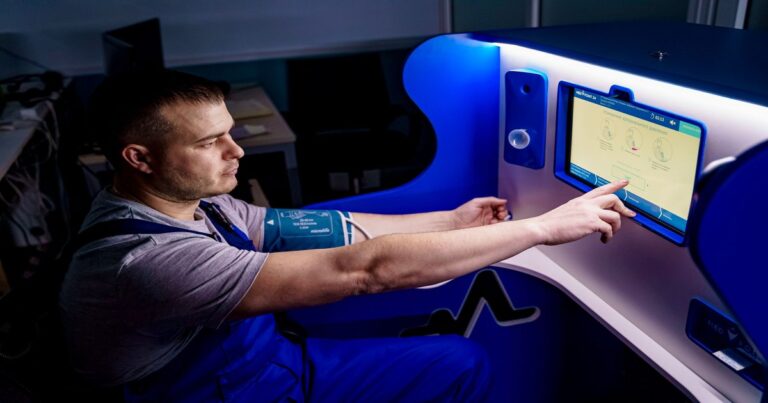

As a senior registered nurse with over twenty years of experience navigating the complex healthcare landscape of New York City, I have seen firsthand how technology can bridge the gap between hospital care and aging in place. In our high-density urban environment, ensuring that seniors are monitored effectively without intruding on their dignity is a constant challenge. Smart mirrors vitals tracking NYC technology is now becoming a cornerstone of modern home care, offering a seamless way to keep our elderly neighbors safe and connected to their medical teams. This innovation represents a significant shift toward proactive, data-driven wellness for New Yorkers living in everything from Upper East Side apartments to Brooklyn brownstones.
Smart mirrors monitor NYC seniors by using advanced optical sensors and AI to capture vital signs such as heart rate, blood pressure, and oxygen saturation just by having the person stand in front of the glass. These devices facilitate a seamless Daily Check-In process, automatically transmitting health data to care providers to detect early warning signs of illness or physical decline. By integrating into a familiar household object, the mirror provides medical-grade monitoring without the need for wearable sensors or invasive equipment.
The Revolution of Remote Patient Monitoring in New York City
The healthcare infrastructure of New York City is one of the most robust in the world, yet it faces unique pressures due to its aging population and the sheer density of its residents. As more seniors express a desire to “age in place,” the demand for sophisticated home-based monitoring has skyrocketed. Smart mirrors vitals tracking NYC is not just a futuristic concept; it is a practical solution for the thousands of elderly individuals living in high-rise buildings where traditional emergency response can be delayed by elevators and complex building layouts. By turning a standard bathroom or bedroom mirror into a diagnostic hub, we are essentially placing a virtual triage nurse in the home.
The integration of these devices into the daily routine of a senior is crucial. Unlike wearable devices, which can be forgotten, lost, or left uncharged, a mirror is a fixed object that most people interact with every morning. This ensures high compliance rates for the Daily Check-In, which is the foundation of any successful remote monitoring program. In NYC, where many seniors live alone in apartments, having a non-intrusive way to verify their health status daily is a game-changer for both social services and private home care agencies.
- Reduced Hospital Readmissions: By catching minor fluctuations in health, NYC hospitals can avoid unnecessary ER visits;
- Increased Compliance: Seniors are more likely to use a mirror than to remember to put on a specialized medical watch.
- Real-Time Alerts: Instant notifications are sent to local NYC care teams if vitals fall outside of a predetermined safe range.
- Dignity in Aging: Monitoring happens passively, allowing seniors to feel like they are living their lives rather than being “patients.”
How Smart Mirrors Capture Vitals Without Physical Contact
The technology behind smart mirrors vitals tracking NYC involves a process called photoplethysmography (PPG). This involves using high-resolution cameras and specialized light sensors to detect tiny color changes in the skin that occur with every heartbeat. While these changes are invisible to the naked eye, the mirror’s AI can interpret them to calculate heart rate, respiration rate, and even estimate blood pressure and oxygen levels. For a senior in the Bronx or Manhattan, this means their health data is collected while they simply brush their teeth or wash their face.
Beyond simple pulse monitoring, these mirrors are equipped with thermal sensors to track body temperature and AI algorithms that analyze facial expressions for signs of pain, distress, or cognitive decline. In the context of a Daily Check-In, the mirror can also ask verbal questions, such as “How are you feeling today?” or “Did you take your medication?” The response is recorded and analyzed for changes in speech patterns or cognitive clarity, which are often early indicators of neurological issues or medication side effects.
- Optical Heart Rate Sensing: Tracking the pulse through skin pigment variations.
- Oxygen Saturation Estimation: Monitoring the way light reflects off blood cells to determine SpO2 levels.
- Respiratory Analysis: Measuring the subtle rise and fall of the chest to calculate breaths per minute.
- Thermal Mapping: Detecting early signs of fever or localized inflammation that might indicate infection.
The Critical Role of the Daily Check-In in Chronic Disease Management
For NYC seniors managing chronic conditions like Congestive Heart Failure (CHF), Chronic Obstructive Pulmonary Disease (COPD), or diabetes, the Daily Check-In is a life-saving protocol. These conditions require constant vigilance; a two-pound weight gain or a slight increase in shortness of breath can signal a need for immediate medication adjustment. Smart mirrors vitals tracking NYC systems allow nurses to see these trends in real-time. Instead of waiting for a monthly doctor’s appointment at NYU Langone or Mount Sinai, the patient’s data is reviewed every single morning.
The “Daily Check-In” serves as a psychological safety net as well. Many seniors in New York experience social isolation, particularly in the winter months when icy sidewalks make leaving the apartment dangerous. Knowing that their mirror is “watching over them” and that a nurse will call if something looks wrong provides a sense of security that reduces anxiety. This holistic approach to health—combining physical data with emotional support—is what makes remote monitoring so effective in the urban environment.
- Early Edema Detection: Mirrors can help identify subtle facial swelling or changes in physical appearance associated with fluid retention.
- Medication Adherence: Reminders pop up on the mirror surface during the morning routine.
- Trend Visualization: Both the senior and their remote care team can view a weekly graph of health trends directly on the glass.
- Proactive Outreach: Home care agencies can prioritize their visits based on which clients show the most significant changes in their daily data.

Navigating NYC Healthcare Challenges with Smart Technology
The NYC healthcare system is incredibly busy, and doctor’s offices are often overwhelmed. By using smart mirrors vitals tracking NYC, patients can provide their physicians with a comprehensive data log that is far more accurate than a patient’s memory. When a senior goes to an appointment in Manhattan, they aren’t just saying they “feel okay”; they are bringing a month’s worth of Daily Check-In data that shows exactly how their body has responded to treatments. This leads to more accurate diagnoses and better-targeted therapies.
Furthermore, the logistical nightmare of transporting a frail senior through NYC traffic for routine vital checks is eliminated. Ambulatory services and Access-A-Ride are often delayed, and the stress of the commute can actually spike a senior’s blood pressure, leading to “white coat hypertension.” Monitoring at home in a relaxed environment provides a “true” baseline of health, which is essential for managing long-term wellness.
- Data Integration: Mirrors can often sync with electronic health records (EHR) used by major NYC hospital networks.
- Emergency Response Coordination: In the event of an emergency, the mirror can provide the first responders with the last several hours of vital sign history.
- Environmental Monitoring: Some mirrors also track room temperature and humidity, which is vital during NYC heat waves or winter cold snaps.
- Family Connectivity: Relatives living outside the city can receive daily updates, ensuring they stay informed about their loved one’s status.
Privacy, Security, and Practical Steps for NYC Families
One of the primary concerns for families considering smart mirrors vitals tracking NYC is data privacy. In a city like New York, where digital security is a top priority, it is essential to choose devices that use end-to-end encryption and comply with HIPAA regulations. The Daily Check-In data must be stored securely and only be accessible to authorized healthcare providers and designated family members. When setting up these systems, families should work with a reputable home care agency that understands the technical and ethical requirements of remote monitoring.
Practical implementation involves more than just buying a mirror. It requires a stable Wi-Fi connection, which can sometimes be a challenge in older, thick-walled NYC apartments. It also requires a partnership with a nursing team that knows how to interpret the data. A Daily Check-In is only useful if there is a professional on the other end ready to act when the mirror flags an abnormality. Families should look for comprehensive programs that include the hardware, the monitoring service, and a clear escalation plan for emergencies.
- HIPAA Compliance: Ensure the mirror and the software platform meet federal standards for medical data privacy.
- Internet Connectivity: Verify that the senior’s home has the necessary bandwidth to support real-time data transmission.
- User Training: While the mirrors are intuitive, an initial training session with an RN can help the senior feel comfortable with the technology.
- Escalation Protocols: Establish a clear chain of command for who is contacted if the mirror detects a critical vital sign.
The Future of Aging in the Five Boroughs
As we look toward the future of healthcare in New York City, the shift from reactive to preventive care is undeniable. Smart mirrors vitals tracking NYC is a flagship example of how we can use the “Internet of Things” (IoT) to protect our most vulnerable citizens. The Daily Check-In is becoming the new gold standard for home care, moving us away from the days when a senior could go days without a health check. By embracing these tools, we are not replacing the human touch of nursing; we are enhancing it, giving nurses the “superpowers” of constant observation and data-driven insight.
For the thousands of seniors living in Queens, Brooklyn, Staten Island, and beyond, this technology offers a path to stay in the homes they love for years longer than previously possible. It reduces the burden on family caregivers and provides a level of medical oversight that was once only available in a hospital setting. As technology continues to evolve, the smart mirror will likely become as standard in the New York home as the refrigerator or the television, serving as a silent sentinel for health and longevity.
- Scalability: These systems can be deployed across large senior living complexes to improve community-wide health outcomes.
- Artificial Intelligence Growth: Future mirrors will likely be able to detect even more subtle signs of illness, such as early-stage tremors or skin changes.
- Cost-Effectiveness: Long-term remote monitoring is significantly less expensive than a single day in a New York City hospital.
- Interdisciplinary Care: Mirrors facilitate better communication between doctors, nurses, physical therapists, and family members.
| Service | What It Includes | Why It Matters |
|---|---|---|
| Remote Vitals Monitoring | Daily tracking of HR, BP, and SpO2 via smart mirror technology. | Detects physiological changes before they become emergencies. |
| Daily Check-In Protocol | Scheduled AI interactions and nurse data reviews every 24 hours. | Ensures consistency and catches “silent” health declines early. |
| NYC Emergency Liaison | Integration with local emergency services and hospital networks. | Speeds up response times in the complex NYC urban environment. |
Frequently asked questions
What exactly is a Daily Check-In for NYC seniors?
It is a scheduled health review where a senior uses a smart mirror to record vitals, allowing a remote nursing team to verify their status every day.
How does smart mirrors vitals tracking NYC help with heart conditions?
The mirror uses optical sensors to monitor heart rate and rhythm changes, which can alert nurses to potential issues like AFib or worsening heart failure.
Is the data from the smart mirror shared with my NYC doctor?
Yes, the data can be compiled into reports and shared directly with your medical team at major NYC hospitals to assist in your care plan.
What happens if the Daily Check-In detects a dangerous vital sign?
An immediate alert is sent to the home care agency’s nursing team, who then follows a protocol to contact the senior, the family, or emergency services if necessary;
Are smart mirrors hard for seniors in New York to use?
Not at all; they are designed to be passive. The senior simply stands in front of the mirror as they normally would, and the technology handles the rest.
Contact ProLife Home Care NYC for a free clinical assessment:(718) 232 – 2777