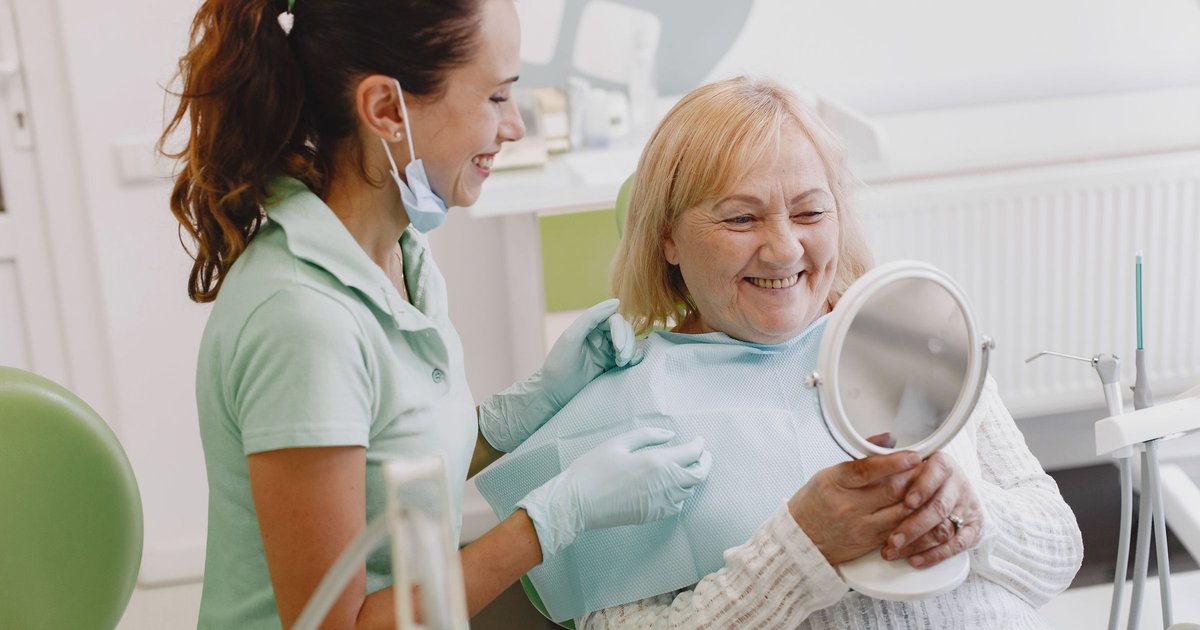
Original Medicare (Parts A and B) generally does not cover routine dental care. Medicare.gov says that in most cases it does not pay for cleanings, fillings, tooth extractions, dentures or implants. Medicare Advantage plans may add dental benefits, and New York Medicaid covers many adult dental services, so the answer often depends on which card a person actually holds.
Does Original Medicare cover dental care?
No, not for everyday dental needs. The Medicare.gov dental page says you pay all costs for services Medicare does not cover. CMS says the Social Security Act excludes care, filling, removal or replacement of teeth and their supporting structures.
| Dental need | Original Medicare |
|---|---|
| Routine exams and cleanings | Not covered in most cases |
| Fillings and tooth extractions | Not covered in most cases |
| Dentures | Not covered in most cases |
| Dental implants | Not covered in most cases |
| Dental work needed because of a covered medical treatment (see below) | May be covered |
| Some dental services during a hospital stay | May be covered |
Does Medicare Part A or Part B cover any dental care?
Yes, in narrow cases. Medicare.gov says it may cover some dental services when you are admitted to a hospital as an inpatient, because of your medical condition or the severity of the procedure. It may also cover dental services directly linked to certain covered treatment, where the dental work is tied to the success of the medical care. Examples from Medicare.gov and CMS:
- An oral exam and dental treatment before a heart valve replacement or a bone marrow, organ or kidney transplant.
- A procedure such as a tooth extraction to treat a mouth infection before cancer treatment such as chemotherapy.
- Exams, infection treatment and complications around head and neck cancer treatment.
- Dental or oral exams and infection treatment before and during Medicare-covered dialysis for end-stage renal disease.
The list has grown through CMS payment rules. The 2025 physician fee schedule rule added the dialysis situations. In the 2026 rule, CMS said it made no proposals in response to public requests for more dental scenarios, such as diabetes, and would keep considering them.
There is a practical catch. CMS says the doctor and the dentist have to coordinate, and the exchange of information has to be documented. Without that record, Medicare will not pay. If your case may fit, ask the treating doctor to contact the dentist before dental work starts.
What do you pay when dental care is covered?
For a covered Part B dental service, Medicare.gov says you pay 20% of the Medicare-approved amount after the Part B deductible, which is $283 in 2026, plus a facility copayment if the service is in a hospital outpatient setting. For premiums and enrollment, see our Medicare Part B guide.
Does Medicare cover dental implants or dentures?
Not under Original Medicare. Medicare.gov lists dentures and implants as items it does not cover in most cases. CMS also lists extra dental work done to prepare the mouth for dentures, such as reshaping the bone or removing a bony growth on the roof of the mouth, as not covered.
Other coverage may help. New York Medicaid can cover dentures and, in certain circumstances, implants (details below). A Medicare Advantage plan might offer something toward them, so read the plan documents first.
Does Medicare cover dental and vision?
Original Medicare covers little of either.
| Service | Original Medicare |
|---|---|
| Routine dental care | Generally not covered |
| Routine eye exams for glasses or contacts | Not covered, per Medicare.gov |
| Glasses or contacts | Part B covers one pair with standard frames, or one set of contact lenses, after cataract surgery that implants an intraocular lens |
| Hearing aids | Not covered. See our guide to Medicare and hearing aids |
Medicare Advantage plans may add some vision, hearing and dental services. See Medicare.gov’s eye exam page for details.
Does Medicare Advantage cover dental?
Often, to some degree, but you cannot assume it. Medicare.gov says plans must cover everything Original Medicare covers and may also offer extra benefits, like some vision, hearing and dental services. CMS reported that 97% of Medicare Advantage plans offered dental supplemental benefits in 2025, a figure about plan availability, not about what any one plan covers.

Before relying on a plan’s dental benefit, check:
- Which services are included. Cleanings and exams are different from fillings, dentures or implants.
- Costs and limits. Ask about copays and any yearly dollar limit on dental.
- The network. Medicare.gov notes that in some plans you must get non-emergency care within the network.
- Approval rules. The booklet says plans may require prior authorization for certain services or items.
- Whether your dentist participates. Ask the dental office directly.
The Evidence of Coverage is the plan document that spells out what it covers and what you pay, and plans send it every year. The Medicare Open Enrollment Period runs October 15 to December 7, and people already in a Medicare Advantage plan can switch from January 1 to March 31, according to Medicare.gov. HIICAP, the state health insurance counseling program, can help you compare plans at 1-800-701-0501. For the bigger picture, see our comparison of Medicare Advantage and Original Medicare.
Do Medigap or standalone dental plans help?
Medigap generally does not. Medicare.gov says Medigap policies generally do not cover dental care, vision, hearing aids, long-term care or private-duty nursing. Our Medigap guide explains what they do pay.
A separate private dental plan is another route. The National Institute on Aging suggests understanding the premiums, covered services and your out-of-pocket costs first. Ask about waiting periods, yearly maximums and whether your dentist is in the network.
What does New York Medicaid cover for adult dental care?
A lot more than Medicare. The New York State Department of Health says Medicaid offers an extensive dental plan through fee-for-service or a Medicaid managed care plan. A person with both Medicare and Medicaid is a Medicaid member, so the Medicaid dental benefit applies even though Original Medicare does not pay for the same care.
| Service | New York Medicaid |
|---|---|
| Oral exams, cleanings, X-rays | Covered when medically necessary |
| Restorations (fillings), extractions | Covered when medically necessary |
| Crowns and root canals | Covered; criteria widened on January 31, 2024 so more natural teeth can be kept |
| Dentures | Covered when medically necessary; prior approval required |
| Implants | Covered in certain circumstances; prior approval and dentist documentation required |
Source: the Department of Health member page and the 2026 Dental Policy and Procedure Code Manual on eMedNY. A few specifics from that manual:
- Prior approval. Procedures marked as requiring it need approval from the Department or the managed care plan before treatment.
- Dentures. They are not normally replaced for eight years unless the Department finds replacement medically necessary; an earlier request needs a justification form signed by the dentist.
- Implants. The dentist must document why other covered options will not work and that the patient is a suitable candidate.
- Not covered. The manual excludes, among other things, immediate dentures, cosmetic work, and fixed bridgework except in limited cases.
What if the person is in a managed care or MLTC plan?
Then the plan handles dental. The Department says all managed long term care plans arrange and pay for dental services when medically necessary, and that covered services differ by plan. For Medicaid managed care, the state told plans in 2024 that for root canals, crowns, replacement dentures and implants they must use the Dental Manual’s criteria and may not add stricter ones, and that members have external appeal rights. If a request is denied, ask the plan how to appeal. To see which Medicaid home care services work alongside dental, read what Medicaid covers for home care and our guide to PACE versus MLTC.
Medicaid has income and resource rules. See Medicare versus Medicaid and financial help for seniors in NYC to find out where you stand.
Where can you find low-cost dental care in NYC?
NIDCR, the dental research institute at the National Institutes of Health, suggests dental school clinics, hygiene schools and federally funded health centers where you pay based on income. In New York City:
- Call 311. The NYC Health Department says to call 311 for help finding a low-cost dentist. Its January 2026 borough lists of low-cost dental clinics include hospital dental departments such as Woodhull and Kings County in Brooklyn and Health and Hospitals Queens, plus community health centers. Contact each clinic for fees and insurance accepted.
- Try a dental school clinic. NYU College of Dentistry says students provide care under faculty supervision at lower fees than most private practices, and that it accepts New York State Medicaid, including Medicaid Managed Care. It has a Brooklyn patient care site, and new patients can call 212-998-9800. Columbia’s College of Dental Medicine runs teaching clinics at 630 West 168th Street; the general line is 212-305-2862. Touro’s teaching practice is in Hawthorne, in Westchester County, outside the city.
- Look at community health centers. The federal Find a Health Center tool lists centers near you. NIDCR says these federally funded centers charge what you can afford, based on income; check which ones offer dental care.
- Plan the trip. Getting a frail parent to the chair is often the real challenge. See senior medical transportation and the medical escort service.
Why does dental health matter for older adults?
According to the NYC Health Department, one in four New York City adults aged 65 and older has no teeth. The National Institute on Aging says a 2020 study of more than 6,000 older adults found those with gum disease and mouth infections were more likely to develop Alzheimer’s disease or a related dementia, though researchers are still working out how the two connect.
NIDCR says people with diabetes are more likely to have gum disease, and that diabetes can slow healing. A 2020 University of North Carolina study found 31% fewer pneumonia cases after one year of a staff mouth care program, but in nursing homes, not at home. It is a reason to keep mouth care consistent, not a guarantee. For diabetes care at home, see our diabetes guide.
What can a home health aide do for daily mouth care?
Daily mouth care is part of personal hygiene, and it cannot replace a dentist. How much help an aide gives depends on their training and the nurse’s care plan.
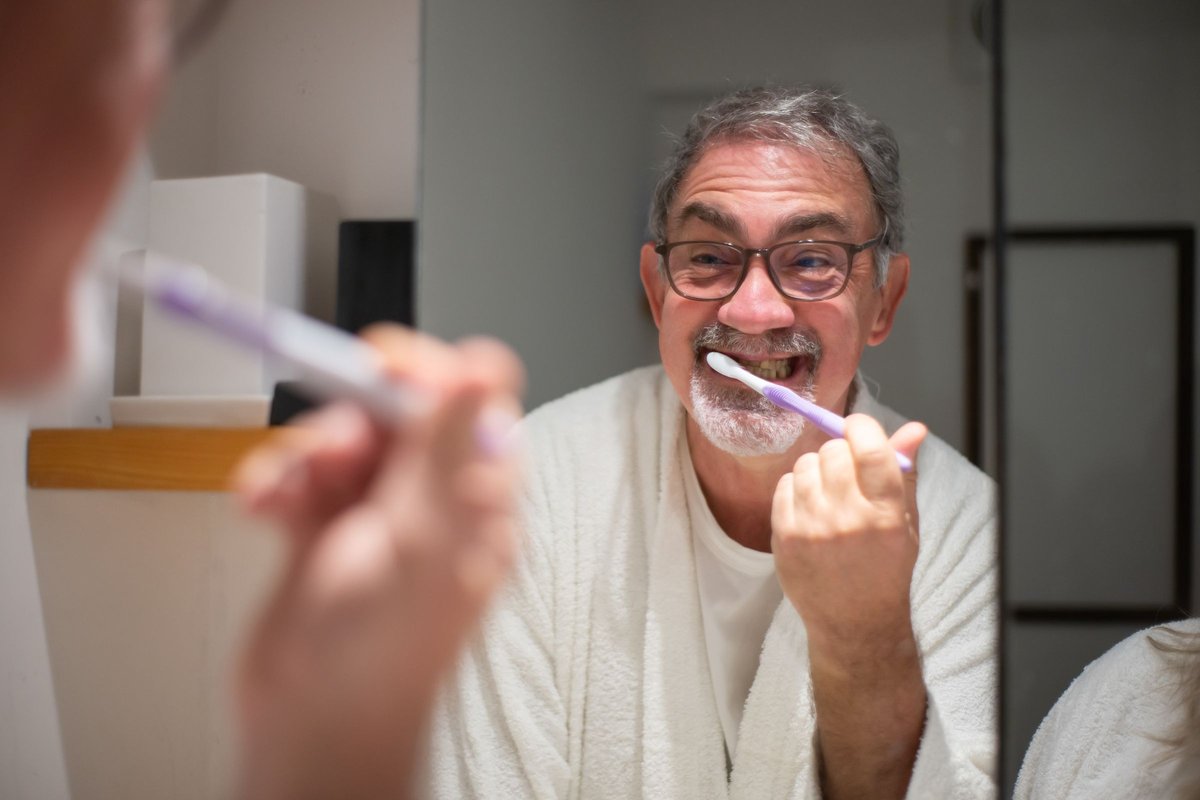
NIA suggests an electric brush or a larger handle for people whose hands struggle with a toothbrush, and links to NIDCR oral health tips for caregivers of people with dementia. Technique, denture care and when to call a dentist are in our oral care guide for seniors and caregivers.
Mouth care and dental coverage: advice from our nurse director
Anna Klyauzova, RN, MSN, MPA, Director of Patient Services at ProLife Home Care, on what she sees in practice:
Oral care is part of daily hygiene. A home health aide or personal care aide can help with brushing, look after removable dentures and set out supplies, as far as their training and the care plan allow. The nurse decides what help each patient needs. Older adults often struggle with dry mouth, dentures that don’t fit and cleaning their own teeth. With dementia, a person may refuse because they don’t understand what is being asked. Stay calm, explain each step and never use force.
If you have no dental coverage, check your insurance first. In New York, Medicaid covers many dental services, and Medicare Advantage plans may add benefits. Without coverage, look at dental school clinics or community health centers that charge by income. Don’t put off treatment because of the cost.
We are a licensed home care agency in Brooklyn and Queens, licence #2572L001, New York State Department of Health. We can talk through what daily personal care or in-home care fits your family. Call (718) 232-2777 or use our contact page.
Coverage rules change, and each plan sets its own details. Everything above was checked on 15 October 2026 against medicare.gov, cms.gov, health.ny.gov, emedny.org, nia.nih.gov, nidcr.nih.gov and nyc.gov. Confirm your situation with your plan, Medicaid, HIICAP or 1-800-MEDICARE. This is general information, not medical, dental or legal advice.
Frequently asked questions
Does Medicare cover dental?
Original Medicare generally does not cover routine dental care such as cleanings, fillings, extractions, dentures or implants. It may cover certain dental services tied to a covered hospital stay or to treatments such as a transplant, heart valve surgery or head and neck cancer care. Medicare Advantage plans may add dental benefits.
Does Medicare Part B cover dental?
Only in the narrow cases where the dental service is linked to a covered medical treatment. Then you pay 20% of the Medicare-approved amount after the Part B deductible. Routine dental care is not covered by Part B.
Does Medicare cover dental implants?
No, Original Medicare does not cover implants in most cases. New York Medicaid can cover implants in certain circumstances, with prior approval and documentation from the dentist. A Medicare Advantage plan’s coverage depends on the plan.
Does Medicare cover dental and vision?
Original Medicare does not cover routine dental care or routine eye exams for glasses. Part B pays for one pair of standard glasses or one set of contacts after cataract surgery with a lens implant. Some Medicare Advantage plans offer extra dental, vision and hearing benefits.
Does Medicare Advantage cover dental?
Many plans include some dental coverage, such as checkups or cleanings, but benefits, limits and networks vary. Read the plan’s Evidence of Coverage or call the plan before booking treatment.
Does New York Medicaid cover dental care for adults?
Yes. The state Department of Health lists exams, cleanings, X-rays, restorations, dentures, extractions, crowns, root canals and implants in certain circumstances, when medically necessary. Some services need prior approval, and managed care plans handle dental for their members.
Where can a senior with no dental coverage get care in NYC?
Call 311 for the city’s low-cost dental clinic lists, try a dental school clinic such as NYU or Columbia, or look up a community health center where fees are based on income. Contact each clinic for fees and appointments.