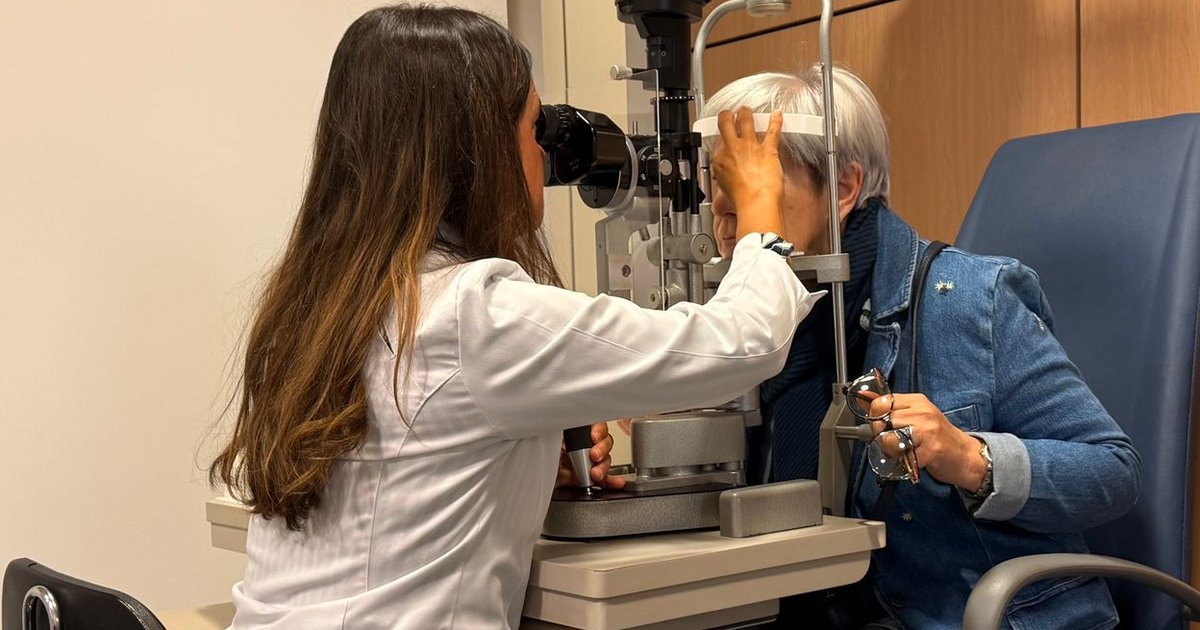
Original Medicare does not cover routine eye exams for glasses or contact lenses, and it does not usually cover glasses or contacts at all. The exceptions are medical: Part B helps pay for cataract surgery, one pair of glasses (or one set of contacts) after cataract surgery with a lens implant, and certain eye tests for people with diabetes, high glaucoma risk or macular degeneration. Some Medicare Advantage plans add vision benefits, and New York Medicaid covers eye exams and eyeglasses with limits.
Does Medicare cover eye exams?
It depends on why the exam is done. Medicare.gov says Original Medicare does not cover routine eye exams (sometimes called “eye refractions”) for eyeglasses or contact lenses, and you pay all costs. It does cover specific eye care tied to a medical condition, shown below.
| Eye service | Original Medicare (Part B) |
|---|---|
| Routine eye exam for glasses or contacts | Not covered. You pay all costs. |
| Glasses or contact lenses | Not usually covered. Exception: one pair of glasses with standard frames, or one set of contacts, after each cataract surgery that implants an intraocular lens. |
| Glaucoma screening | Covered once every 12 months if you are at high risk: you have diabetes, a family history of glaucoma, you are African American and 50 or older, or Hispanic and 65 or older. |
| Eye exam for diabetic retinopathy | Covered once a year if you have diabetes, from an eye doctor legally allowed to do the test in your state. See our diabetes care guide. |
| Macular degeneration tests and treatment | Part B may cover certain tests and treatments for age-related macular degeneration, including certain injectable drugs. |
| Cataract surgery with a conventional lens implant | May be covered, with 20% coinsurance after the deductible. |
For the covered services you pay the Part B deductible first ($283 in 2026 according to Medicare.gov), then usually 20% of the Medicare-approved amount. Hospital outpatient care adds a facility copayment. Our guide to Part B costs and enrollment explains the premium and deductible.
One practical catch: a visit to an eye doctor can mix a medical part and a vision-testing part. Lighthouse Guild explains on its patient page that the office visit and the refraction test are reported as two separate charges, and that most insurers do not pay for the refraction. Ask the office how a visit will be billed before you book.
What does Medicare pay for with cataract surgery and glasses afterward?
Medicare.gov says Part B may cover cataract surgery that implants conventional intraocular lenses. After the deductible, you pay 20% of the Medicare-approved amount to both the facility and the surgeon when it is done in a hospital outpatient department or surgery center. In a doctor’s office you pay 20% for the lens and for the surgery.
After each covered surgery with a lens implant, Part B also covers one pair of glasses with standard frames or one set of contact lenses. Note three details:
- You pay 20% after the deductible, plus any extra cost for upgraded frames.
- Medicare pays only for glasses or contacts from a supplier that participates in Medicare.
- The benefit applies after each covered cataract surgery with a lens implant.
Does Medicare cover dental and vision?
Original Medicare covers very little of either. For vision, see the table above. For dental, Medicare.gov says that in most cases Medicare does not cover routine cleanings, fillings, extractions, dentures or implants. It may cover some dental care that is directly tied to a covered medical treatment, for example an oral exam before a heart valve replacement or a kidney transplant, or some dental services when someone is admitted to the hospital as an inpatient.
A plan covering both vision and dental is something only some Medicare Advantage plans offer (next section). Our pages on oral care for seniors and hearing aid coverage cover the other two common gaps.
Do Medicare Advantage plans cover vision?
Many do, but it varies by plan. Medicare.gov says plans must cover everything Original Medicare covers and may also offer extra benefits such as vision, hearing and dental. You may have to use providers in the plan’s network and service area for non-emergency care, so the plan’s rules decide where you can get your exam and glasses.

Before you assume a plan pays for glasses, call the plan or read its coverage documents and ask:
- Is a routine eye exam covered, and how often?
- Are glasses or contacts covered? Ask whether there is a dollar limit or a set frame selection.
- Which eye doctors and optical shops are in the network?
- What does the plan pay for medical eye care such as cataract surgery, glaucoma or macular degeneration treatment, and do you need a referral?
Our comparison of Medicare Advantage and Original Medicare in New York covers the wider trade-offs.
Does New York Medicaid cover eyeglasses and eye exams for adults?
Yes. The New York State Department of Health’s Medicaid member FAQ lists vision care and eyeglasses among the services Medicaid pays for, and says managed care plans cover eye care. The detailed rules are in the eMedNY Vision Care Manual, Policy Guidelines. The version posted on eMedNY when we checked is dated 1 September 2013, so ask the provider or your plan whether anything has changed since.
| Item | What the Medicaid vision manual says |
|---|---|
| Eye exam | Usual frequency is one complete exam every two years. More often if the person’s condition, such as diabetes or glaucoma, requires it, with an explanation from the provider. |
| Eyeglasses | Usually one pair every two years, after an exam and a written prescription. New lenses can be covered sooner if the prescription changes by at least 0.50 diopter or there is a medical reason such as a rapidly changing cataract. |
| Frames | Choose from Medicaid frame styles. Your own frame is allowed, but Medicaid does not pay for it. |
| Lost or broken glasses | Repair and replacement of lost or destroyed eyeglasses are reimbursable. |
| Contact lenses | Only when medically necessary for an eye condition, on an eye doctor’s recommendation. |
| Low vision | A low vision exam by an optometrist with a special certificate is a Medicaid service, and low vision aids and rehabilitation may be supplied afterward. |
| Not covered | Items include sunglasses, photochromic and progressive lenses, and scratch-resistant coating. |
If the person is in a Medicaid managed care plan, the manual says the plan must provide at least the same vision services as fee-for-service Medicaid, using the plan’s network. For people with both programs, the manual says that when Medicare approves payment, Medicaid remains responsible for the coinsurance and deductible on that claim. Our Medicare vs Medicaid guide explains how the two fit together.
Where can you get free or low-cost eye care in NYC?
These programs publish their own rules, so call before you go. We give no prices because none of them list fixed fees.
| Option | What its official page says |
|---|---|
| SUNY College of Optometry, University Eye Center (33 West 42nd St, Manhattan) | Accepts most health plans, including Medicare and NYS Medicaid. Payment is due at the time of service, but financial assistance may be available. Appointments: 212-938-4001. |
| Lighthouse Guild | Vision and low vision care. Medicaid and New York State Medicare provide benefits for care there, coverage varies by plan, and it says it may be able to help if you are uninsured. Phone: 212-769-6300. |
| NYC Care (NYC Health + Hospitals) | For New Yorkers who do not qualify for or cannot afford insurance. Its ophthalmologists can examine your eyes and give eyeglass prescriptions, with a referral from your primary care provider. Fees are on a sliding scale starting at $0. Phone: 646-NYC-CARE. |
For free help comparing coverage, the city’s page for people with vision disabilities says to call 311 and ask for the Department for the Aging HIICAP program, which gives free, impartial information about Medicare and other health insurance. Our financial help guide lists other programs, and senior medical transportation covers rides to appointments.
Why does vision matter for falls and memory?
The National Institute on Aging says more than one in four people age 65 or older fall each year, lists having your vision checked as a step that helps prevent falls, and notes that even small changes in sight are linked to a higher fall risk. Tell the doctor about any fall, even without pain, because it can point to eyesight or medication problems that can be fixed. Our fall prevention guide for NYC apartments covers the rest of the home.
Vision and thinking are also linked. In a study funded by the National Eye Institute and the NIA of 2,520 older adults, vision loss tended to come before a decline in cognitive scores. The researchers did not prove one causes the other and suggested a possible reason: people with significant vision loss may do fewer activities that keep the mind active. This is research on groups, not a prediction for any one person.
Which eye symptoms need prompt care?
The NIA says to see an eye care professional right away if you:
- suddenly cannot see, or everything looks blurry;
- see many new floaters (specks or “cobwebs”) or flashes of light;
- have redness or swelling of the eye or eyelid.
The CDC lists sudden trouble seeing among stroke warning signs and says to call 911 right away if you or someone else has any of the listed symptoms. Do not wait for an appointment or for insurance questions to be settled. This is general information, not medical advice.
How can lighting and simple aids help at home?
Low vision means vision that cannot be fully fixed with glasses, contacts, medicine or surgery. The National Eye Institute suggests small changes first: brighter lights at home, a magnifying lens for reading and other close-up tasks, and phone or computer settings for higher contrast, larger text or reading aloud. If vision gets in the way of daily life, it suggests asking the eye doctor about vision rehabilitation.

The NIA’s tips for home add:
- brighten the lighting in the room;
- use motion lights that turn on when you enter a room;
- put colored tape on the edge of stairs;
- install dark light switches and outlets so they stand out on light walls;
- use clocks with large numbers and large-print labels on the microwave and stove.
If small print on a medicine label is hard to read, say so to the pharmacist or prescriber instead of guessing at a dose. Our medication management guide has more, and our general eye care page for NYC seniors adds everyday habits.
Which programs fit? Advice from our nurse director
Anna Klyauzova, RN, MSN, MPA, Director of Patient Services at ProLife Home Care, on what she sees in practice:
If you don’t know what you qualify for, start with what is on the table: insurance, income, benefits already received and the person’s care needs. You don’t have to fill out a dozen applications this week. First find out which programs fit. NYC Aging, NY Connects (1-800-342-9871, listed by the state Office for the Aging) and Medicaid specialists are good places to ask, and hospital Medical Social Services can help in tricky situations. Please don’t wait for a hospital stay or a fall to start looking at Medicaid and home care programs. It is far easier to arrange safe care before things reach a crisis.
ProLife Home Care is a licensed home care agency in Brooklyn and Queens, licence #2572L001, New York State Department of Health. We are not an eye clinic or an insurer, so we cannot tell you what your plan will pay for glasses. We can talk through home care options for someone whose eyesight is making daily life harder. Call (718) 232-2777 or use our contact page.
Medicare costs and rules change every year, and Medicaid and plan benefits vary. Everything above was checked on 15 October 2026 against official government and clinic sites. The Medicaid vision manual posted on eMedNY is dated 1 September 2013. Confirm your own coverage with your plan, Medicaid, HIICAP or 1-800-MEDICARE. This page is general information, not medical or legal advice.
Frequently asked questions
Does Medicare cover eye exams?
Not routine ones. Original Medicare does not pay for eye exams for glasses or contact lenses. Part B does cover an annual eye exam for diabetic retinopathy if you have diabetes, a glaucoma screening every 12 months for people at high risk, and tests and treatment for macular degeneration.
Does Medicare cover vision and dental?
Original Medicare covers neither routine vision nor most dental care. Some Medicare Advantage plans add both as extra benefits, so check the plan’s coverage details and network before you rely on it.
Does Medicare pay for glasses after cataract surgery?
Yes, once per covered surgery. Part B covers one pair of glasses with standard frames or one set of contact lenses after cataract surgery that implants an intraocular lens. You pay 20% after the deductible, plus any extra for upgraded frames, and the supplier must participate in Medicare.
How much does Medicare pay for cataract surgery?
After you meet the Part B deductible, you generally pay 20% of the Medicare-approved amount, to both the facility and the surgeon in a hospital outpatient setting or surgery center. Your exact cost depends on other insurance, the provider and the setting.
Does New York Medicaid cover eyeglasses for adults?
Yes, with limits. The Medicaid vision manual says the usual frequency is one eye exam and one pair of glasses every two years, with exceptions when medically necessary. Managed care plans must provide at least the same services. Confirm current rules with the provider or plan.
Where can seniors in NYC get an affordable eye exam?
Options include the SUNY University Eye Center, Lighthouse Guild and NYC Care, which are described above. Each describes its own insurance or financial help rules. Call first and ask what your coverage will pay.
When is a sudden vision change an emergency?
The NIA says to see an eye care professional right away for sudden loss of sight or blurriness, many new floaters or flashes of light, or a red or swollen eye. The CDC lists sudden trouble seeing as a stroke sign and says to call 911.