Overnight care means a caregiver stays in an older person’s home through the night, either awake the whole time or sleeping on site and getting up when needed. In New York, Medicaid and managed long term care (MLTC) plans decide night hours by assessment, and the state’s rules separate a live-in aide who sleeps from continuous care by more than one aide.
What does overnight care for an older adult actually mean?
The phrase covers three different arrangements, so ask which one is being quoted.
| Arrangement | What the caregiver does at night | Usually fits |
|---|---|---|
| Awake overnight aide | Stays awake and nearby all night, walks with the person to the bathroom, repositions, watches for wandering | Frequent night needs, wandering, high fall risk |
| Sleep-in or live-in aide | Sleeps in the home and wakes if the person needs help; needs a private place to sleep | Occasional night needs; the person mostly sleeps |
| On-call or check-in cover | No aide in the home; a relative or neighbor is reachable and alarms alert them | Low night risk, a person who can call for help |
Our live-in care page describes the first two in its own terms: live-in means one caregiver who sleeps in the home for 8 hours and responds to true emergencies, while 24-hour care uses two or more caregivers on rotating 12-hour shifts so someone is awake at all times.
When does a family need overnight care?
Families ask: “Can Mom be left alone at night if there is help only during the day?” There is no single rule. What helps is looking at what actually happens between bedtime and morning.
- Night wandering. The Alzheimer’s Association says six in 10 people with dementia will wander at least once. The National Institute on Aging (NIA) advises not leaving a person with a wandering history unattended.
- Evening confusion that runs into the night. The Alzheimer’s Association describes sundowning as increased confusion from dusk through night, with pacing, agitation and trouble sleeping. Our sundowning guide covers the evening routine.
- Toileting and falls. NIA lists rushed trips to the bathroom, dementia, medicines that cause dizziness and tiredness among fall risks. More than one in four people 65 and older fall each year.
- Disrupted sleep. NIA notes that older adults wake more often, and that dementia can bring waking, wandering or yelling at night.
- A worn-out caregiver. NIA says poor sleep in a person with Alzheimer’s also affects the caregiver’s sleep. See our guides to caregiver burnout and respite care.
New night confusion is a reason to call the doctor first. NIA says a medical condition or a medicine can cause sleep problems, and the Alzheimer’s Association names urinary tract infections, incontinence and sleep apnea. Ask the prescriber about any medicine.
How many hours of night care can Medicaid or an MLTC plan approve?
There is no fixed number. The Department of Health’s regulation, 18 NYCRR 505.14, says the district or plan may authorize only the hours the person actually requires, based on the assessment. It defines two night-related categories, shown below.
| Live-in 24-hour personal care | Continuous personal care | |
|---|---|---|
| Aides | One | More than one |
| Coverage | One aide living in the home | Uninterrupted care for more than 16 hours in a calendar day |
| Night need | Help is infrequent enough that the aide would likely get 5 uninterrupted hours of sleep during an 8-hour sleep period | Help is frequent enough that the aide would be unlikely to get those 5 hours |
| Tasks counted | Toileting, walking, transferring, turning and positioning, or feeding | |
Source: 18 NYCRR 505.14(a)(2) and (a)(4), also summarized in the Department’s MLTC Policy 15.09. Several other points in the regulation shape what families see:
- The nursing assessment must document the night. It records which tasks the person needs help with, how often, whether needs differ between waking and sleeping hours, and whether a live-in aide would likely get the 5 hours.
- No place for the aide to sleep means continuous care. If the home has no sleeping accommodations for an aide, continuous services must be authorized. The case is reviewed again if a room becomes available.
- Other supports are considered first. The plan looks at equipment such as bedside commodes, adult day programs, telehealth and informal caregivers, and must confirm a relative is willing to cover what is assigned to them.
- Supervision is not a standalone service. The regulation allows supervision and cueing only as help with a listed task, so describe the night tasks.
- Over 12 hours a day needs an extra review. More than 12 hours per day on average cannot be authorized until an independent medical review panel has made a recommendation, unless a fair hearing or court orders it. The plan does not have to adopt the panel’s view.
Eligibility comes first: Medicaid, the Minimum Needs Requirement (for dementia, supervision with more than one activity of daily living) and, for MLTC, a need for services for more than 120 days, as the Department’s MLTC page explains. See what Medicaid covers for home care.
What is the 13-hour rule, and why does it matter?
It is the New York Department of Labor’s pay rule for 24-hour shifts. Per the DOL, home health aides are paid for 13 hours of each 24-hour shift, as long as they get eight hours of sleep, five of them uninterrupted, and three uninterrupted meal breaks. A 2023 DOL release adds that when an aide does not get uninterrupted sleep, the employer owes pay for those hours.
For families this explains the structure. A sleeping live-in aide is paid for 13 hours of the day, while two aides on rotating shifts are paid for the whole 24. It also explains the Medicaid definitions above: both tests turn on whether the aide can realistically sleep. If your parent needs help every hour or two at night, one aide cannot realistically get the five uninterrupted hours the rule assumes.
What does private-pay overnight care cost, and how do you compare quotes?
Medicare does not help: Medicare.gov lists 24-hour-a-day care at home as not covered. Current New York price ranges are on our home care cost page. To compare quotes fairly:
- Match the model. Compare awake with awake and sleep-in with sleep-in, with the same nights per week.
- Convert to paid hours. Weekly cost is the rate times paid hours times nights. A live-in day counts 13 paid hours under the DOL rule, a rotating 24-hour day counts 24, so a lower hourly rate can still cost more per day.
- Ask about minimums and interruptions. Shift length, minimum nights, holiday pay, cancellation, and what happens to the price when sleep is broken.
- Ask who covers a sick aide. Hiring directly can look cheaper until payroll taxes, backup and liability are counted. Our agency versus private caregiver guide goes through them.
Which safety measures work at night?
An aide helps, but the room matters too. These steps come from NIA, the CDC and the Alzheimer’s Association.
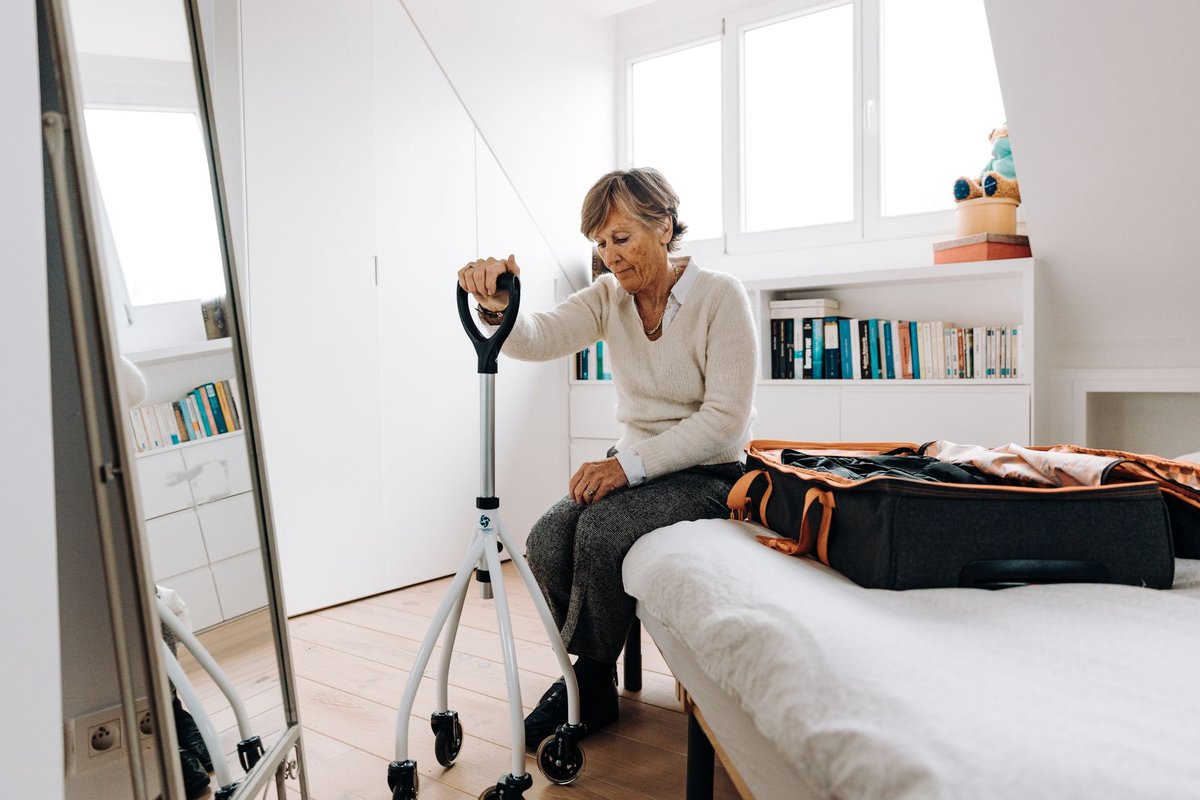
The CDC notes that more than one in four older adults fall every year and publishes a home fall checklist and a brochure for family caregivers. See also our fall prevention guide for NYC apartments.
| Measure | What it helps with | Source |
|---|---|---|
| Night lights in the bedroom, hall and bathroom; a lamp within reach of the bed | Safe path from bed to toilet | NIA, CDC |
| Phone with emergency numbers by the bed; remove loose rugs and cords | Calling for help, tripping | NIA, CDC |
| Pressure-sensitive mat at the bedside or door, or a door chime and a smart doorbell | Alerts someone that the person is up or leaving | Alzheimer’s Association, NIA |
| Keyed deadbolt on exterior doors with the key nearby, window limiters, coats and keys out of sight, ID bracelet or GPS device | Leaving the apartment at night, getting found quickly | NIA |
| Cutting back liquids up to two hours before bed, but not eliminating them | Fewer night bathroom trips | Alzheimer’s Association |
| A current medication list shown to a doctor or pharmacist; ask the doctor about the best time of day for medicines | Dizziness, sleepiness, falls | CDC, Alzheimer’s Association |
Two cautions. An alarm tells someone there is a problem, but a person has to respond to it. And never lock a person with dementia into a room: the Alzheimer’s Association says never to lock a person in at home, and the NIA door advice is for exterior doors with a key kept nearby. For medicine questions see our medication management guide and ask the prescriber before changing anything.
What can an aide do at night, and what is outside the job?
An aide works from a plan of care. In New York, the personal care task list includes toileting, walking, transferring from bed to chair, turning and positioning, feeding, and help with a patient’s own medication: prompting the time, identifying it, bringing it and opening the container. Our personal care services page says an aide cannot go beyond the task list, and our home health aide page describes help with bathing, dressing, meals, mobility and medication reminders.
- Appropriate at night: guiding the person to the toilet, steadying transfers, changing position in bed, reassurance, noting changes and reporting them to the nurse or family.
- Outside the aide’s role: giving injections or other nursing tasks (see nurse services), changing a medicine or dose, using physical restraint (the Alzheimer’s Association advises against it) or locking the person in.
- Call 911, then the family and nurse: after a fall with injury or any sudden change such as unresponsiveness, new confusion or trouble breathing.
What should you ask an agency about night shifts?
- Is this an awake or a sleep-in shift? Get it in writing, with the hours.
- What happens if the aide calls out at 9 p.m.? Who covers, and how fast?
- How do rest breaks work? For a 24-hour shift, ask how the agency meets the DOL sleep and meal requirements and what it does when sleep is interrupted.
- Who supervises? Ask which registered nurse reviews the plan of care, how often, and how a family reaches someone after hours.
- Who are the aides? Ask about training, background checks and dementia experience.
- Is the agency licensed? Use the state registry. Our agency checklist has more.
On our own live-in page, we say private-pay clients can often start within 24 to 48 hours, while Medicaid-funded live-in care needs a physician order and plan authorization. For ongoing night wandering, the page says we may recommend two caregivers on a rotating schedule.
Overnight care and the assessment: advice from our nurse director
Anna Klyauzova, RN, MSN, MPA, Director of Patient Services at ProLife Home Care, on what she sees in practice:
I never promise a family a number of hours before the assessment. Two people with the same diagnosis can need very different amounts of help. The assessment looks at how they manage daily activities, their cognitive state and other individual needs. If the approved hours still look too low, ask for a reassessment.
At the needs assessment, someone asks, “Can your mother shower, dress and use the toilet on her own?” and the family says, “Yes, basically.” Meanwhile she is afraid of falling in the shower, has trouble getting out of bed and forgets her pills. Describe how the person really manages, bad days included.
We are a licensed home care agency in Brooklyn and Queens, licence #2572L001, New York State Department of Health. We can talk through the night needs your family is describing and which model might fit. Call (718) 232-2777 or use our contact page. For dementia-specific questions, the Alzheimer’s Association helpline, 1-800-272-3900, is free and open 24 hours. Our dementia care guide goes deeper.
Medicaid regulations and wage rules change. Everything above was checked on 12 October 2026 against regs.health.ny.gov, health.ny.gov, dol.ny.gov, medicare.gov, nia.nih.gov, cdc.gov and alz.org. Confirm your own situation with the person’s plan or district, the Department of Labor for pay questions, and the doctor for any health or medicine question. This page is general information, not medical or legal advice.
Frequently asked questions
How many hours of overnight care will Medicaid approve?
No set number. Under 18 NYCRR 505.14, the plan or district authorizes only the hours the person actually needs, based on the assessment. Night needs decide between one live-in aide who sleeps and continuous care by more than one aide.
What is the difference between an awake overnight aide and a live-in aide?
An awake aide stays up all night. A live-in aide sleeps in the home and wakes when needed, and under New York’s definitions this fits when night help is infrequent enough that the aide would likely get five uninterrupted hours of sleep.
Can an older adult with dementia be left alone at night?
There is no universal rule, so ask the doctor. NIA advises not leaving a person with a history of wandering unattended, and the Alzheimer’s Association says six in 10 people with dementia will wander at least once.
Is it legal in New York for an aide to work 24 hours straight?
The Department of Labor describes pay rules for 24-hour shifts: 13 paid hours if the aide gets eight hours of sleep, five uninterrupted, and three uninterrupted meal breaks. When sleep is interrupted, the aide must be paid for those hours. For a specific dispute, contact the Department of Labor or an employment attorney.
Does Medicare pay for overnight care at home?
No. Medicare.gov lists 24-hour-a-day care at home, and custodial care when it is the only care needed, as not covered. Families pay privately or use Medicaid if eligible.
My parent’s apartment has no room for a live-in aide. What then?
The regulation requires the assessment to check for sleeping accommodations. If the home has none, continuous personal care services must be authorized, and the case is reviewed again if space becomes available.
Is it safe to lock a bedroom door so my mother cannot wander at night?
No. The Alzheimer’s Association says never to lock a person in at home. Use alarms, door chimes, a bedside mat and a person nearby. NIA suggests locks on exterior doors, with the key kept close in case of an emergency.