

Wandering is common with dementia: the Alzheimer’s Association says six in 10 people living with dementia will wander at least once, and many do it repeatedly. You can lower the risk with a steady daily routine, door alerts, ID and a plan, but no step guarantees safety. If someone with dementia is missing, call 911 right away and tell the dispatcher the person has dementia.
Why do people with dementia wander?
Dementia changes how the brain recognizes places and faces. The Alzheimer’s Association says it is common for a person with dementia to wander or become lost or confused about their location, and that it can happen at any stage.
Its behavior tip sheet adds that a person may wander by foot, car or public transportation, and lists some reasons: physical pain or restlessness, an unmet need such as hunger, and boredom. The warning signs on its wandering page are often small at first:
- coming back from a regular walk or drive later than usual
- wanting to “go home” while already at home
- talking about going to work or other old obligations
- pacing, restlessness or repetitive movements
- trouble finding the bathroom, bedroom or dining room
- seeming lost in a new or changed place, or anxious in crowds
Many of these signs point back to an old routine, such as work or home, or to a need that is not being met. A new behavior can also have a medical cause, so the Association advises talking with the person’s doctor about changes, since an infection, hearing loss or a medicine interaction can play a part.
How do you prevent wandering at home?
Start with the person’s day, then the doors. The Association’s advice is to keep the person busy with structured, meaningful activity, meet basic needs such as toileting, food and water, and plan activities for the time of day when wandering is most likely. The door and home options from the Association and the National Institute on Aging (NIA) are below.

None of these is a cure, and the Association says plainly that such steps cannot guarantee a person will not wander.
| Measure | What the sources say |
|---|---|
| Door chime or smart doorbell | NIA suggests an alarm that chimes when a door opens. The Association lists warning bells above doors and pressure-sensitive mats by the door or bed |
| Lock placed out of sight | Both suggest a deadbolt up high or down low. NIA says to keep the key nearby for emergencies |
| Disguise the door | Cover knobs with cloth the same color as the door, or paint or screen the door to blend with the wall |
| Hide cues to leave | Keep coats, hats, shoes, bags, keys and wallets out of sight; remove car keys if the person no longer drives |
| Windows | NIA suggests devices that limit how far windows open (see the fire-safety note below) |
| Night lights and room signs | Light the way to the bathroom and label doors with words or symbols |
| ID and GPS | An ID bracelet with name, address and your phone number; clothing labels if the person removes it; a GPS device as a backup or alternative |
Cameras and door sensors are a household decision that these sources do not cover. If you use one, tell the person and any aide, and keep cameras out of bathrooms and bedrooms. A camera shows what happened; it does not stop anyone from leaving, so it helps only if someone is watching the alerts.
Can you lock the door in a New York apartment?
Be careful, because the advice pulls in two directions. The Association says “never lock a person in at home.” NIA suggests an extra lock up high or down low, with the key nearby. FDNY’s apartment fire safety guide tells residents to make sure the apartment door lock can be opened from the inside with a thumb turn, without a key. It also says only FDNY-approved window gates that open without a key may be installed on a fire escape window.
So do not install anything that traps the person or needs a key to get out. Before you add a lock or window device, ask your building manager, landlord or co-op board and FDNY about the specifics. An elder law attorney can advise on your own situation. We did not find a single rule for every building, so we leave it there.
Should the person carry ID, GPS or MedicAlert?
NIA advises an ID or medical bracelet with the person’s name, address and your phone number, plus a recent photo or video for police. It also says many GPS systems can track location and can be an alternative or addition to a bracelet.
The program once called Safe Return is now MedicAlert with Safe & Found, run with the Alzheimer’s Association. MedicAlert says a caregiver should call 911 first, then call its 24/7 emergency response team, which creates a missing person report and activates a network that includes local law enforcement and hospitals. If someone finds the person, they can call the toll-free number on the ID. Enrollment questions go to 1-800-432-5378 (Monday to Friday, 6:00 a.m. to 4:30 p.m. Pacific). NIA notes the program is not affiliated with NIA and there may be a charge. Our guide to medical alert systems and Medicaid covers emergency buttons, but a button only helps someone who can remember to use it.
What daily routine reduces restlessness?
The Association’s daily care plan says structured, pleasant activities can often reduce agitation and improve mood. Build the day around what the person liked to do and when they function best.
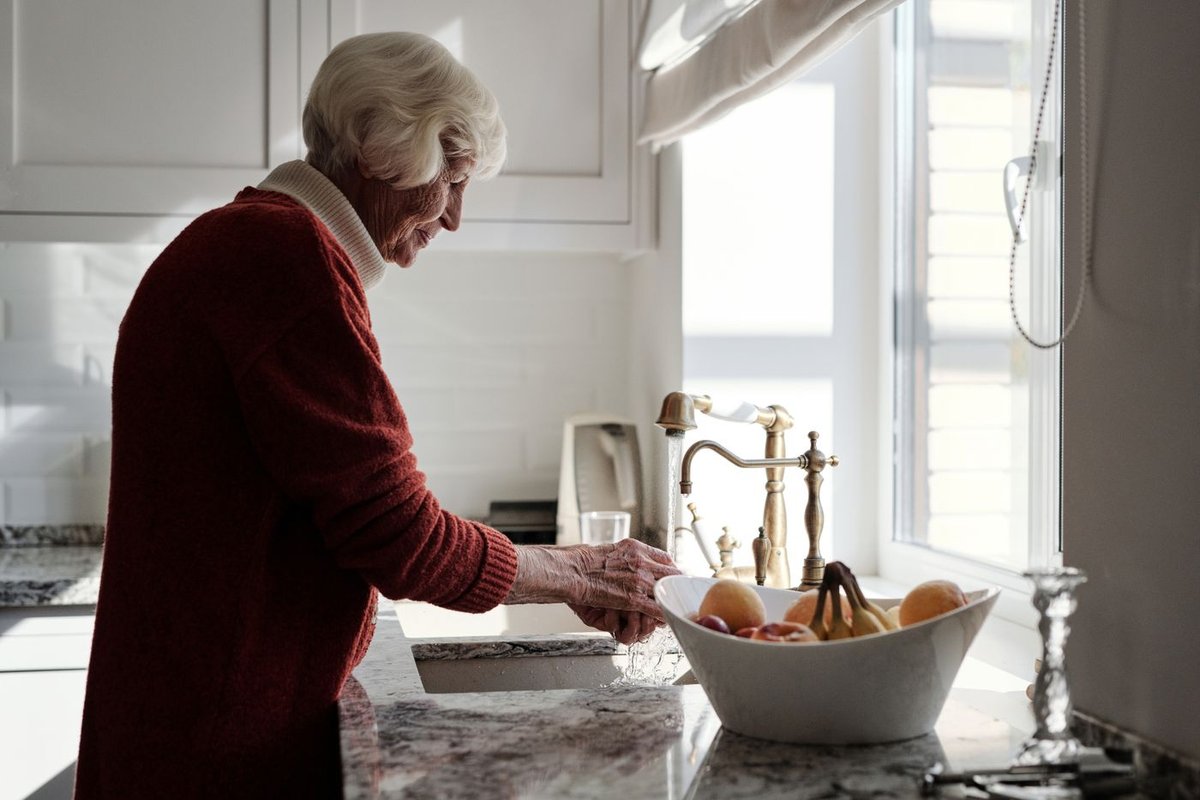
- Keep fixed times. Regular wake-up, meals and bedtime. Schedule bathing and appointments in the morning or early afternoon, when the person is usually more alert.
- Add a job. Folding laundry or helping prepare dinner gives the day a purpose.
- Walk together. The Association suggests a walk to help reduce restlessness, and time outside in daylight when possible.
- Plan the risky hour. Note when wandering tends to happen. For late afternoon, see our guide to sundowning: a bigger lunch, a lighter dinner, less noise and good light.
- Do not restrain. The Association’s advice is “Don’t use physical restraint.” Let the person pace with supervision.
If wandering suddenly increases, ask the doctor. Do not change or add any medicine on your own.
What should you do if a person with dementia goes missing?
Act at once. The Alzheimer’s Association says to start searching immediately and to call 911 if the person is not found within 15 minutes. The NYPD says there is no waiting period before you report someone missing, and MedicAlert says to call 911 first. So if you cannot find the person quickly, or they could be near traffic, water or bad weather, call without waiting for the 15 minutes to pass.
- Call 911. Say the person has dementia, give their name, age, clothing and where they were last seen.
- Send someone to search the nearby area. The Association says many people who wander are found within 1.5 miles. Check places such as water, tree lines, stairwells, tunnels, bus stops and busy roads, and any place the person used to go.
- Keep one person at home in case the person returns, and keep your phone free.
- Have a recent, close-up photo ready for police.
- Tell neighbors, friends and family to call you if they see the person.
- If enrolled, call MedicAlert at the number on your membership.
The Alzheimer’s Association Helpline, 1-800-272-3900, is open 24 hours for support, but it does not replace 911.
How do NYPD, Silver Alert and the state alert work in New York?
The NYPD says to call 911 or the Missing Persons Squad as soon as possible, and that you do not have to wait a set time. New York has two alerts for missing adults, and families cannot start either one. Police decide.
| Feature | New York City Silver Alert | State Missing Vulnerable Adult Alert |
|---|---|---|
| Who qualifies | A person 65 or older with dementia, reported missing and thought to be in imminent danger of serious injury or death | An adult 18 or older with a cognitive impairment, brain injury or mental disability, reported missing and at credible risk of harm |
| Who starts it | The NYPD | Only law enforcement can ask the state Missing Persons Clearinghouse |
| What happens | City public notification, including Notify NYC notices (NYC.gov/notifynyc or 3-1-1) | The alert is sent to police, media and others; it lasts up to 72 hours, then becomes a standard missing person case |
| Source | City press release, 6 October 2010; NYPD page | DCJS alert procedures and Executive Law 837-f-1 |
The DCJS procedure says agencies should request an alert as early as possible and that no waiting period is required. The Missing Persons Clearinghouse number listed there is 1-800-346-3543. The NYPD Missing Persons Squad number for information is 212-694-7781.
When does wandering mean more supervision is needed?
NIA says not to leave a person with a history of wandering unattended. The Association says not to leave someone with dementia alone in new surroundings that may cause confusion. If the person has left the home even once, if door alarms are going off at night, or if you cannot be there when they are most restless, it is time to add people, not just devices.
Our guides explain the next steps: stages of dementia, overnight care, live-in care, when memory care may be the safer choice and the broader dementia care at home guide. For other hazards, use our home safety checklist.
What can a home health aide do, and not do?
An aide can stay with the person, keep to the routine, walk with them, notice early signs such as pacing at the door and report them to the nurse and family. An aide cannot lock someone in or use restraint. The role is supervision and redirection, which fits the Association’s advice against restraint.
Nurse director advice for families
Anna Klyauzova, RN, MSN, MPA, Director of Patient Services at ProLife Home Care, on what she sees in practice:
Families usually come to us once memory problems start getting in the way: Mom leaves the stove on, mixes up her pills or gets lost on a street she has known for years. Please don’t wait for something serious to happen. See a doctor at the first changes you can’t explain.
What families rarely hear: don’t argue and don’t keep correcting. If your mother asks the same question for the fifth time, she isn’t doing it on purpose. A calm voice, a familiar room and a routine she can predict usually work better than long explanations. And you can’t do all of it by yourself. Even a few hours of professional home care a week gives relatives time to rest.
ProLife Home Care is a licensed home care agency in Brooklyn and Queens, licence #2572L001, New York State Department of Health. We can talk through supervision and overnight options for someone who wanders. Call (718) 232-2777 or use our contact page.
Related guides
- Aggression and Anger in Dementia: Why It Happens and What Caregivers Can Do
- What Is the Difference Between Dementia and Alzheimer’s Disease?
Programs and phone numbers change. Everything above was checked on 16 October 2026 against alz.org, nia.nih.gov, medicalert.org, nyc.gov, the New York State Division of Criminal Justice Services procedure and nysenate.gov. Confirm details with the sources named. This page is general information, not medical or legal advice. In an emergency, call 911.
Frequently asked questions
Why do dementia patients wander?
Dementia affects how a person recognizes places. The Alzheimer’s Association lists pain, restlessness, unmet needs such as hunger, and boredom among the reasons, and says it can happen at any stage.
How common is wandering with dementia?
The Alzheimer’s Association says six in 10 people living with dementia will wander at least once, and many do so repeatedly.
How long should I wait before calling 911 for a missing person with dementia?
Do not wait. The Alzheimer’s Association’s guidance is to call 911 if the person is not found within 15 minutes, and the NYPD says no waiting period applies. If you cannot find them quickly, call.
Does New York have a Silver Alert?
Yes. New York City has a Silver Alert for people 65 and older with dementia, activated by the NYPD. The state has a Missing Vulnerable Adult Alert that police request through the Missing Persons Clearinghouse.
Can I lock my parent with dementia in the apartment?
No. The Alzheimer’s Association says never to lock a person in at home, and FDNY says an apartment door lock should open from the inside with a thumb turn, without a key. Use alarms, chimes and supervision instead.
Is an ID bracelet or GPS enough?
No. NIA recommends ID and says GPS can be an alternative or addition, but they help find the person after they leave. They do not replace supervision.
Can a home health aide stop someone from wandering?
An aide can supervise, keep a routine and redirect the person, but cannot restrain or lock them in. Ongoing wandering is a signal to discuss more hours or overnight care with the nurse and the family doctor.