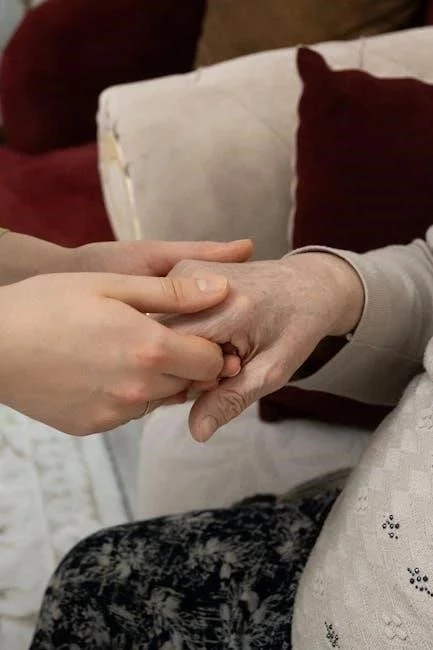
She still manages on her own.
Just not with the bathtub, the stairs and the laundry
A New York State certified personal care assistant covers exactly the parts of the day that have become unsafe, and leaves the rest to her. Across all five boroughs, most families pay $0 through Medicaid.
What a personal care assistant actually does
Two levels of help, defined by the state and not by us
New York does not leave «personal care» open to interpretation. The tasks a personal care aide may perform are written into state regulation and split into two levels. Which level your mother is approved for decides how many hours she gets.
The house, not the person
Shopping, cooking, laundry, dishes, light housekeeping, getting to the pharmacy and back. Help that keeps the apartment running. On its own, Level I is capped at eight hours a week, which is the state telling you plainly that housekeeping alone is not what this program is for.
The person, and everything in Level I
Bathing, dressing, grooming, toileting, walking, transferring in and out of bed or a chair, turning and positioning, and help with feeding. Level II includes all of Level I. This is where the real hours are, and where most of our clients are approved.
Task lists are set by the New York State Personal Care Services program under regulation 18 NYCRR 505.14. An aide cannot go beyond them, and a good agency will tell you that before you sign, not after.
The question every family asks first
PCA or HHA: what the difference really is
Both come to the home. Both help with bathing and dressing. The difference is training hours, and what those extra hours legally allow.
PCA · Personal Care Aide
- 40 hours of state-approved training, minimum
- Bathing, dressing, grooming, toileting, walking
- Transfers, turning and positioning in bed
- Meals, laundry, shopping, light housekeeping
- No health-related tasks
The PCA certificate does not expire. Right for someone whose needs are physical rather than medical: she is steady enough at home, but the tub and the stairs have stopped being safe.
HHA · Home Health Aide
- 75 hours of training, minimum
- Everything a PCA does
- Plus 35 hours of health-related task training
- Medication reminders, vital signs, simple dressings under nurse supervision
- Ongoing nurse supervision and yearly in-service hours
Right when a diagnosis is driving the day: recovery after a hospital stay, a wound to watch, a medication schedule nobody can afford to lose track of. See home health aide services.
Training minimums come from the New York State Department of Health home care standards. In practice the choice is rarely yours alone: the assessment decides which one the plan of care calls for. What you can do is understand the answer when you hear it.
How to get a home attendant in NYC
Four steps, and the one that trips most families
Medicaid first
Personal care through the state runs on Medicaid. If she already has it, you are past this step. If she does not, this is the part that takes the longest, and the part where an agency that handles the paperwork every week is worth more than any brochure.
The independent assessment
You call the New York Independent Assessor and they schedule two appointments: a nurse assessment and a clinical appointment with an independent practitioner. Both are meant to happen within 14 days of your call, and either can be done by telehealth or in person.
The step that trips people
Since September 2025 the bar is specific: she has to need at least limited assistance with physical maneuvering for more than two activities of daily living. With a dementia or Alzheimer’s diagnosis, supervision with more than one is enough. Families who describe a good day instead of an average one get fewer hours than they need. Describe the hard days.
Hours, then an aide
The plan writes a plan of care with a set number of hours, and you pick a licensed agency to fill them. That is us. If more than 12 hours a day is on the table, a separate review panel looks at the case before it is approved.
Steps follow the New York Independent Assessor Program. Not on Medicaid and not planning to be? Private pay home care skips all four steps and can start this week.
Whether this is the right service
When a personal care assistant is enough, and when it is not
Choosing the wrong level wastes weeks. Here is the honest split, including the cases where we will tell you to ask for something else.
A PCA is the right fit when
- She is medically stable, but the tub, the stairs or getting dressed have become risky
- Meals are being skipped because cooking is too much
- She needs a hand getting out of bed or a chair
- Arthritis, frailty or poor balance is the reason, not a new diagnosis
- The family is covering the gaps and running out of road
Ask for something else when
- There is a wound, a catheter or injections: that is nursing at home
- She was just discharged from hospital: start with post-surgery care
- Wandering or sundowning has started: see dementia care
- She cannot be alone overnight: that is live-in care
- She is regaining strength after a fall: therapy at home comes first
Why families stay with us
A nurse writes the plan before an aide knocks on the door
Hours on paper are not care. What decides whether this works is who wrote the plan and who is watching it.
An RN reviews every plan
Our co-founder Anna Klyauzova, RN, MSN, MPA has run patient services here since 2017 and reviews each plan of care personally, with 14 years of clinical nursing behind her.
Licensed, and checkable
ProLife is a New York State licensed home care services agency, NY DOH License #2572L001. You can look the license up in the Department of Health registry before you call us.
She can be understood
Our aides speak 13 languages. For someone who has slipped back into their first language, being understood at home is not a nicety.
We handle the paperwork
The assessment, the plan, the Medicaid forms: our coordinators do this every week. Most families reach us somewhere in the middle of it, already tired of being transferred.
Get a free care assessment
We'll call you the same business day.
We'll call you back within 2 hours. For urgent needs call (718) 232-2777.
🔒 Your information is private and never shared.
Families in the same situation
“Reception and care is very reliable and thorough. It has been a great experience both for us and our beloved grandfather. He gets the respect and attention he deserves.”
“I am very satisfied with the agency. They help me take care of my mother. My family is very grateful to them.”
“Very professional! Good attitude and service. The staff explained all the information we needed in full detail.”
Questions families ask
PCA, HHA, hours and who pays
What is the difference between a PCA and an HHA?
Training hours, and what those hours allow. A personal care aide completes at least 40 hours of state-approved training and helps with bathing, dressing, toileting, walking, transfers, meals and the house. A home health aide completes at least 75 hours, including 35 hours of health-related task training, so an HHA can also do things like medication reminders and vital signs under nurse supervision. Everything a PCA does, an HHA does too.
What does a personal care assistant do?
New York splits the work into two levels. Level I is the household: shopping, cooking, laundry, dishes, light housekeeping. Level II is the person: bathing, dressing, grooming, toileting, walking, transferring in and out of bed, turning and positioning, and help with feeding. Level II includes Level I. Level I on its own is capped at eight hours a week.
How do I get a home attendant in NYC?
Four steps. She needs Medicaid. You call the New York Independent Assessor, who schedules a nurse assessment and a clinical appointment, both meant to happen within 14 days. The assessment decides whether she qualifies and at what level. Her plan then authorizes a number of hours and you choose a licensed agency to fill them. Without Medicaid the same care is available privately and can start within days.
Does Medicaid pay for a personal care assistant in New York?
Yes. Personal care services are a Medicaid benefit in New York, delivered either through an MLTC plan or through local Medicaid, and most of our families pay nothing out of pocket. Medicare does not cover this: it pays for short-term skilled care such as nursing or therapy visits, not for ongoing help with bathing and meals.
How many hours of personal care can she get?
That comes out of the assessment, not out of a price list. Hours follow the tasks she needs help with and how much help each one takes. Since September 2025 she has to need at least limited assistance with physical maneuvering for more than two daily activities to qualify at all, or supervision with more than one if she has a dementia or Alzheimer’s diagnosis. Cases above 12 hours a day go to a separate review panel.
Can the family member already helping her get paid instead?
Often yes, through CDPAP, New York’s consumer directed program. It lets the client choose and direct their own aide, including many relatives, rather than receiving one from an agency roster. It runs through the same assessment. If that is the direction you want, say so on the call and we will tell you plainly whether it fits your situation better than what we offer.
Not sure whether she qualifies, or for how many hours?
Describe an ordinary day: what she still does herself and where she needs a hand. A nurse will tell you which level she is likely to be approved for, roughly how many hours that means, and what the assessment will ask. No cost, no obligation.