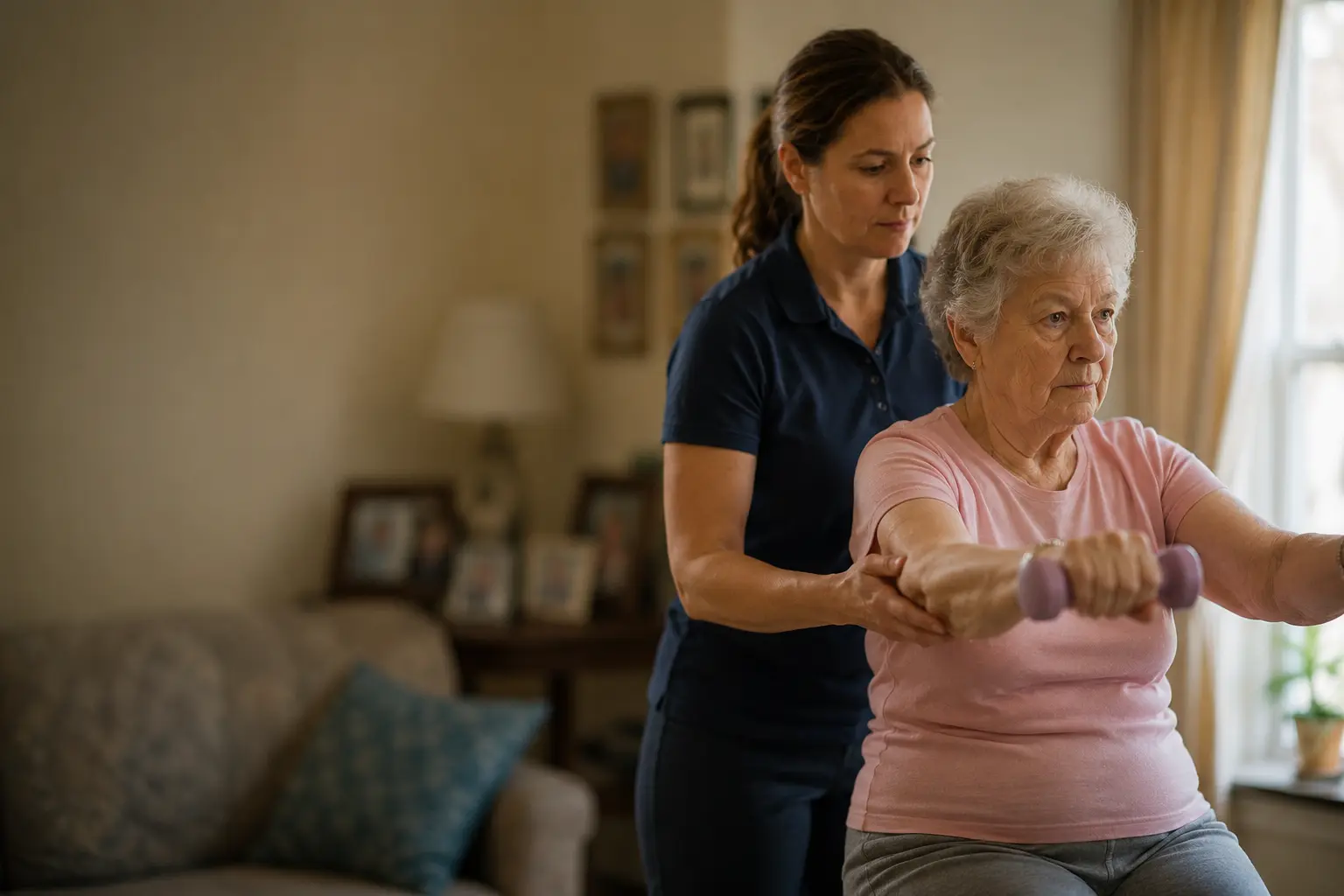
Её выписали домой с назначением на терапию, а
делать её некому
Терапия на дому в Нью-Йорке: физическая, эрго- и логопедия
В выписке написано PT, OT, ST. Там не написано, кто это организует, кто платит и что будет, если никто не позвонит. Лицензированный терапевт приходит в квартиру и работает с настоящей лестницей, настоящей ванной, настоящим расстоянием от кровати в два часа ночи.
Подберём специалиста недалеко от дома.
Терапевт приезжает домой, а не вы в клинику.
Готово. Заявка у координатора, мы вам позвоним.
Ваши данные защищены и не передаются посторонним.
- Услуга
- Физическая терапия, эрготерапия и логопедия на дому
- Где
- Дома у пациента
- Округа
- Кингс, Куинс, Нью-Йорк, Бронкс, Ричмонд, Нассау
- Лицензия
- NY DOH лицензия NY DOH №2572L001, лицензированное агентство ухода на дому (LHCSA)
- Назначение врача
- Обязательно
- Обычная частота
- 1–3 визита в неделю на каждый вид терапии
- Обычный курс
- 4–8 недель, с пересмотром по мере достижения целей
- Кто платит
- Частная оплата или по договору с сертифицированным агентством ухода на дому
- Не выставляем
- Medicare и Medicaid managed care — для них нужна лицензия CHHA
- Клинический надзор
- Дипломированная медсестра пишет и проверяет план ухода
Какая терапия нужна вашей семье?
После колена, бедра, инсульта, падения. Или без всякого повода — она просто с каждым месяцем делает меньше, и кто-то наконец произнёс слово «терапия». Терапия на дому охватывает три вида, и ниже они описаны через то, что не получается в квартире, а не через название профессии.
Что такое терапия на дому и чем она отличается от клиники
Терапия на дому означает, что лицензированный терапевт лечит пациента в его собственной квартире. Реабилитация дома — это не те же упражнения из клиники в другой комнате. В клинике вашу маму учат подниматься по учебной лестнице с поручнями с обеих сторон. В её доме одиннадцать ступеней, поручень с одной стороны и поворот наверху. Дома терапевт работает с настоящей лестницей, настоящей ванной, настоящим расстоянием от кровати до туалета в два часа ночи. Ничего не нужно потом переносить в жизнь, потому что тренировка уже прошла там, где это имеет значение.
Есть ещё сама дорога. Для человека, у которого проблема как раз с равновесием, спуститься с крыльца, сесть в машину и пройти через парковку — самое опасное за день, и всё это происходит до начала занятия. И именно дорога, а не терапия, обрывает большинство курсов. Кто-то не смог отвезти, погода испортилась, родственник за рулём вышел на работу — и к третьей неделе визиты прекращаются. Реабилитация дома убирает это из уравнения.
В чём клиника действительно выигрывает — так это в оборудовании. Брусья, разгрузка веса, полноценный зал. Ничего из этого в бруклинскую квартиру не влезет. Тому, кто восстанавливается до такого уровня, терапия на дому обычно служит мостом к клинике, а не заменой ей, и хороший терапевт скажет вам, когда этот момент настал.
Нужно ли направление для терапии на дому?
Не всегда, и именно здесь семьям чаще всего говорят неверное.
В Нью-Йорке есть прямой доступ. Физический терапевт или эрготерапевт со стажем не меньше трёх лет может вести пациента десять визитов или тридцать дней, что наступит раньше, без назначения врача. Наши терапевты этому требованию отвечают, поэтому при частной оплате терапия может начаться, пока бумаги догоняют.
После этого окна, а для логопедии в большинстве случаев сразу, нужно письменное назначение. Слова «направление» и «назначение» здесь используют как синонимы, и любое из них приведёт вас к нужному документу. Написать его может любой врач, недавно видевший пациента: хирург, невролог, терапевт.
Если случай идёт через сертифицированное агентство ухода на дому или через страховой план, назначение нужно с самого начала, и обычно его получает семья.
Одно закон обязывает нас сказать вслух: без направления ваша страховая может не возместить визиты. Мы пишем это на бумаге до первого из них.
Помимо назначения, причины обычные. Человек вернулся из больницы слабее, чем туда попал. Человек перенёс инсульт и заново учится ходить, одеваться или говорить. Человеку заменили бедро или колено. Человек упал и с тех пор двигается всё меньше, потому что боится упасть снова. У человека Паркинсон или деменция, и он сдаёт постепенно, а не разом, и задача — этот процесс замедлить.
Не обязательно не выходить из дома. Это требование относится к уходу на дому по Medicare, а не к терапии вообще, и это одна из тех вещей, которые семьи чаще всего понимают наоборот на первом звонке.
Возраст решающим не является. Мы организуем терапию и взрослым, и детям — за частную оплату и по назначению врача. Государственные программы для детей — Early Intervention для тех, кому нет трёх, и CPSE или CSE для школьного возраста — идут через поставщиков, одобренных именно для этих программ. Если вам нужен этот путь, скажите на первом звонке, и мы подскажем, куда идти, а не возьмём случай, который не сможем довести.
Сколько стоит терапия на дому и сколько она длится
Цена зависит от района, потому что от него зависит дорога через город. Физическая терапия стоит $70 за визит в Бруклине и Куинсе, $180 на Манхэттене и $170 в Бронксе, на Статен-Айленде и в округе Нассау. Эрготерапия и логопедия — $120 в Бруклине и Куинсе и $170 в остальных районах. У физической терапии есть и пакеты: пять визитов за $300, десять за $500, то есть визит выходит в $50.
Столько вы платите при частной оплате, и мы называем эту сумму на первом звонке, до того как что-то назначено. Полные таблицы — на страницах физической, эрго- и логопедии .
Ждать одобрения не надо. Вы решаете — и начинается расписание, обычно в течение 24–48 часов.
Курс обычно длится четыре-восемь недель по два-три визита в неделю. После замены колена или бедра чаще ближе к нижней границе. После инсульта или при Паркинсоне может идти дольше или прерываться и возобновляться блоками по мере изменения целей. Расписание терапевт составляет после первой оценки и меняет по ходу.
Больше визитов — не автоматически лучше. Два в неделю с настоящей практикой между ними лучше трёх без неё. То, что происходит в дни, когда никто не пришёл, важно не меньше самих визитов.
Кто платит за терапию на дому
Терапия на дому оплачивается здесь двумя способами, и сказать об этом прямо полезнее, чем привести список подлиннее.
Частная оплата. Самый быстрый путь, и им пользуется большинство семей. Ждать одобрения не нужно, договариваться со страховым планом не нужно. Вы решаете — и начинается расписание. Ставка зависит от района, и сумму мы называем на первом звонке.
Через сертифицированное агентство ухода на дому. Если после выписки случай уже ведёт CHHA, терапевт может прийти от ProLife по договору с этим агентством. С вашей стороны ничего не меняется. Вы говорите CHHA, что хотите ProLife, а договариваются между собой уже два агентства.
Чего мы не делаем и почему это важно. Уход на дому по Medicare, включая терапию, оплачивается только через сертифицированное агентство ухода на дому, CHHA. ProLife — лицензированное агентство ухода на дому, LHCSA: другая лицензия и другая роль, поэтому счета в Medicare мы напрямую не выставляем. Департамент здравоохранения штата Нью-Йорк описывает LHCSA точно так же в нашей публичной записи. По той же структурной причине мы не оказываем терапию через планы Medicaid managed care, хотя помощника по уходу на дому и персональный уход через них предоставляем. Если уход идёт через план MLTC, вопрос о терапии — к плану или к CHHA. Если так проще, позвоните нам, и мы покажем нужную дверь, а не возьмём случай, который не сможем довести.
От первого звонка до первого визита
Вы звоните, и медсестра разбирает случай
Пятнадцать минут по телефону. Что написано в выписке, какая квартира, сколько ступеней до двери, кто дома днём. Бесплатно и ни к чему не обязывает.
Назначение врача
При частной оплате первые десять визитов можно сделать без него. Через CHHA или страховой план назначение нужно с самого начала, и обычно его получает семья. Скажите на первом звонке, какой из двух случаев ваш, и мы скажем, что понадобится.
Приезжает терапевт и оценивает
Первый визит — это оценка, а не тренировка. Терапевт смотрит, как человек на самом деле передвигается по квартире, проверяет, что безопасно, а что нет, и говорит с тем, кто ухаживает.
План и расписание, которое выдержит
Обычно два-три визита в неделю на протяжении четырёх-восьми недель, с поправками по ходу. План ухода пишет дипломированная медсестра и пересматривает его, когда что-то меняется. При частной оплате терапевт обычно приезжает за 24–48 часов. Через план или CHHA сроки принадлежат им, а не нам.
Эрготерапия против физической, и при чём тут логопедия
Об этом спрашивают первым делом, и ответ помещается в одну строку: физическая терапия — про то, чтобы двигаться; эрготерапия — про то, чтобы делать. Одна работает с телом — ходьба, равновесие, сила. Другая работает с задачей: сможет ли она в итоге сама одеться, помыться и собрать обед. Человек может вернуть себе силы, чтобы стоять у стола, и всё равно не готовить, потому что готовка — это последовательность движений, захватов и шагов, а не одно движение.
Логопедия стоит особняком. Она про речь и понимание — и про глотание, ту самую половину, о которой семьи никогда не догадываются сказать.
Таблицу можно листать вбок →
| Терапия | С чем работает | Обычные причины | Назначение врача | Обычная частота |
|---|---|---|---|---|
| Физическая | Ходьба, равновесие, сила, пересаживание, лестница | Замена бедра или колена, инсульт, падение, Паркинсон, слабость после больницы | Обязательно | 2–3 визита в неделю |
| Эрго- | Одевание, мытьё, готовка, безопасное пользование квартирой, приспособления и переделки | Инсульт, деменция, артрит, перелом плеча или запястья, слабое зрение | Обязательно | 1–3 визита в неделю |
| Логопедия | Речь, понимание, память на разговор и глотание | Инсульт, травма мозга, Паркинсон, деменция, кашель или поперхивание во время еды | Обязательно | 1–3 визита в неделю |
Терапия и сиделка из одного агентства
Терапия на дому работает лучше всего, когда сиделка и терапевт из одного агентства, потому что бо́льшая часть практики происходит между визитами. Терапевт приходит дважды в неделю; остальные пять дней принадлежат тому, кто есть в квартире — обычно дочери, иногда сиделке. Именно там упражнения либо делаются, либо перестают делаться, и это самое главное, что отличает работающий курс терапии от неработающего.
Когда сиделка и терапевт из одного агентства, они работают по одному плану ухода. То, что терапевт записал во вторник, сиделка отрабатывает в среду, а когда что-то меняется, один звонок доходит до всех, а не три. Семьи, которые берут терапию в одном агентстве, а сиделку в другом, занимаются этой координацией сами — обычно параллельно с работой. План ухода пишет дипломированная медсестра и пересматривает его, когда что-то меняется.
Физические терапевты, эрготерапевты и логопеды, с которыми мы работаем по договору, имеют собственные лицензии штата Нью-Йорк. ProLife добавляет к ним всё вокруг случая: надзор медсестры, часы сиделки, расписание и один номер, по которому можно позвонить.
Услуги помощника по уходу на дому · Частный сестринский уход · Все услуги
Терапия на дому по Нью-Йорку и округу Нассау
Терапевты приезжают на дом в Бруклине, Куинсе, Манхэттене, Бронксе, на Статен- Айленде и в округе Нассау, по лицензия NY DOH №2572L001. Покрытие не везде одинаковое: терапевта в Бенсонхёрсте или Форест-Хиллс назначить проще, чем на южном берегу Статен-Айленда, и мы предпочтём сказать это на первом звонке, а не оставить вас ждать и выяснять самим. При частной оплате терапевт обычно приезжает в течение 24–48 часов. Через план или CHHA сроки принадлежат им, а не нам.
Все 48 районов
Все 47 районов
Все 32 районов
Все 43 районов
Все 37 районов
Все 39 районов
О чём семьи спрашивают в первую очередь
Терапия — не самое трудное. Трудное — её организовать.
Оставьте номер, и медсестра перезвонит разобрать случай: какая терапия назначена, из чего она будет состоять и сколько будет стоить. Звонок бесплатный и ни к чему не обязывает.
Хотите позвонить сами? (718) 232-2777
Подберём специалиста недалеко от дома.
Терапевт приезжает домой, а не вы в клинику.
Готово. Заявка у координатора, мы вам позвоним.
Ваши данные защищены и не передаются посторонним.